

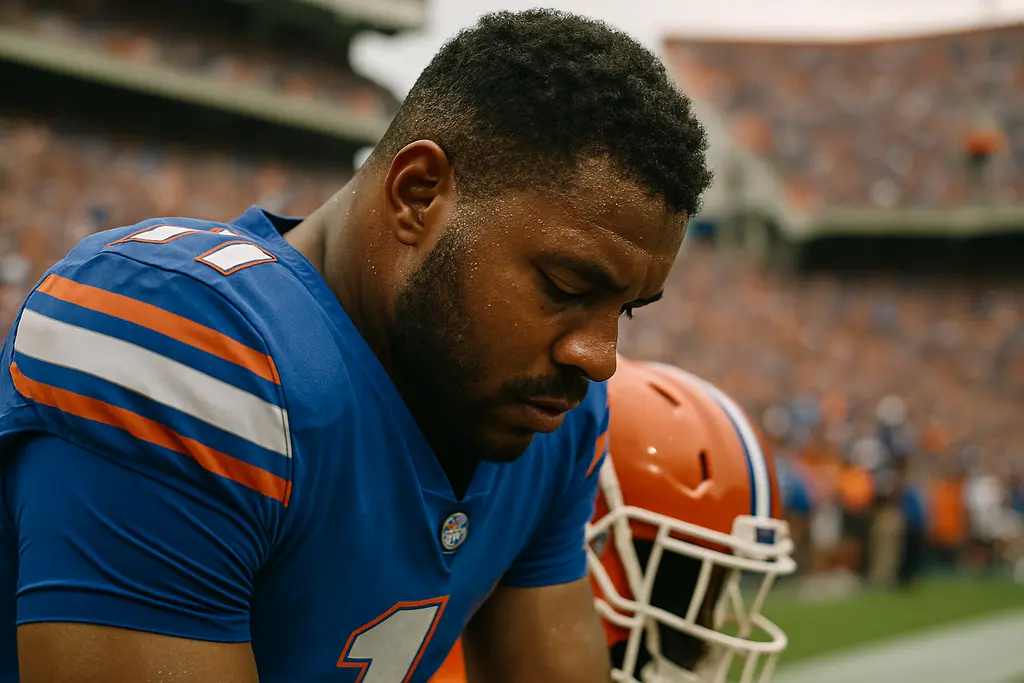
The Gators Performance conversation shifted sharply between September 26 and October 3, 2026. Florida looked complete in a 52-28 win over No. 4 Ole Miss, then lost 45-17 at No. 25 Missouri one week later. Those two games did not erase each other. They showed the same team under very different game conditions: one matchup where Florida controlled the run game and tempo, and one where early negative plays, defensive stress and Missouri’s scoring run took Florida out of its preferred structure.
Gators Performance In The Two-Game Swing
Florida entered the Missouri game with a 4-0 record and a 2-0 mark in SEC play, according to the research notes. The Gators had scored 66, 52, 44 and 52 points in their first four games, a four-game scoring surge the program had not produced since the Steve Spurrier era in 2001. That context matters because the Missouri result was not a slow decline. It was a sudden change in game state and matchup control.
Ole Miss Showed The Run Game Ceiling
On September 26, Florida’s offense had the kind of balance that makes a team difficult to defend. The Gators beat No. 4 Ole Miss 52-28, and the official Florida recap credited tailbacks Jadan Baugh with 142 rushing yards and three touchdowns and Duke Clark with 126 rushing yards and one touchdown in that win Florida’s Ole Miss recap. That was not just production. It was evidence that Florida could stress a highly ranked opponent with two backs, create repeated successful early downs and keep the offense out of predictable passing situations.
The Ole Miss game also gave Florida a workable identity. When Baugh and Clark both cleared 100 yards, the Gators could dictate personnel, stay physical between the tackles and force defensive adjustments that opened the rest of the offense. A performance like that also protects the defense. Long drives shorten the opponent’s possession count and limit the number of high-leverage snaps the secondary has to play.
Where Gators Performance Broke At Missouri
At Missouri on October 3, the same template did not hold. The research notes show that Missouri produced five tackles for loss on Florida’s opening drive. That detail explains much of the night. Florida’s offense is built to apply pressure through the ground game, but early penetration flipped the down-and-distance math. Once the Gators were behind the chains, Missouri could attack with more confidence and Florida had fewer clean answers.
The score movement made the problem worse. Missouri scored 35 unanswered points in the 45-17 win. That run changed Florida’s play-calling environment from controlled to urgent. A rush-oriented offense can recover from one stalled series. It has a harder time recovering when the opponent strings together scores while the offensive line is losing early-down leverage.
Why The Missouri Drives Got Away
The turning point was not a single snap as much as a pattern. Missouri disrupted Florida before the Gators could settle into the same rhythm that worked against Ole Miss. Florida had entered the game with strong possession traits, including an average time of possession of 32:55 through the first five games from the research notes. That usually points to an offense that can stay on the field and a defense that is not being overexposed. Missouri changed that by winning early contact and forcing Florida into reactive football.
Early Negative Plays Changed The Script
The five tackles for loss on the opening drive were the clearest sign that Florida’s blocking angles and run timing were not clean. Negative plays do more than cost yardage. They take away the play sheet. Second-and-12 is different from second-and-5. Third-and-long lets a defense widen its rush, disguise pressure and play coverage with less run conflict. Florida’s offense had thrived when it could make opponents defend the run and pass on equal terms. Missouri reduced that balance early.
That also affected momentum. A team coming off a decisive win over Ole Miss could reasonably expect to test Missouri’s front with the same physical approach. Instead, Missouri got immediate proof that it could win across the line of scrimmage. For Florida, that meant the sideline had to adjust while already trailing the matchup at the point of attack.
Simmons Put Stress On Coverage
Missouri quarterback Austin Simmons threw for 340 yards and two touchdowns, according to the research notes. That passing output paired with Missouri’s defensive control gave Florida little room for error. When an opponent is both creating negative plays and producing explosives or chunk gains through the air, the burden shifts to every Florida possession. Drives have to end in points, not field position.
The AP Top 25 reaction reflected the scale of the result. After the loss, Florida dropped eight spots to No. 16, while Missouri made a major move in the poll after its rout of the Gators AP Top 25 update. Poll movement is not the main football issue, but it showed how sharply one road loss changed the national read on Florida’s start.
Matchups That Split The Results

The contrast between the Ole Miss and Missouri games came down to matchup control. Against Ole Miss, Florida’s backs created a clear offensive edge. Against Missouri, the Tigers’ front created the first edge and kept it long enough for the game to tilt. That difference is why the two results should be studied together rather than treated as separate storylines.
Baugh And Clark Versus The Ole Miss Front
Baugh and Clark gave Florida a two-back answer on September 26. Their production allowed Florida to keep fresh legs in the game and keep running concepts available deep into the second half. It also reduced the need for Florida to chase low-percentage plays. When both backs are producing at that level, the quarterback can operate from favorable looks and the offensive line can lean on repetition.
That is why the Ole Miss result still matters after the Missouri loss. It showed a real ceiling for Florida’s rushing attack against a top-five opponent. It also raised the standard for how the Gators should look when their line is controlling first contact. For readers tracking how injuries, rotations and workload may affect that standard, our related breakdown of roster depth after Ole Miss fits directly into this stretch of the season.
Missouri Front Versus Florida’s Run Plan
Missouri’s defensive front made Florida play from disadvantage. That is the most important takeaway from the 45-17 score. If Florida cannot keep the run game on schedule, the offense loses the part of its identity that creates manageable third downs and protects the defense. The Gators did not need to match the Ole Miss rushing numbers to win at Missouri, but they did need enough early-down success to prevent the game from becoming a long-yardage test.
- Florida’s best stretch: The Ole Miss win showed two-back rushing depth and red-zone finishing ability.
- Florida’s sharpest issue: Missouri’s early tackles for loss prevented the Gators from setting tempo.
- Key defensive concern: Simmons’ 340 passing yards showed that Florida struggled to stop Missouri once the Tigers controlled game flow.
- Main turning point: Missouri’s 35 unanswered points turned a competitive SEC road game into a one-sided result.
What Gators Performance Now Means For Florida
Gators Performance after these two games should be evaluated with separation between capability and consistency. Florida proved against Ole Miss that it can run through a highly ranked opponent, finish drives and create a balanced offensive picture. Florida also proved at Missouri that if the run game is disrupted early, the rest of the structure can strain quickly.
The coaching review should start with first drives and early-down answers. Florida cannot assume that the same run menu will work when an opponent is penetrating gaps and creating tackles for loss. Counters, screens, quick throws and formation variation become more than changeups; they are protection for the base offense. If the Gators can punish overaggressive fronts, the run game becomes harder to collapse.
Defensively, the Missouri game raised the question of how Florida responds when the offense is not controlling possession. Simmons’ production forced the Gators to defend extended pressure situations, and the 35 unanswered points showed that the response was not strong enough on October 3. That does not cancel the 4-0 start, but it does narrow the margin for SEC play.
The most accurate read is that Florida is neither the finished product suggested by the Ole Miss score nor the broken team suggested by the Missouri score. The Gators have a high-end rushing identity, but it depends on staying ahead of the chains. They have shown scoring power, but that power drops when defensive fronts win early. The next step is not about proving the Ole Miss game was real or forgetting Missouri. It is about building a plan that survives when an unbeaten or ranked opponent takes away Florida’s first option.