

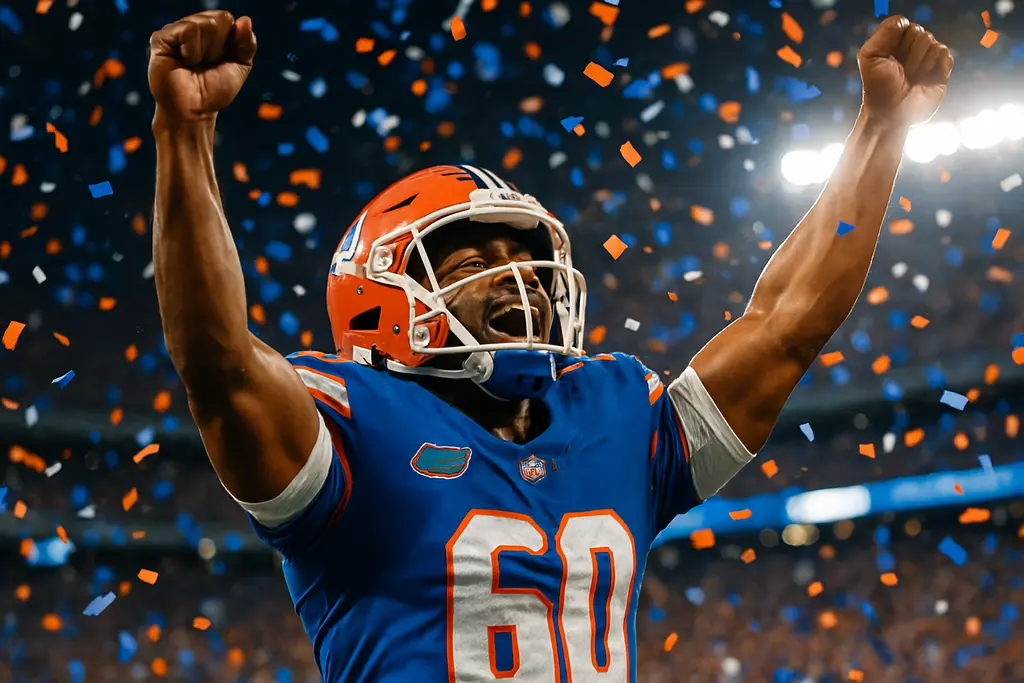
The Florida Ole Miss matchup on September 26, 2026, turned into a clear statement about how the Gators wanted to win: run the ball, own possession, and force Ole Miss into longer answers than it could sustain. Florida defeated No. 4 Ole Miss 52-28 at Ben Hill Griffin Stadium, improving to 4-0 and 2-0 in SEC play, according to the Florida game recap.
The score was not built on one explosive quarter alone. Florida led 10-0 after the first quarter and 17-6 at halftime, then answered Ole Miss’ third-quarter push with one of its best offensive stretches of the season. The Gators scored touchdowns on their first five possessions of the second half, which turned a competitive SEC game into a 24-point win.
Why The Florida Ole Miss Win Moved The Season
Florida Ole Miss Game Flow
The first half mattered because Florida did not allow Ole Miss to settle into a track meet. Ole Miss finished with 426 total yards, so this was not a defensive shutdown in the strictest sense. The Gators’ advantage came from timing. Early stops, a 10-point first quarter, and a halftime margin forced the Rebels to play from behind before their offense found its rhythm.
The third quarter was the stress test. Ole Miss scored 15 points in that period, while Florida scored 14. That exchange could have tightened the game if Florida’s offense had stalled. Instead, the Gators kept finishing drives. That is the key difference between yardage allowed and game control. Ole Miss moved the ball, but Florida kept matching and then separating.
Florida’s time of possession told the story of the game’s shape. The Gators held the ball for 36 minutes, 59 seconds, while Ole Miss had it for 23:01. That kind of split is not only about slowing the game down. It also limits the number of clean possessions available to an opponent that needs repeated scores to catch up.
Second-Half Drives Changed The Pressure
The most important offensive fact from the night was that Florida scored touchdowns on its first five second-half possessions. That run kept Ole Miss from turning its third-quarter offense into real scoreboard leverage. Each Florida answer forced the Rebels to chase again, and that matters against a quarterback who was still producing through the air and on the ground.
Trinidad Chambliss completed 25 of 34 passes for 298 yards and two touchdowns. He also ran for 44 yards and two scores. Those numbers show why Florida could not simply sit on the lead. The Gators had to keep scoring, and they did it through a ground game that kept the offense on schedule and protected the defense from being exposed to repeated quick-change possessions.
The Rushing Matchup That Defined The Night
Baugh And Clark Controlled The Terms
Florida rushed for 302 yards, led by junior tailback Jadan Baugh and sophomore Duke Clark. Baugh carried 29 times for 142 yards and three touchdowns. Clark added 126 yards and a touchdown on 12 carries. For Baugh, it was his fifth straight 100-yard rushing game, a streak that carried across seasons. Florida also had two 100-yard rushers in the same game for the first time since 2022.
That production changed the math for Ole Miss. Florida did not need to live in high-risk passing downs. The Gators converted 6 of 10 third downs, while Ole Miss went 4 of 11. The difference was not huge in raw count, but it matched the way the game felt: Florida stayed closer to its preferred menu, and Ole Miss had to create more from less stable situations.
The Florida Ole Miss result also showed the value of a two-back rushing profile. Baugh handled volume. Clark supplied efficiency and chunk gains. That combination reduced the burden on Aaron Philo and made play calling less predictable. When a defense has to respect two runners, inside fits and perimeter force rules become harder to maintain for four quarters.
What Philo Added Without Forcing The Game
Aaron Philo completed 16 of 23 passes for 196 yards and one touchdown, and he also ran for a score. Those are not empty-support numbers. They fit the game. Florida did not need Philo to throw 35 times. It needed him to be efficient, take advantage of the rushing threat, and avoid turning the game into extra possessions for Ole Miss.
That is the most useful takeaway for Florida’s offense. Philo’s role was not detached from the run game; it was tied to it. His passing line worked because the backs forced Ole Miss to account for run fits first. For more background on how his responsibilities have been developing, our earlier Aaron Philo role analysis gives useful context.
Turnovers And Momentum Swings
Jayden Woods Created The Cleanest Break
The defense’s most direct momentum swing came in the second half, when edge rusher Jayden Woods sacked Chambliss and knocked the ball loose. Florida forced two second-half turnovers, and that one stood out because it came against an Ole Miss offense that had already shown it could generate yards.
Turnovers are often discussed as isolated plays, but this one fit the game’s larger pattern. Ole Miss was trying to keep pace. A strip sack in that setting does more than end a drive. It shifts the burden back to the trailing team, while Florida’s offense was already in a scoring rhythm. That is how a single defensive play can multiply the value of an efficient offense.
Yardage Allowed Did Not Equal Control Lost
Ole Miss’ 426 total yards cannot be ignored. Chambliss gave Florida problems, and the Rebels had enough production to make the Gators defend the whole field. Still, Florida’s defensive performance should be judged by leverage. The Gators protected the early lead, forced two second-half takeaways, and benefited from an offense that limited the number of Ole Miss possessions.
This is the useful distinction from the Florida Ole Miss game: Florida did not dominate every snap defensively, but it won the situations that made the score stretch. Third downs, second-half takeaways, and red-zone finishing on the other side all worked together. Ole Miss gained yards. Florida gained control.
National Perception After Gainesville

The Ranking Jump Reflected More Than The Score
After the win, Florida moved from No. 21 to No. 8 in the AP Top 25, according to the AP Top 25 report. Poll movement can overreact to one result, but this rise had a clear football basis. Florida beat a top-five SEC opponent by 24 points, scored 52, and did it with a repeatable offensive identity.
The key word is repeatable. Explosive passing wins can disappear if protection or timing fades. Defensive touchdown swings can be hard to count on week to week. A 302-yard rushing performance built around two productive backs, efficient quarterback play, and possession control gives coaches more to carry forward.
For Florida fans in Gainesville and across the state, the win also changed the tone around the team without needing empty praise. A 4-0 start is strong on its own. A 2-0 SEC mark with a decisive win over No. 4 Ole Miss carries more weight because it came through line play, backfield depth, and second-half execution.
What The Florida Ole Miss Win Changed
The Florida Ole Miss win changed the way this team has to be evaluated. Before September 26, 2026, Florida’s profile still needed a high-end SEC proof point. After a 52-28 result against No. 4 Ole Miss, the Gators had one. The proof was not only the final score; it was how the score was built.
Florida ran for 302 yards, controlled possession by nearly 14 minutes, converted 60 percent of its third downs, and scored touchdowns on its first five second-half drives. Those are connected facts. The rushing attack helped third downs. The third-down work helped possession. Possession limited Ole Miss’ chances. The second-half turnovers turned that control into separation.
The remaining caution is also clear. Ole Miss still produced 426 yards, and Chambliss accounted for four total touchdowns. Florida’s staff will have corrections from this film, especially in containing a quarterback who can extend plays and finish drives. But the larger takeaway is that Florida showed a winning SEC structure: physical run game, efficient quarterback usage, and timely defensive disruption.
That is why this result mattered beyond one Saturday in Gainesville. It gave Florida a working identity against a ranked conference opponent, and it showed that the Gators could handle a second-half push without losing their plan.