

Florida Georgia Adjustments became the main story after the Gators’ rivalry loss on October 31, 2026, because Florida entered the game with real personnel questions and left Atlanta with a clearer view of where the problems were connected. No. 17 Florida faced No. 3 Georgia at Mercedes-Benz Stadium in Atlanta, according to the official Florida game day notes, but the matchup turned less on one isolated position than on how quarterback play, first-down efficiency, receiver availability, line support and penalties fit together.
The pregame adjustment list was reasonable. Florida had to protect a limited quarterback room, lean on Jadan Baugh enough to keep Georgia from sitting on the pass, replace missing receiver production with depth, and prevent Georgia’s offense from building explosive rhythm. Some pieces worked, especially after halftime on defense. Others broke early, and the sequence of those breakdowns shaped the game.
Where Florida Georgia Adjustments Started
Florida Georgia Adjustments At Quarterback
The quarterback plan was unstable before kickoff. Aaron Philo was listed as questionable with a shoulder injury, and Tramell Jones Jr. was also listed as questionable with an undisclosed injury. Philo started, but he was benched in the second quarter after completing 5 of 7 passes for 26 yards with two interceptions, and Jones took over, according to WRUF’s postgame takeaways.
The most visible of the Florida Georgia Adjustments was the move from Philo to Jones, but the bigger issue was what the staff could reasonably ask either quarterback to do. A passing game with injury uncertainty at quarterback and missing receiver depth usually needs clean early downs, firm protection and defined reads. Florida did not get enough of that combination. The interceptions did not just stop drives; they narrowed the play sheet and increased the value of every later possession.
Sumrall’s postgame point that the problems went beyond quarterback play matched what the game showed. The offensive line, tight ends, running backs and receivers all had to carry more of the burden. When protection, route timing or run efficiency slipped, the quarterback change could not fix the structure by itself.
Receiver Availability Changed The Menu
Florida also had to play through a thinner receiver picture. Vernell Brown III was downgraded to out after entering the week with 17 receptions for 271 yards and two scores on special teams. Bailey Stockton was upgraded to questionable. That mattered because Brown’s absence reduced the number of proven ways Florida could stress Georgia horizontally and in the return phase.
Without that piece, Florida needed other receivers to win earlier in the down, not only after extended quarterback movement. Against a Georgia defense that could challenge routes and compress throwing windows, the adjustment was less about calling more passes and more about creating easier throws. Screens, quick-game concepts and run-action looks only help if first down stays on schedule. Once Florida fell behind the chains, the missing receiver depth became harder to hide.
Why The First-Down Battle Set The Terms
Early-Down Losses Fed Long Third Downs
Florida’s first-down results were one of the clearest explanations for why the offense could not sustain enough control. The Gators averaged 3.0 yards per first-down snap across 25 first-down plays, and 44 percent of those plays gained no yardage or lost yardage. Georgia averaged 5.8 yards on first down and had far fewer negative plays.
That difference changed the personality of the game. Florida needed manageable third downs to protect its quarterback situation. The research shows that the Gators converted three of four third-and-6 to third-and-8 chances, but went 1-for-7 in long-yardage situations of nine yards or more. That split points to the issue: Florida was not hopeless on third down when the offense stayed within the call sheet. It became limited when first down forced low-percentage answers.
This was similar to a recurring problem Florida had shown in earlier SEC play, where drive structure and line play put too much stress on the next call. The same theme appeared in our prior look at Gators offensive adjustments, and the Georgia game made it harder to separate play-calling from execution.
Run Game Intent Met Georgia’s Front
The run-game emphasis made sense before kickoff. Baugh had gained 91 yards and a touchdown against Texas on October 17, 2026, and Florida needed him involved to prevent Georgia from teeing off on an uncertain quarterback room. Georgia entered with a defense allowing roughly 91.4 rushing yards per game, second in the SEC, so Florida’s margin was thin from the start.
The adjustment was not simply “run more.” It was to run well enough on early downs to create second-and-medium and third-and-manageable. That is where the plan hit resistance. When early-down runs stalled or pass plays failed to produce, Florida’s offense moved into the exact downs Georgia wanted. The Bulldogs could squeeze the field, challenge protection and make the replacement quarterback operate from obvious passing looks.
How Florida’s Defense Kept The Game Reachable
Second-Half Coverage Tightened
Florida’s defense had clear issues entering the matchup. The Gators had been allowing about 255 passing yards per game and had given up too many explosive completions of more than 20 yards. Against Georgia, the defensive adjustment was to reduce explosive stress and force longer drives.
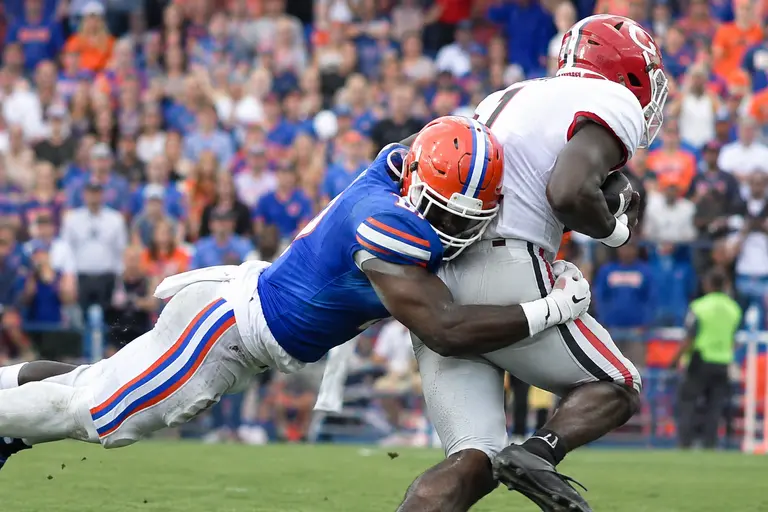
That part improved after halftime. Georgia finished with 318 total yards and 27 points, while Florida held Georgia to 101 passing yards in the second half, forced turnovers and allowed only one touchdown after halftime. Safety DJ Coleman had eight tackles and a forced fumble, while Myles Graham and Ty Jackson each had seven tackles.
Those numbers show a defense that adjusted well enough to keep the game from getting away quickly. Florida did not erase Georgia’s offense, but it made Georgia earn more after halftime. That mattered because the offense needed extra possessions and shorter comeback math. The problem was that defensive improvement could not fully offset the offensive empty stretches and penalty damage.
Penalties Cut Against The Defensive Work
Penalty discipline was another pregame focus, and it remained a problem. Florida committed eight penalties for 78 yards, including five penalties for 60 yards in the first half. In a rivalry game where Florida already had quarterback uncertainty and receiver limitations, those yards were not small details.
Penalties change drive math in both directions. On offense, they can turn a reasonable down into another long-yardage situation. On defense, they can extend possessions or reduce the value of a good early-down stop. Florida’s defense played a stronger second half, but the first-half penalty load helped Georgia operate with less resistance than the Gators could afford.
The third-down numbers also show how close the defensive plan came to doing its job. Georgia failed on all long third downs of third-and-4 or longer, going 0-for-6 in those situations. That is a strong defensive marker. It also makes the offensive and penalty issues stand out more sharply, because Florida did enough defensively in key passing-down spots to give itself a chance.
What Florida Georgia Adjustments Meant In Atlanta
The final read on Florida Georgia Adjustments is that Florida identified the right pressure points but did not solve enough of them at the same time. The quarterback switch was necessary after the early turnovers, but it was reactive. The run-game emphasis was logical, but first-down inefficiency kept the offense from controlling tempo. Receiver availability mattered, but the larger support structure around the quarterback mattered just as much.
Defensively, Florida’s staff and players found better answers after halftime. Limiting Georgia’s second-half passing yardage, forcing turnovers and holding Georgia to one touchdown after the break were meaningful signs. That does not erase the loss, but it does separate the defensive response from the offensive rhythm issues.
For Florida, the Florida Georgia Adjustments showed why this game turned on sequence. The Gators needed early offensive stability to protect a compromised quarterback room. Instead, interceptions, first-down losses and penalties pushed the offense into the hardest version of the matchup. The defense adjusted well enough to keep pressure on Georgia, but the offense did not create enough clean possessions to reward that work.
The takeaway from Atlanta is not that one position decided everything. It is that Florida’s support systems were not consistent enough around the quarterback, and Georgia forced the Gators to prove they could win early downs without full receiver strength or clean rhythm. That was the difference between having a workable adjustment plan and turning that plan into a rivalry result.