

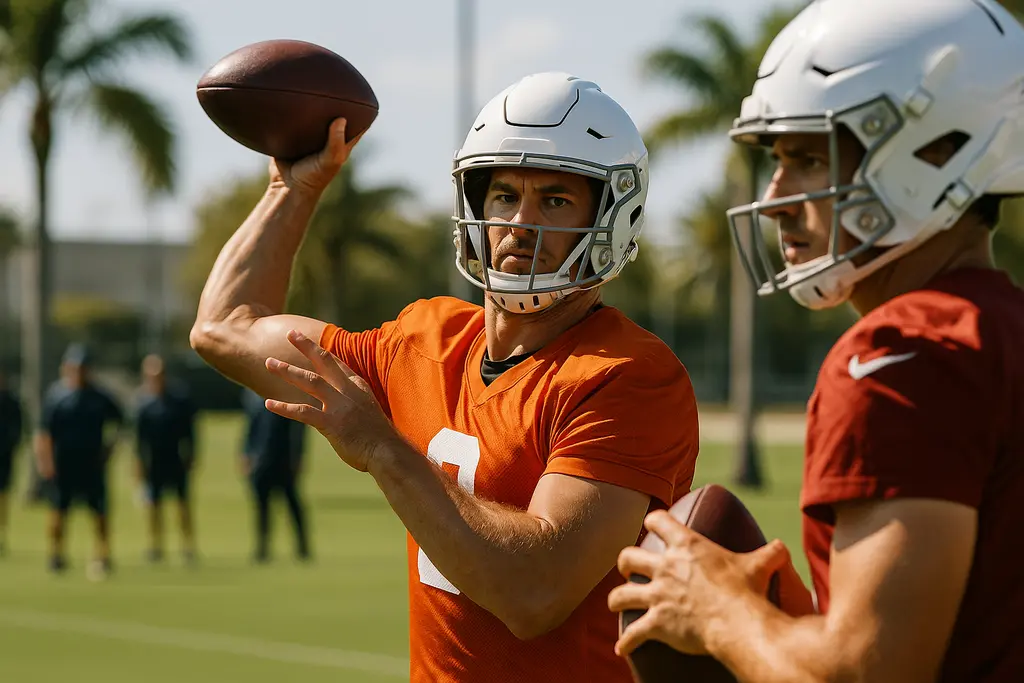
The Gators Quarterback Battle between Tramell Jones Jr. and Aaron Philo is not just a depth-chart question. It is the decision that will shape how Florida builds early downs, manages third-and-medium, calls the red zone and protects a new offensive system under head coach Jon Sumrall and offensive coordinator Buster Faulkner. The available research does not confirm a named starter, so the best read is strategic: what changes if Florida leans toward Jones, and what changes if Philo wins the job?
Florida’s spring game gave the first public reference point. In the April 11 Orange & Blue Game, Philo completed 15 of 22 passes for 180 yards and two touchdowns, while Jones completed 12 of 20 passes for 150 yards and one touchdown, according to the Florida spring game recap. Those numbers do not settle the race. They do show that both quarterbacks were functional enough in a live setting to keep the staff from being forced into a quick decision.
Where The Gators Quarterback Battle Stands
Spring Production Kept The Race Open
The spring game did not create a clean separation. Philo’s stat line showed efficiency and scoring output, while Jones was productive enough to remain firmly in the competition. The difference in completion volume and touchdown total matters, but spring games come with limited defensive disguise, controlled rotations and evaluation goals that do not always match a fall Saturday.
That is why the staff’s real question is not simply who had the better box score. It is who can carry the offense through imperfect downs. The starter will need to answer pressures, second-and-long calls, red-zone spacing and the communication load that comes with a new system. A quarterback can win a spring segment with timing throws. Winning the job requires handling the full operation.
Gators Quarterback Battle And The Call Sheet
The Gators Quarterback Battle will affect the first 15 scripted plays as much as it affects the highlight throws. If Florida starts Philo, the staff may have more reason to open with rhythm concepts, quick-game answers and progression throws tied to Faulkner’s structure, given the research note that he arrived from Georgia Tech with experience in that system. If Florida starts Jones, the plan may lean more heavily on movement throws, quarterback mobility and controlled reads that let him threaten edges while protecting the ball.
Neither path is automatically more aggressive. The difference is where the pressure is placed. With a rhythm passer, the stress moves to timing, spacing and receiver detail. With a more mobile quarterback, the stress moves to run-pass conflict, defensive eye discipline and perimeter tackling. Florida’s offensive identity will come from which stress point the coaches trust most.
How Each Quarterback Changes Game-Day Choices
Tramell Jones Jr. And Stress On The Edge
Jones remained with the program after DJ Lagway’s departure, and Sports Illustrated reported Florida had re-signed him ahead of the 2026 season in its quarterback report. The research describes Jones as a redshirt freshman known for mobility and decision-making. Those traits point toward a game plan that can make defenses defend more than the pocket.
If Jones wins the job, Florida can build more answers into early downs. Zone-read looks, boot action and half-field reads can help a young quarterback stay ahead of the chains without asking him to throw into crowded middle-field windows too often. The goal would be to make first down productive enough that third down stays manageable.
The key matchup with Jones would likely be Florida’s tackles and tight ends against SEC edge defenders. If the edge is sealed or influenced, Jones’ movement can create easier throws. If defenses set hard edges and force him to reset inside the pocket, the plan has to shift toward quick answers and checkdowns. That is where decision-making becomes more valuable than raw movement.
Aaron Philo And Tempo Through Familiarity
Philo’s case starts with spring production and the research note that he brings experience in Faulkner’s offensive system. That familiarity could matter on game day because the quarterback is often responsible for getting the offense into the correct tempo, protection and route adjustment before the snap.
If Philo starts, Florida may be more comfortable using a wider menu earlier in games. That could mean more empty looks, more formation shifts and more full-field progression concepts, if the staff trusts his command. The momentum swing in that version of the offense comes from staying on schedule: completions on first down, quick answers against pressure and red-zone throws that arrive on time.
The key matchup with Philo would be interior protection against pressure looks. A quarterback who is asked to win with timing needs a firm launch point. If the pocket is clean, he can let the structure work. If interior pressure arrives early, Florida would need built-in outlets, screens and moving pockets to avoid stalled drives.
Drive Management, Momentum And Turning Points
Why Third Down May Decide The Race
The Gators Quarterback Battle may come down to third down more than deep passing. Third-and-4 to third-and-7 is where the playbook changes. Defenses can disguise pressure, rotate late and force quarterbacks to process faster than they did in spring. Florida’s staff has to decide which quarterback gives the offense the best answer when the first read is covered.
For Jones, the answer may be extending the play or forcing defenses to account for his legs. For Philo, the answer may be anticipation and timing. Both can move the sticks, but they do it in different ways. That affects receiver routes, protection calls and even how Florida handles fourth-and-short near midfield.
This is where the quarterback decision connects to broader game-day strategy. A staff that trusts its quarterback to create off schedule may be more willing to call deeper-developing concepts. A staff that trusts its quarterback to distribute on time may be more willing to spread the field and let spacing do the work. For more on how the race can change fourth-down and pace decisions, see our related analysis on how the Gators QB battle shapes strategy.
Red-Zone Play Calling Will Show The Staff’s Trust
Red-zone possessions will reveal the staff’s confidence faster than any public comment. Inside the 20-yard line, windows shrink and quarterback runs become more valuable because they add a blocker back into the math. If Jones is the starter, Florida may be able to use more designed quarterback movement near the goal line. If Philo starts, the staff may favor quick spacing throws, tight-window timing routes and play-action concepts built from run looks.
The turning point in close SEC games often comes from one red-zone decision: run the ball into a heavy box, throw into a condensed window or use the quarterback as a runner or movement passer. The starter’s strengths will decide which option feels least risky. That is why the competition is bigger than one position. It influences the whole scoring plan.
What Florida Fans Should Track On Saturdays

Early-Down Efficiency Will Tell The Story
The best public clue will be early-down efficiency. If Florida is consistently ahead of the chains, the chosen quarterback is probably operating the offense as intended. If second-and-long becomes a pattern, the play caller will have to reduce the menu, and defenses will gain control of the rhythm.
Fans should watch the first two drives closely. Are the Gators using motion to identify coverage? Are they moving the pocket? Are they calling quarterback run tags? Are the throws coming out quickly? Those details will show whether the staff built the plan around the starter’s strengths or is still protecting unresolved weaknesses.
- First-down calls: Run-heavy, quick passing or movement-based concepts will point to the quarterback’s comfort zone.
- Third-down answers: Scrambles, checkdowns and timing throws will show how the starter handles pressure.
- Red-zone usage: Designed runs or quick-game concepts will reveal how the staff wants to finish drives.
- Tempo changes: Faster pace may signal comfort with communication and pre-snap control.
The Gators Quarterback Battle also affects roster roles around the starter. Receivers may be asked to win differently depending on the quarterback. Running backs may see more option-adjacent looks with Jones or more check-release work with Philo. Tight ends can become protection helpers, seam targets or formation tools depending on the final call.
Why The Quarterback Choice Shapes Florida Saturdays
The Gators Quarterback Battle is central because Florida is pairing a new staff with a quarterback decision after Lagway’s move to Baylor. The research points to an open competition, spring production from both passers and a system that will be built around the starter’s strengths. That combination makes the decision less about naming the most talented quarterback and more about choosing the best weekly operating system.
If the staff picks Jones, expect game plans that can use mobility to change defensive rules and create easier throws. If the staff picks Philo, expect more emphasis on timing, system command and quick answers. Either way, Florida’s opening strategy will tell local fans what the coaches trust most: quarterback movement, quarterback processing or a mix that keeps both pressure points alive.
The available facts do not support declaring a winner. They do support one clear read: the starter will shape Florida’s tempo, red-zone calls, third-down identity and risk tolerance. For a team facing a demanding SEC schedule, that choice will be felt on every meaningful possession.