

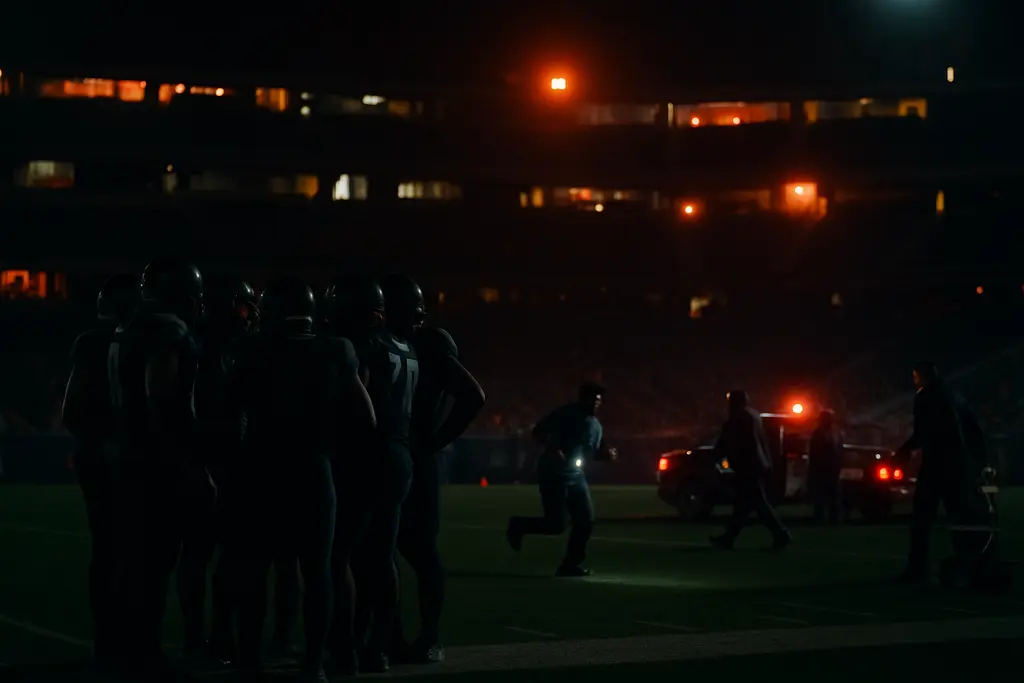
The FSU power outage was more than a stadium operations problem. It changed the rhythm around Florida State’s 27-24 loss to SMU on September 7, 2026, at Doak Campbell Stadium and put both teams into a stripped-down football environment before the first snap.
The game was scheduled for 7:35 p.m. ET but did not kick off until 9:15 p.m. ET after an electrical short in the main transformer caused a power outage, according to Field Level Media. Several systems were offline at kickoff, including coach-to-player communication devices, sideline iPads, the public address system, the scoreboard and the video boards. Officials decided there was enough ambient light to play, though many stadium functions remained dark during the first half.
How The FSU power outage Changed The Setup
The delay did not create the same challenge as a weather stoppage, where teams leave the field with a known restart process. This was a game-operation failure that touched communication, clock awareness, sideline organization and player routine. For Florida State, the key issue was not whether the outage alone caused the loss. The more useful question is how a team adapts when normal communication and information systems are reduced.
FSU power outage And Sideline Communication
With no coach-to-player communication devices and no sideline iPads available at kickoff, the game leaned harder on old-school sideline signaling, verbal relays, player recognition and pre-snap rules. That affects both sides of the ball. Offensively, play calls must be delivered cleanly without wasting tempo. Defensively, checks must be simple enough for linebackers and defensive backs to align against motion, formation shifts and down-distance tendencies.
The FSU power outage also placed pressure on game management. Without a working scoreboard or video boards, players and coaches had to depend on field officials, sideline staff and internal communication to track time, down, distance and score context. That does not excuse missed execution, but it does explain why contingency work matters. Teams that can operate without tablets, headset rhythm or board feedback reduce the number of small breakdowns that can show up later as drive-killing mistakes.
Delay Rhythm And The First-Half Test
A 1 hour and 45 minute delay forces players to restart their pregame cycle. Warmups, hydration, position meetings and emotional pacing all get stretched. In that setting, the cleaner team is usually the one that can simplify. Run the core calls. Avoid sideline confusion. Make the opponent earn each possession. Florida State did some of that through its rushing game, but the Seminoles did not pair that ground control with enough passing efficiency or third-down answers.
Why The SMU Loss Turned On Situational Football
SMU won 27-24 and produced 585 total yards, including 430 passing yards and 155 rushing yards. Florida State finished with 324 total yards, with 199 on the ground and 125 through the air, according to the FOX Sports box score. Those numbers frame the central football problem: Florida State ran the ball well enough to stay in the game, but SMU’s passing production created the larger stress point.
Third Down Separated Possession From Production
Florida State held the ball for 32:16 compared with SMU’s 27:44, but time of possession did not translate into control. The Seminoles converted only 2 of 15 third downs, while SMU converted 8 of 14. That gap matters because it changed the value of nearly every possession. Florida State could hold the ball, but it could not reliably extend drives after reaching the money downs.
That failure creates a strategic issue for the next game plan. If Florida State wants to lean on the run, it still needs manageable third downs and answers when defenses crowd the sticks. A strong rushing total can hide passing-game limits for stretches, but third-and-5, third-and-7 and late-game passing downs eventually test protection, route timing and quarterback decision-making. Against SMU, those situations tilted away from Florida State.
Kromah Gave Florida State A Base
Ousmane Kromah gave the Seminoles a clear offensive building block with 22 carries for 116 rushing yards and one rushing touchdown. That performance did not solve the passing limitations, but it gave Florida State a credible foundation. The next step is not simply giving him more carries. It is using that run threat to create cleaner second-level throws, play-action windows and easier third-down calls.
Florida State’s 199 rushing yards showed the offensive line and backs could generate enough movement to stay balanced. The problem was that balance did not become pressure on SMU’s defense. A run game becomes more valuable when it forces safeties downhill and opens throws behind them. Without that connection, long drives can become fragile: one negative play, one incomplete pass or one third-down miss ends the series.
Strategic Adjustments Florida State Can Carry Forward
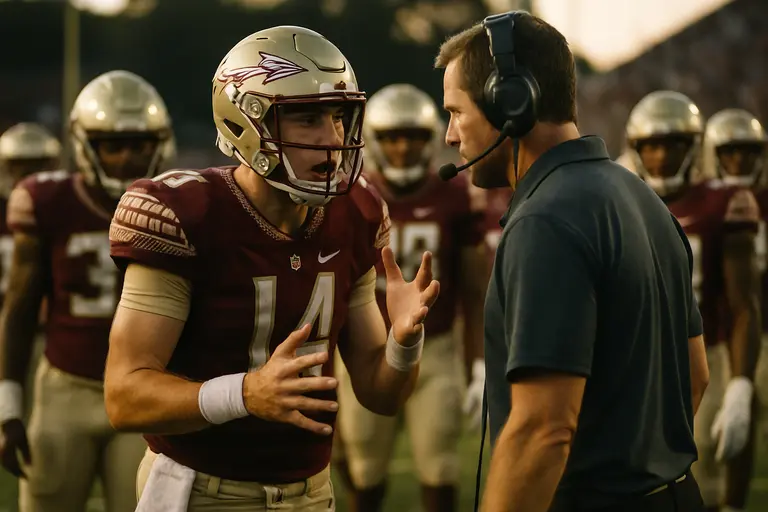
The FSU power outage should push Florida State to examine two separate areas: contingency operations and on-field efficiency. Those are connected but not identical. One is about how the team communicates when technology fails. The other is about how the offense and defense handle repeatable football situations regardless of stadium conditions.
Offensive Planning Must Help Third Down
Florida State’s third-down rate points to a need for better early-down sequencing. That can mean more throws on first down, quicker perimeter concepts, run-pass options if they fit the personnel, or route combinations that give the quarterback a defined answer near the sticks. The goal is not to abandon the run. The goal is to stop asking the run game to carry every possession without enough support.
The passing total of 125 yards is a concern because SMU had enough defensive freedom to survive Florida State’s rushing success. Future opponents will study that. If the Seminoles cannot punish loaded boxes or tight coverage near the line, defenses can play downhill and force third downs into traffic. Kromah’s production deserves to be part of the offensive identity, but it should be paired with calls that make linebackers hesitate.
Pass Defense Needs A Cleaner Stress Plan
SMU’s 430 passing yards made the defensive takeaway plain. Florida State had to defend a passing game that could generate chunk yardage even after SMU dealt with mistakes. Kevin Jennings threw three touchdown passes and two interceptions. That mix tells Florida State there were chances to change the game, but not enough stops after those chances appeared.
The defensive staff’s review should start with coverage spacing, pressure timing and answers on conversion downs. When an opponent converts 8 of 14 third downs, the issue can be coverage leverage, pass rush timing, tackling after the catch or call tendency. Without the full All-22 review, the safest read is broader: Florida State did not win enough possession downs to make SMU play from behind the chains.
- Communication plan: rehearse sideline signaling and personnel calls without tablets or coach-to-player devices.
- Third-down menu: build a smaller, faster call sheet for third-and-medium situations.
- Run-pass pairing: connect Kromah’s rushing threat to play-action and defined throws.
- Coverage response: review how SMU created passing volume and where Florida State lost leverage.
- Late-game operation: practice clock, substitution and field-position decisions without scoreboard help.
What The FSU power outage Means For Florida State
The FSU power outage will be remembered because it was unusual, visible and disruptive. For the football staff, its value is in what it exposed. Florida State needs a cleaner backup communication plan, but the larger issues from the SMU loss were third-down offense, pass-defense strain and the inability to turn possession time into scoreboard separation.
There is also a regional layer for a program in Tallahassee. Doak Campbell Stadium is not just a venue; it is a game-day hub for Florida State students, alumni, local workers and visiting fans. A delayed kickoff with limited stadium functions affects more than play calls. It affects operations, crowd information, in-game rhythm and the way a home team uses its environment.
On the field, the answer is not to overstate the outage as the reason for a three-point loss. SMU handled the same delay and the same limited setup. The sharper takeaway is that Florida State had enough rushing production and enough possession time to win, but not enough situational execution. If the Seminoles use this game correctly, the next adjustment is practical: simplify emergency operations, build better third-down answers and make the run game a starting point rather than the whole plan.