

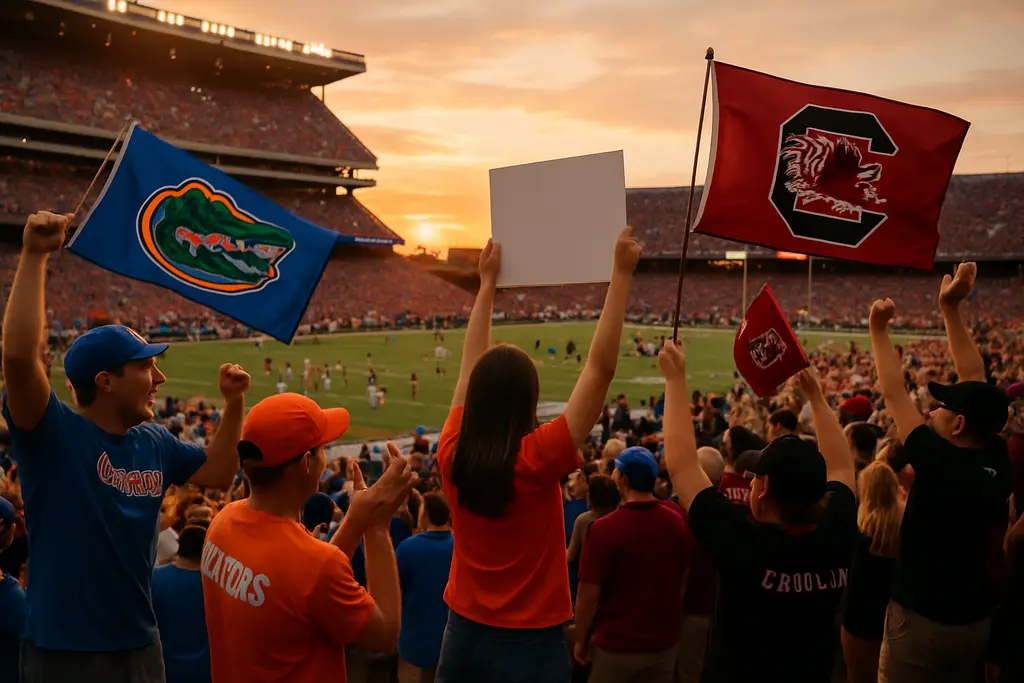
Gators South Carolina is a useful checkpoint for Florida because the matchup sits between two different reads on this team: the high-end version that climbed into the AP Top 25 after beating Ole Miss, and the less settled version that took a loss at Missouri. Florida hosts South Carolina at Ben Hill Griffin Stadium in Gainesville on Saturday, October 10, 2026, at 12:45 p.m. ET during Homecoming and GatorMade Week, according to the official Florida game center. The setup gives fans a clear question to track: can the Gators play with enough offensive rhythm and defensive control to avoid turning a favorable home setting into a tighter game than it needs to be?
Gators South Carolina Matchup Setting
Gators South Carolina Schedule Context
The date matters. Florida enters the week with a 4-1 overall record and a 2-1 mark in SEC play, based on the research notes. That record puts the Gators in a strong but not comfortable spot. The early-season ceiling was visible after Florida’s win over Ole Miss, when the Gators moved to No. 8 in the AP Top 25, as reported by AP’s Top 25 coverage. The later loss to Missouri changed the tone. It did not erase the good start, but it made the South Carolina game a response week rather than a routine home date.
Homecoming can help Florida’s energy early, but it can also create a week with more attention around the program. That makes the first quarter important. Florida does not need to force the game open immediately, but it does need clean operation: no early short-field mistakes, no busted coverages that give South Carolina easy completions, and no stalled drives caused by avoidable penalties. For more matchup background tied to the same date, our Oct. 10 South Carolina preview lays out the broader game-week context.
Series Edge And Stadium Pressure
Florida also carries the weight of series history. The official game center lists the all-time matchup at 31 Florida wins, 10 South Carolina wins and 3 ties. That edge does not decide the 2026 game, but it frames expectations in Gainesville. When Florida has the better record, the home field, and the more productive offense, the pressure shifts toward execution. The Gators do not have to invent a new identity this week. They need to play to the one they have already shown: fast scoring potential, a productive run game, and enough quarterback efficiency to keep defenses from overloading the box.
How Florida’s Offense Can Control The Game
Philo, Baugh And The First-Down Battle
The research points to an offense with balance and scoring punch. Quarterback Aaron Philo has thrown for 1,114 yards in five games, with 8 touchdown passes and 2 interceptions. Running back Jadan Baugh has already rushed for 613 yards. Florida’s team production has been just as important, with the Gators averaging 46.20 points and 491.2 yards per game through the listed sample.
Those numbers explain why Florida should be able to dictate terms if it wins first down. The offense is at its best when Philo is not living in obvious passing situations. Early run success from Baugh can create second-and-medium, which opens the playbook for run-pass options, quick throws, and shot plays off protection looks. If South Carolina has to fit extra defenders into the run game, Florida can create cleaner windows outside and between the hashes.
The key is not only explosive plays. Florida needs drive shape. Long scoring drives protect a defense that has had pass-game concerns, while quick strikes can stress South Carolina’s sideline if the Gamecocks are already struggling to answer. The best version for Florida is a mix: enough rushing volume to make South Carolina tackle repeatedly, enough vertical threat to punish aggressive safeties, and enough tempo control to keep the game from becoming uneven possession by possession.
Receiver Availability Could Shape The Passing Plan
The receiving corps bears watching because the research lists Vernell Brown III as questionable with a knee issue, Bailey Stockton dealing with a back issue, and Eric Singleton Jr. as probable with an ankle issue. Without adding anything beyond that status, the practical effect is clear: Florida may need a flexible passing plan.
If the full group is not available or is limited, the Gators can still generate efficient throws through formation, spacing, and backfield involvement. Slants, glance routes, screens, and tight-window timing throws can keep Philo ahead of the chains without requiring every drive to depend on deep completions. If South Carolina plays off coverage, Florida should be willing to take easy yards and force tackling in space. If the Gamecocks press, Philo’s accuracy and protection become the deciding pieces.
This is where the run game can protect the passing game. Baugh’s production gives Florida a base answer if the receiver rotation is not at full strength. A strong rushing start could reduce the burden on the perimeter and force South Carolina to reveal coverage intentions before the snap. For Gators South Carolina, that may be the cleanest offensive path: use the run to create passing clarity, then let Philo work from manageable downs.
Where The Florida Defense Must Tighten Up
Pass Defense Is The Main Test
The defensive concern is not vague. The research notes Florida has been better against the run than against the pass, allowing 126.4 rushing yards per game compared with 266.6 passing yards per game. That split gives South Carolina a logical target. Even if the Gamecocks have had their own offensive issues and injury questions, Florida should expect short and intermediate throws designed to stress communication, leverage and tackling.
The first defensive goal should be limiting easy completions on early downs. If South Carolina can hit five- to eight-yard gains without much resistance, third down becomes manageable and the pass rush loses impact. Florida needs tighter route distribution underneath, cleaner handoffs in zone coverage, and better tackling after the catch. The Gators do not need to play recklessly. They need to make South Carolina earn completions against bodies in position.
Pressure also matters, but not at the cost of structure. If Florida blitzes without coverage integrity, South Carolina can attack the vacated areas with quick throws. If Florida rushes four and fails to affect the quarterback, the secondary is left covering too long. The balance should be situational: bring extra pressure when down, distance and formation support it, but avoid giving away simple answers.
Third Down And Red Zone Discipline
Florida’s defense has to change the rhythm on third down. The research notes opponents have converted too often in short-yardage situations, with coverage mistakes and run-fit failures contributing. That detail matters against a South Carolina team likely to value possession and field position if it cannot match Florida score for score.
The answer starts before third down. A run stop on first down or a contested throw on second down can create third-and-long, where Florida’s athletic edge has more value. Third-and-2 is a different game. In those spots, South Carolina can run, use quarterback movement, or throw quick routes at the sticks. Florida’s linebackers and safeties must fit the run without overcommitting and leaving easy access throws behind them.
Red zone defense also carries weight. Florida’s offense has shown it can finish drives, including a 5-for-5 red-zone performance and 3-for-3 fourth-down showing against Auburn in the research notes. If the Gators repeat that type of offensive efficiency, South Carolina will need touchdowns to keep pace. Holding the Gamecocks to field-goal attempts or empty trips would shift the game toward Florida’s preferred script.
Momentum Swings Fans Should Track

Early Drives Will Set The Tone
The opening three possessions may tell fans whether Florida has handled the week properly. A clean offensive touchdown drive would settle the stadium and force South Carolina to play from behind. A defensive three-and-out would be just as meaningful because it would show immediate corrections in coverage and run fits.
The danger signs are also clear. A Florida turnover, a missed assignment in the secondary, or a special teams mistake could give South Carolina a short field and reduce the value of Florida’s offensive advantage. That is how underdog game plans stay alive: shorten the field, slow the pace, and create pressure on the favorite to answer every swing.
For Gators South Carolina, the most important momentum swing may come in the second quarter. If Florida builds an early lead, South Carolina will likely have to expand its passing game. That gives Florida’s defensive front more chances to affect the pocket. If the game remains tied or within one score, the Gamecocks can stay patient and continue testing Florida’s coverage rules underneath.
Turnovers, Penalties And Hidden Yardage
Florida’s formula should not require a perfect game, but it does require a controlled one. Turnovers would be the fastest way to undo the matchup edge. Philo’s interception total in the research sample is low, and that ball security needs to continue. Taking calculated shots is fine; forcing throws into crowded windows is how a comfortable home game becomes a fourth-quarter stress test.
Penalties can have the same effect, especially on defense. A third-down stop erased by contact downfield or a late hit would extend drives and keep South Carolina’s offense from facing the full burden of execution. On offense, pre-snap penalties can turn second-and-short into second-and-long, taking Baugh’s downhill presence out of the center of the call sheet.
Special teams should be viewed through field position rather than highlight plays. Florida does not need a return touchdown to win the hidden-yardage battle. It needs clean catches, solid coverage, and no short fields allowed. In a noon kickoff environment, early special teams discipline can help set the game’s tempo before either offense fully settles in.
Gators South Carolina Game Expectations
Fans should expect Florida to lean on offensive balance. Baugh’s rushing production gives the Gators a stable foundation, while Philo’s passing numbers show enough efficiency to punish defenses that overplay the run. The most likely successful script is not complicated: win first down, finish red-zone chances, and make South Carolina chase the game rather than manage it.
The defensive expectation should be more guarded. Florida’s run defense profile is stronger than its pass defense profile, so the Gators must be ready for South Carolina to attack space with timing throws and intermediate routes. The secondary does not have to shut everything down, but it must reduce free access, communicate through motion, and tackle immediately after the catch.
The Homecoming setting gives Florida a clear advantage in crowd energy and routine, but the game still comes down to execution. If the Gators avoid turnovers and make South Carolina drive the long field, their scoring ability should create separation. If Florida allows easy third-down conversions and gives away field position, the matchup becomes more about late-game management than it should be.
Gators South Carolina should be read as a response test. Florida has already shown a top-end version of itself, and it has already taken a conference loss that exposed areas to clean up. On October 10, 2026, the assignment is to connect those lessons: keep the offense on schedule, tighten the pass defense, and turn a favorable home matchup into a steady SEC win attempt rather than a game decided by avoidable swings.