

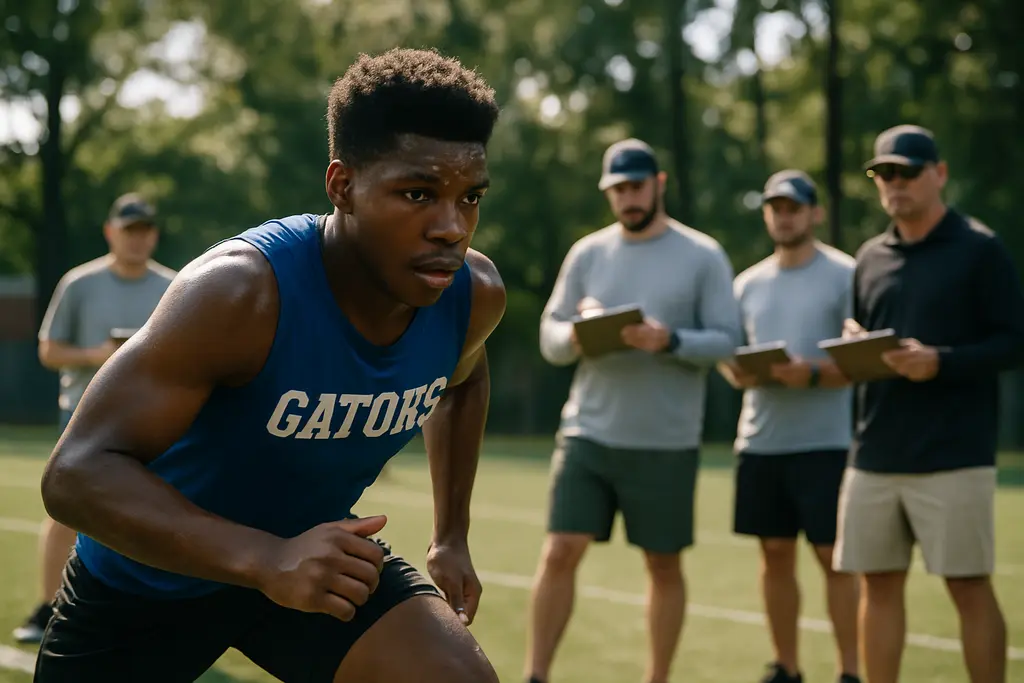
The Gators Recruiting Class for 2026 carried a clear in-state theme: Florida did not need to leave its own high school footprint to find skill talent, trench depth and defensive pieces. Based on the research provided, more than half of the class came from inside Florida, and several of the most notable names arrived from Gainesville, Lakeland, Windermere, Ocala, Fort Myers, Treasure Island and other familiar recruiting areas.
Why The Gators Recruiting Class Stayed Local
Florida’s 2026 haul mattered for more than signing-day graphics. The class arrived during a period of program adjustment under Jon Sumrall, and the in-state group helped give the staff a base that did not depend only on national reach. That point matters in Gainesville because the state’s high school football map is deep enough to fill different roster needs without stretching evaluation too far from campus.
The research notes point to a class that had national ranking momentum, with service-by-service movement described in the top-20 range and at times near the top 15. Because recruiting rankings shift by outlet and timing, the stronger takeaway is not a single number. It is that Florida’s local signees gave the staff a workable foundation across premium positions: receiver, quarterback, linebacker, cornerback, offensive line and defensive line.
Gators Recruiting Class And The In-State Core
The Gators Recruiting Class leaned on players who already knew the state’s Friday-night standard. That can help the transition from high school to college in small but real ways. Players from Lakeland, Gainesville, Fort Myers and Central Florida have faced fast athletes, multiple offensive systems and playoff-level pressure before stepping on a college practice field.
There is no need to claim that local roots guarantee early playing time. They do not. Freshmen still have to adjust to the size, speed and week-to-week demands of SEC football. What the local base does give Florida is a stronger connection between the roster and the state’s high school coaches, families and fan communities.
Justin Williams Leads The Gainesville Angle
Justin Williams is the most direct local story in the class because he came from Buchholz High School in Gainesville. His profile stands out because of both production and versatility. Florida lists Williams as a consensus four-star recruit by Rivals, 247Sports and ESPN, and his 2024 season included 1,023 rushing yards with 16 touchdowns plus 85 catches for 1,473 yards and 13 receiving touchdowns, according to his Florida signing bio.
That production matters because it was not built from one narrow role. Williams handled backfield work, receiver volume and explosive-play chances. For a college staff, that type of background can create several development tracks. He could stay primarily at receiver, be used in motion packages, or grow into a matchup piece who stresses linebackers and nickel defenders.
What Williams Brings To The Receiver Room
Williams should not be framed as an automatic freshman starter without depth-chart proof. The safer analysis is that his high school usage gives Florida options. A player who has already handled carries and a high target load brings ball skills, contact balance and spatial feel. Those traits are useful even if his first role comes through sub-packages, special teams or situational snaps.
His Gainesville connection also gives the signing added weight locally. Buchholz is minutes from Florida’s campus, and a productive hometown player choosing the Gators gives the staff a visible win in its own backyard. For fans tracking local development, Williams is the type of recruit who keeps Alachua County tied directly to Saturdays in The Swamp.
Defensive Fits From Lakeland To Windermere
Malik Morris gave Florida a linebacker with size and verified production. The research lists him at 6-foot-1 and 235 pounds, with a senior season that included 95 tackles, nine sacks and three forced fumbles. On3 reported that Morris committed to Florida on July 7, 2025, in its Malik Morris commitment story.
Lakeland has long been one of the state’s most important high school football areas, and Morris fits the kind of in-state defensive profile Florida has often valued: compact size, contact production and enough pass-rush activity to suggest more than a run-stopping role. The jump to SEC linebacker play is a major one, so the first stage of his college path should be about learning fits, coverage rules and special teams value.
Cornerback Help From Central Florida
CJ Bronaugh, from Windermere Prep, gives the class a Central Florida defensive back addition. The research identifies him as a four-star cornerback known for speed and coverage ability. That profile is useful in a league where defensive backs are tested by vertical routes, option routes and perimeter run support.
Cornerback development can take time because college receivers are stronger, route detail is sharper and penalties can turn small mistakes into drive-extending plays. Still, signing an in-state corner with a strong reputation keeps Florida active in one of the state’s most competitive recruiting areas. For a staff trying to build defensive depth, Bronaugh’s value is tied to both long-term cornerback competition and the ability to strengthen the scout-team standard early.
Trench Depth And Quarterback Development
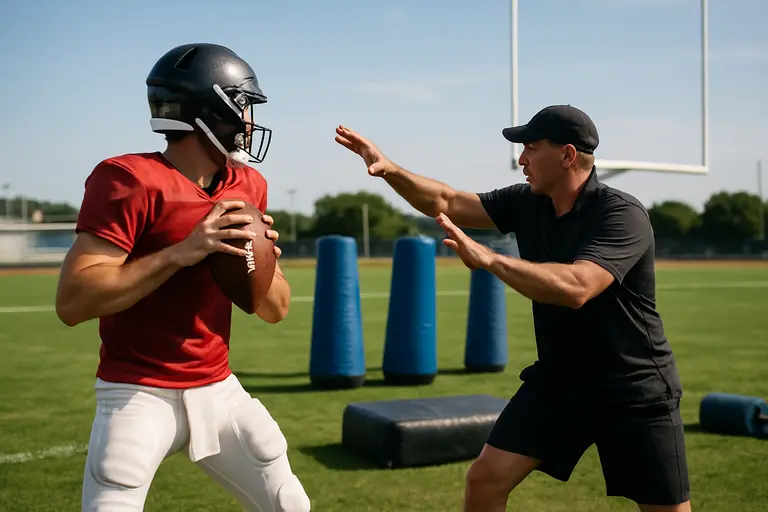
The Gators Recruiting Class also included several Florida-based linemen and a quarterback prospect, which made the local theme wider than skill positions. G’Nivre Carr came through IMG Academy after growing up in Florida, with the research placing him in the interior offensive line group. Corey Brown is described as an offensive line addition with Gainesville and Gators family ties, while Kendall Guervil from Fort Myers High School adds a defensive line body to the class.
Those trench additions should be viewed through a development lens. Offensive linemen often need time to build college strength, improve hand placement and adjust to faster defensive fronts. Defensive linemen face a similar climb with pad level, conditioning and rotation demands. If one of those players earns early snaps, that would be a bonus. The more realistic path is that they raise practice competition and give the staff more options across multiple recruiting cycles.
Will Griffin And The Long-Term Quarterback Room
Will Griffin, from Treasure Island and Jesuit, gives Florida a state-based quarterback in the 2026 group. The research describes him as a four-star quarterback with major high school production, including one of the top career passing touchdown totals in Florida history. The key word for his early role is development.
Quarterback recruiting is rarely only about the next opener. It is about stacking the room, protecting against attrition and giving the staff enough time to build mechanics, protection calls and decision-making. Griffin’s high school record gives him a credible résumé, but his college value will depend on how quickly he adjusts to defensive disguise, pocket movement and the speed of SEC windows.
Florida’s roster build also connects to player retention and portal planning. For readers tracking how high school signees fit with transfers and returning players, the site’s breakdown of Gators player retention gives helpful context on how the 2026 roster core was being assembled.
What Florida Roots Mean For This Gators Recruiting Class
For the Gators Recruiting Class, the local angle is not just a feel-good note. It affects roster identity, recruiting relationships and the way Florida sells its program inside the state. Williams connects Gainesville to the receiver room. Morris gives the defense a Lakeland linebacker. Bronaugh keeps a Central Florida defensive back in the fold. Carr, Brown and Guervil add trench bodies from Florida backgrounds. Griffin gives the quarterback room an in-state developmental option.
The practical test comes after arrival. Which players handle the weight room fastest? Who learns special teams roles? Which linemen develop enough to enter the two-deep? Which skill players earn trust without forcing the staff to shrink the playbook? Those answers cannot be assigned from recruiting bios alone.
What can be said now is that Florida’s 2026 local group gave the program a stronger state base at a key roster-building point. In a region where high school coaches, family ties and weekly competition carry real recruiting weight, keeping that much talent close to Gainesville was a meaningful step for the program.