

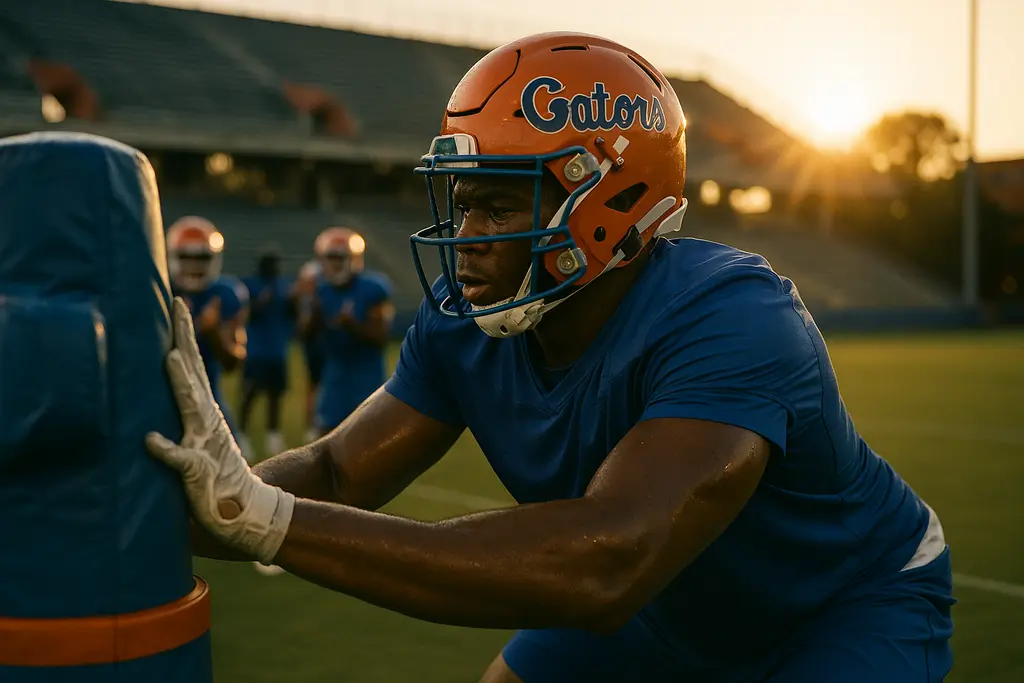
Gators Player Retention is one of the clearest roster questions around Florida football before the 2026 season because the program is not just adding players; it is trying to hold enough continuity to make those additions useful. Florida announced a 2026 newcomer group of 50 players, made up of 29 transfers, 20 high school recruits and one junior college recruit, according to the school’s official newcomers announcement. That number gives the Gators a large reset, but it also raises the main football question: how quickly can the roster become a team?
Retention is the piece that can make a heavy portal class less volatile. A transfer group can fill holes, increase competition and change the depth chart, but returning players carry practice habits, SEC experience, locker-room standards and position-room memory. For Florida, that balance matters because the 2026 roster is being shaped under head coach Jon Sumrall with a large incoming group and a need to get older without losing the local recruiting base.
How Gators Player Retention Fits The Roster Plan
Why Gators Player Retention Starts With Numbers
Gators Player Retention is not just about keeping recognizable names. It is about preserving a usable core while adding enough players to address roster stress. Florida’s 50-player newcomer group signals a major roster build. The transfer count alone gives the staff a chance to add college-ready bodies, while the 20 high school signees and one junior college addition keep the roster from becoming portal-only.
That balance matters in the SEC because depth gets tested early. A team can sign a strong high school group and still need transfers at positions where age, size and game experience matter. It can also add transfers and still need young players to develop over multiple seasons. The retention piece connects those two tracks. Returning players help set the baseline for what the newcomers are walking into.
Florida’s transfer activity has been tracked by On3 on its 2026 Florida transfer page. The page reflects the scale of the portal work, which is the clearest public signal that Florida used the transfer market as a major roster-building tool. The school’s official count confirms the full newcomer mix, but the transfer tracker gives fans a position-by-position way to follow the portal part of the build.
Where The Newcomer Mix Changes The Depth Chart
The size of the class points to competition across the roster rather than a small patch job. With 29 transfers, Florida can target immediate help. With 20 high school recruits, the staff can still protect the developmental pipeline. With one junior college recruit, the Gators add another route for a player who may arrive with more physical maturity than a high school signee.
The public data does not prove which players will win jobs, and it should not be treated that way before practices sort out roles. What it does show is that Florida is building with volume and variety. That puts pressure on retention because the returning group must give the staff a starting point. Without that, a large class can become a collection of new pieces with no shared reference point.
Why Transfers And Returners Have To Work Together
Transfer Additions Need A Returning Standard
Portal additions can improve a roster quickly, but they also enter with different terminology, training habits and game backgrounds. A retained core gives them a clearer standard. That matters for offensive linemen learning calls, receivers adjusting to timing, tight ends handling formation shifts and defenders fitting into run-game rules. The more the returning players can carry the day-to-day expectations, the faster newcomers can compete for meaningful snaps.
For Florida fans, the number to remember is not only 29 transfers. It is 50 newcomers. That is a massive amount of roster movement in one cycle. A staff can sign that many players, but the fall product depends on how the team absorbs them. Retention helps turn addition into depth instead of simple turnover.
This is also why internal roster planning has become a year-round topic. Florida’s portal moves connect directly to the broader roster debate covered in our look at how Florida Gators transfers shape the 2026 path. Transfer volume tells part of the story, but returning players decide how stable the week-to-week operation feels once camp begins.
Staff Familiarity Can Shorten The Adjustment Period
The research notes point to staff familiarity as part of Florida’s approach, with existing relationships helping the Gators attract transfers. That is a practical strategy, not just a recruiting pitch. If a player knows a coach’s system, practice language or expectations, the transition can be shorter. That does not guarantee production, but it can reduce the amount of time spent on basic installation.
There is still uncertainty. Fans should be careful with claims about how fast any transfer will adjust until the staff and players go through practices, scrimmages and game reps. Familiarity can help, but college football still tests durability, role acceptance, communication and weekly preparation. The best version of Gators Player Retention is not one that blocks newcomers. It is one that gives them a stable environment to earn roles.
Roster Continuity And Florida Recruiting

High School Recruits Still Matter In A Portal Cycle
Florida’s 20 high school recruits in the official newcomer group are important because the Gators still have to build from the state and region. The transfer portal can solve short-term problems, but high school recruiting remains the route for multi-year development. A strong retained roster can help those young players avoid being rushed before they are physically or mentally ready.
That is especially relevant in Florida, where high school football produces prospects who grow up watching SEC and in-state rivalries. The Gators cannot treat the portal as a replacement for that pipeline. They need high school signees to see a path. Retained veterans can help by setting examples in meetings, weight-room work and special teams roles before younger players become starters.
Retention Protects Against Annual Roster Reset
Heavy roster movement can become normal in the portal era, but programs still need continuity. If too many contributors leave each year, the staff has to rebuild communication and depth from scratch. Retention lowers that risk. It allows position coaches to install corrections instead of re-teaching the same foundation every offseason.
Florida’s roster work also ties into the broader question of how player movement rules affect development. The issue is not only who enters or exits the portal. It is how roster managers plan around scholarship limits, timing and player roles. That context is part of why Gators transfer rules shape roster development is a relevant companion topic for this cycle.
Why Gators Player Retention Matters In 2026
Gators Player Retention matters in 2026 because Florida’s roster math is aggressive. The Gators have confirmed 50 newcomers, including 29 transfers, and that kind of movement can reshape competition across nearly every position room. The upside is clear: more options, more experience from the portal and more young talent for the future. The risk is also clear: too many new pieces can slow chemistry if the returning core is not strong enough.
For Florida fans, the most useful way to track the offseason is to watch how the staff pairs returners with newcomers. Which position rooms have enough returning leadership? Which transfers arrive with a clear path to snaps? Which high school recruits can develop without being forced into early pressure? Those answers will say more about the 2026 team than the raw newcomer count by itself.
The Gators’ retention strategy should be judged by function. If returning players hold standards, transfers fill real needs and young recruits get a clear development path, Florida’s large 2026 class can become a foundation rather than a reset. That is the football value of keeping a core in place while still using the portal with purpose.