

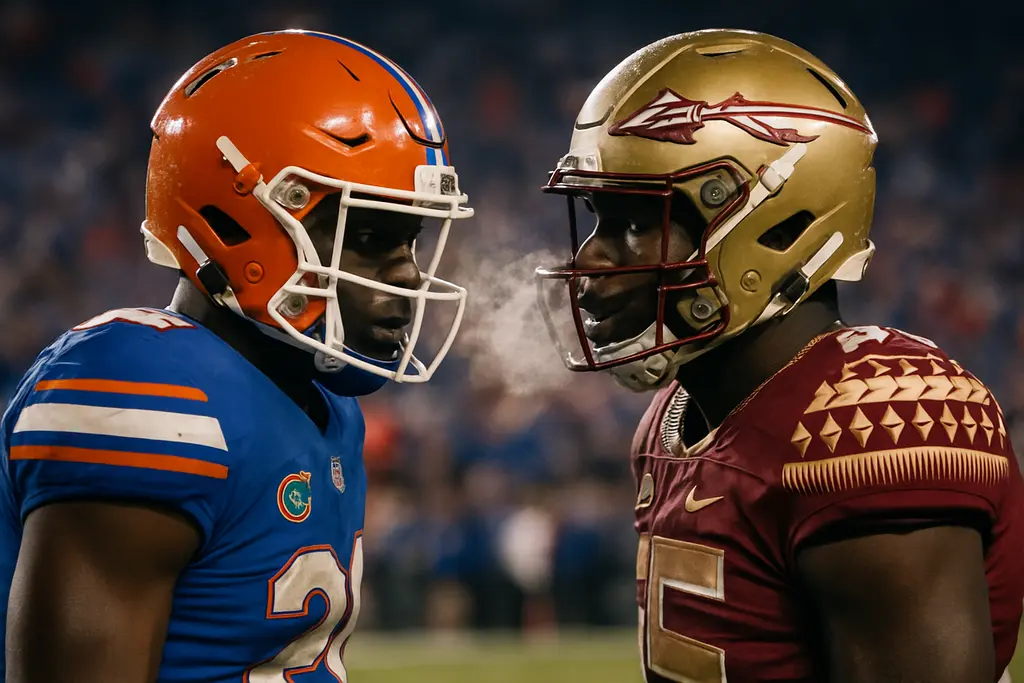
The Florida FSU clash on Friday, November 27, 2026, in Tallahassee carries more than the usual rivalry edge because both programs entered this cycle trying to prove that late-season football can still show direction. Florida had the cleaner recent result in the series, beating Florida State 40-21 on November 29, 2025, in Gainesville, while Florida State spent the following offseason under pressure after consecutive losing seasons. That puts the next meeting in a clear football frame: which team can control the line of scrimmage, protect fourth-down situations, and avoid letting last year’s problems repeat?
Why The Florida FSU Clash Matters Now
Florida and Florida State do not need much context to make the final regular-season meeting matter across the state. In 2026, the context is unavoidable. Florida’s 2025 season ended at 4-8, but the Gators closed it with a rivalry win that gave them something specific to carry into the offseason. Florida State, which entered that 2025 game at 5-7, had a different problem: the Seminoles lost the game and continued a two-year slide that placed greater pressure on the staff entering 2026.
The 2026 meeting was scheduled for Friday, November 27, at 3:30 p.m. ET in Tallahassee. That date gives both staffs a fixed endpoint for regular-season evaluation. It also changes the rhythm of game-week preparation, with a Friday kickoff compressing recovery and final installation by one day compared with the traditional Saturday slot. For fan-planning context around the same date, this site has tracked the Nov. 27 rivalry meeting from a local schedule angle.
Florida FSU Clash Pressure Points
The Florida FSU clash starts with pressure, not pageantry. Florida’s 2025 victory did not erase the broader issues from a 4-8 season, but it did show a path that was repeatable: lean on the run game, extend drives, finish short fields, and convert defensive stops into immediate points. Florida State’s pressure was different. A Washington Post preseason report described Mike Norvell as being under strain in his seventh year after two losing seasons in a row and a combined 7-17 ACC record across the previous two seasons Washington Post preview.
That kind of pressure tends to show up in decision-making. Fourth-and-short calls, red-zone sequencing, and early-down run-pass balance become markers of confidence. In a rivalry game, emotion is obvious, but the cleaner indicator is whether the offense stays on schedule and whether the defense can force the opponent into the least comfortable part of the call sheet.
The Schedule Context
The Friday kickoff in Tallahassee also places the game in a different operating window. Travel, walkthrough timing, and short-week preparation can all affect how deep a staff wants to go into the plan. A team with a stable identity can narrow the menu and play fast. A team still searching for answers can become reactive, especially if the opening quarter produces an early deficit or a failed fourth-down try.
For Florida, the central question is whether the 2025 formula was a one-game answer or a broader identity clue. For Florida State, the question is whether the Seminoles can handle the leverage moments that turned against them in Gainesville.
What The 2025 Tape Changed
The 2025 game gave both sides a clear teaching tape. Florida won 40-21, but the score alone does not explain why the game turned. The Gators controlled the ball for 34:42 to Florida State’s 25:18, gained 440 total yards to FSU’s 407, and turned two fourth-and-1 stops into touchdowns, according to Florida’s official game recap official Florida recap. Those details matter because they point to game control rather than a single explosive stretch.
The Seminoles moved the ball enough to reach 407 total yards, so Florida’s defense was not simply shutting down every series. The difference was situational football. Florida State could gain yards between the 20s, but Florida won the short-yardage moments that decide possession value. When a fourth-and-1 fails, the lost yard is not the only damage. The defense comes off the field with energy, the offense starts with a short field or a momentum push, and the play-caller on the other sideline has to think about that failure the next time the same situation appears.
Baugh And The Ground Game
Jadan Baugh was the central figure in that 2025 result. He carried 38 times for 266 yards and two touchdowns, and he became the first Florida player since 2015 to surpass 1,000 rushing yards in a season. That kind of workload shaped the game in two ways. First, it kept Florida in manageable down-and-distance. Second, it prevented Florida State from consistently dictating personnel, because the Gators could keep the same run threat alive across different formations.
For the 2026 meeting, the lesson is less about copying the exact stat line and more about understanding the stress point. If Florida can again force Florida State to tackle repeatedly in the box, the Gators can reduce the number of long-yardage snaps that invite pressure. If Florida State can win early downs, the Seminoles can push Florida into more obvious passing situations and make the game less comfortable for the Gators’ offensive structure.
Fourth-Down Stops
The two fourth-and-1 stops from 2025 are the cleanest turning points. They were not isolated defensive highlights; they became possession swings because Florida converted them into touchdowns. That is the kind of sequence that changes play-calling for the rest of a rivalry game. A coach who fails once on fourth-and-short might still trust the call. A coach who fails twice and gives up touchdowns after both stops has to weigh every later decision against field position and game state.
That is why short yardage should be one of the first areas to study in the Florida FSU clash. It connects line play, quarterback handling, backfield timing, defensive interior fits, and perimeter constraint. A single yard can define whether a drive continues or becomes the play everyone discusses for a year.
Matchups That Can Swing November 27

The matchup will be shaped by whether Florida can keep the game physical without becoming predictable, and whether Florida State can generate enough offensive answers to avoid repeated high-pressure downs. The 2025 numbers show that FSU gained yards, but the Gators had the better situational profile. That contrast should be central to the next meeting.
Florida’s Run Game Against Florida State’s Front
Florida’s clearest 2025 advantage was the run game. Baugh’s 38 carries were not just volume; they were a statement that the Gators could stay committed without falling behind the chains. In Tallahassee, Florida State’s front will have to prove it can set edges, fit interior gaps, and tackle with enough consistency to stop second-and-medium from becoming Florida’s base operating mode.
If Florida keeps creating four- and five-yard early-down runs, the Gators can protect the quarterback and shorten the game. That does not guarantee control, but it tilts the play sheet toward balance. If Florida State forces enough second-and-long snaps, the Seminoles can change the rhythm and make Florida throw into more defined coverage and pressure looks.
Lagway’s Efficiency And Red-Zone Answers
DJ Lagway’s 2025 line was efficient rather than explosive: 15 completions on 24 attempts for 168 yards with three short touchdown passes. That profile fit the game because Florida did not need to chase chunk plays once the run game and field position were working. The passing game functioned as a finishing tool, especially near the goal line.
That is a useful reference point for 2026. Florida does not have to build the entire plan around vertical passing if the run game is creating scoring chances. Florida State, though, can force a different type of game if it takes away the direct run path and makes Florida complete intermediate throws before the red zone. The Seminoles’ defensive discipline in condensed space could decide whether Florida finishes drives with touchdowns or leaves possessions unresolved.
Florida State’s Offensive Response
Florida State’s 407 yards in the 2025 loss show that the Seminoles were capable of moving the football. The issue was turning that production into enough scoreboard pressure. Against Florida, empty yards can become costly because the Gators showed they could answer sudden-change chances with touchdowns. Florida State’s offensive response in 2026 needs to be cleaner in short yardage and more stable in drive-ending situations.
For the Seminoles, the best answer is not simply tempo or aggression. It is reducing the number of plays where one missed block or one interior loss kills a possession. If FSU can win on first down and avoid fourth-and-1 stress, the game changes. If not, the same pressure points from Gainesville can resurface in Tallahassee.
What The Florida FSU Clash Says About Control
The Florida FSU clash is ultimately a control game. Florida controlled time of possession in 2025, controlled key fourth downs, and controlled the late-season narrative by getting the rivalry result despite a difficult record. Florida State had enough yardage to stay competitive, but not enough situational success to change the outcome.
That is why the 2026 meeting should be read through drives, not slogans. The first three possessions will reveal whether Florida can reproduce the physical approach that worked in Gainesville. They will also show whether Florida State has corrected the short-yardage and finish-drive issues that made last year’s loss so damaging.
For Florida fans, the useful lens is progress. A repeat of the 2025 formula would suggest the Gators have found a dependable rivalry-game identity built on rushing volume, clock control, and red-zone execution. For Florida State fans, the useful lens is response. A stronger performance in fourth-and-short, tackling, and possession finishing would indicate that the Seminoles have addressed the problems that defined the previous meeting.
Rivalry games often get framed by emotion, but this one is better understood through structure. The team that wins early downs, handles fourth down without panic, and turns field position into touchdowns will shape the night. That was the story in Gainesville on November 29, 2025. In Tallahassee on November 27, 2026, the same areas should tell the clearest story again.