

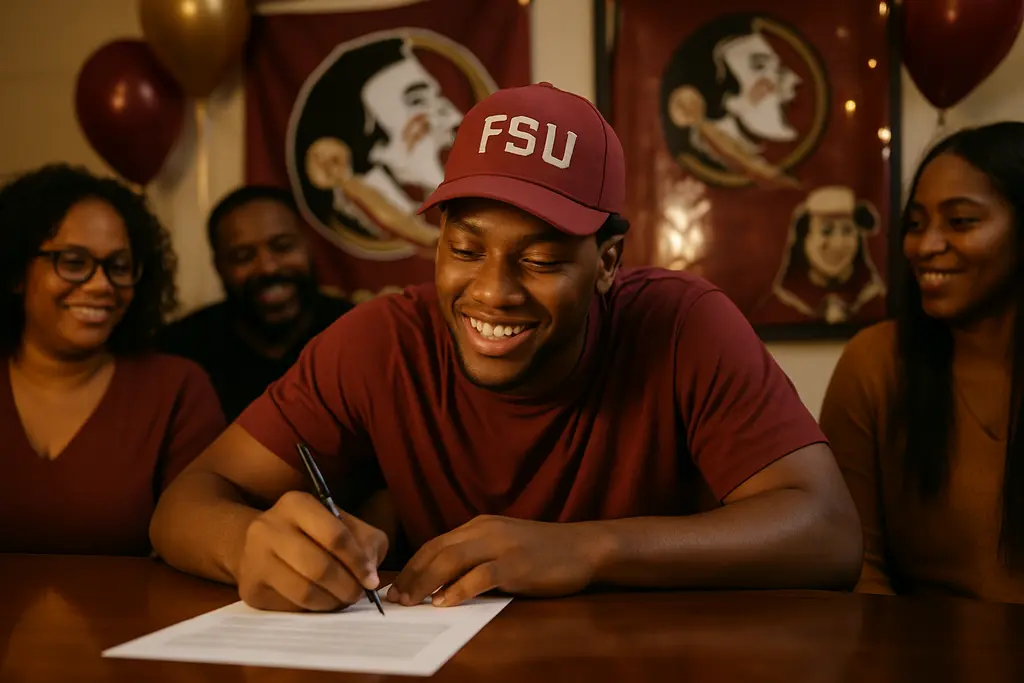
The Za’Kari Johnson Commitment gave Florida State a July 2026 pledge from a South Florida athlete whose profile fits the modern defensive back room: long enough to project outside, skilled enough to move around, and experienced enough on both sides of the ball to keep multiple college pathways open.
Johnson verbally committed to Florida State on July 14, 2026, after reclassifying from the 2028 recruiting class to the 2027 cycle, according to SI’s commitment report. That timing matters because it moved his recruitment onto a faster clock and placed him into the group FSU is building for the 2027 roster.
Za’Kari Johnson Commitment And FSU’s Florida Bet
Za’Kari Johnson Commitment Came With Local Value
The Za’Kari Johnson Commitment was not just another out-of-state board win or a late national search. Johnson’s high school path has been based in Florida, including time at Plantation High School and a move to Miami Carol City High School for his senior year, as reported by On3’s commitment report. For Florida State, that keeps the evaluation tied to a familiar South Florida recruiting base.
That base matters because Miami-Dade and Broward players are often evaluated against strong skill-position depth. Johnson’s background as a quarterback, runner and defensive back gives evaluators more film angles than a single-position prospect. It also gives FSU room to watch how his body and role settle after the move to Miami Carol City.
His listed size varies by source, with research notes placing him around 6-foot-1 and between 175 and 196 pounds. That range should be read with caution because high school measurements can shift across camps, rosters and recruiting services. Still, the general frame points toward the defensive back or athlete projection that has followed his recruitment.
Why Reclassification Changed The Timeline
Johnson’s move from the 2028 class to the 2027 class made his 2026 senior prep season more meaningful for Florida State’s staff. Instead of tracking a younger prospect with two full high school seasons left, FSU had to treat him as a player much closer to signing-cycle decisions, senior film review and continued contact from other programs.
That is where the timing of the verbal pledge matters. A commitment in July 2026 gave Florida State a public spot in his recruitment before the heart of his senior season. It did not end the process, because verbal commitments are not binding, but it did give the Seminoles a clear position with a player who had finalists that included Miami, Auburn, Syracuse and Georgia Tech.
Position Fit For A Reclassified Athlete
Two-Way Production Supports The Athlete Label
The available production from Johnson’s 2025–2026 junior season explains why he has been viewed as more than a one-role player. On offense, the research notes credit him with 551 passing yards, seven passing touchdowns and three interceptions. They also credit him with 777 rushing yards and nine touchdowns on 73 carries, which comes out to more than 10.6 yards per carry.
Those rushing numbers are useful for defensive projection because they show open-field burst and contact balance, even though they came from an offensive role. A defensive back prospect who has carried the ball, created explosive plays and handled quarterback responsibilities may bring better route anticipation and ball-tracking feel. That does not guarantee a college position, but it helps explain the athlete label.
Defensive Traits Are The Long-Term Read
On defense during that same 2025–2026 season, the research notes list 10 tackles, four pass breakups, one interception returned for a touchdown and one fumble recovery. The volume is not the same as a full-time defensive-only prospect, so the projection depends heavily on traits and senior-year usage rather than raw defensive totals alone.
- Coverage range: Pass breakups and 7-on-7 work point to a player being evaluated in space.
- Ball skills: An interception returned for a touchdown adds evidence of return ability after the catch.
- Offensive background: Quarterback and rushing production can help with route recognition and angles.
- Senior-year setting: Miami Carol City film gives evaluators another South Florida sample before the cycle tightens.
The July 2026 305Sports Invitational 7-on-7 event in Miami added another evaluation point, with research notes crediting Johnson for multiple pass breakups and an interception. 7-on-7 results should not be treated as a full substitute for Friday-night tackling, run support or block destruction, but they can show how a defensive back sees routes and competes at the catch point.
Recruiting Stability After The Verbal Pledge
FSU Still Had To Protect The Pledge
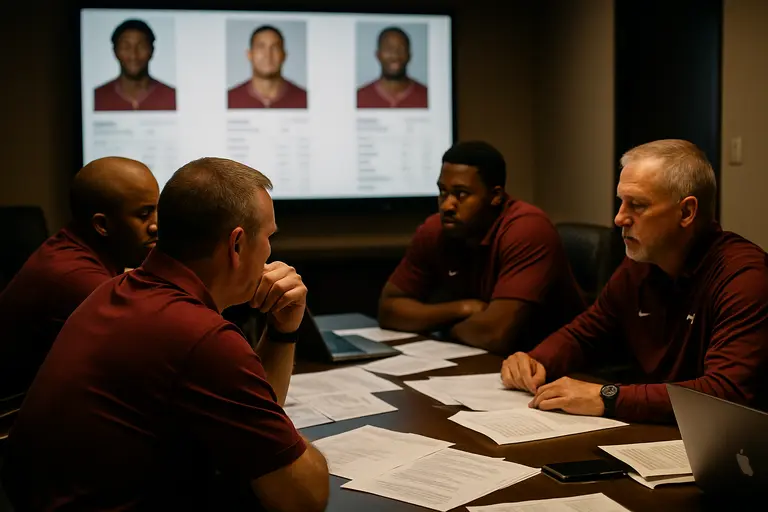
The Za’Kari Johnson Commitment remained a verbal pledge as of October 8, 2026. That distinction is key in any 2027 recruiting discussion. A verbal commitment gives the school recruiting momentum and gives the player a public direction, but it does not prevent other schools from staying in contact or pushing for visits.
Research notes from late September 2026 indicated that schools including Miami and Texas A&M were still connected to his recruitment after a visit with the Hurricanes. That does not mean a flip happened. It means FSU’s task after July 14 was retention as much as celebration. The staff had to keep building the relationship through senior-year evaluation, role clarity and communication with Johnson’s camp.
This is part of a wider in-state recruiting pattern. Florida prospects who move schools, reclassify or carry multi-position value often stay under pressure from regional programs deep into a cycle. That development pressure connects with the broader shift in Florida HS recruiting, where retention and player fit have become as important as early identification.
Rankings Help Frame, But Film Decides Fit
Research notes list Johnson as a four-star athlete and cite 247Sports composite placement from July 2026 at No. 349 nationally, No. 21 among athletes and No. 31 in Florida. The notes also say Rivals had him No. 9 nationally among athletes, No. 24 in Florida and No. 296 nationally overall.
Those rankings create context, but Florida State’s evaluation should still be judged by fit. If Johnson grows into a defensive back role, the questions are straightforward: Can he cover with enough discipline against Power Four receivers? Can he tackle consistently? Can his offensive instincts translate into turnovers? Can he handle a defined college position after being valued for versatility in high school?
Why The Za’Kari Johnson Commitment Matters In Florida
The Za’Kari Johnson Commitment matters because it sits at the intersection of three trends Florida football fans track closely: South Florida recruiting battles, athlete projections and the speed of reclassification decisions. FSU gained a player with verified local ties, a public July 2026 commitment date and a profile that can be evaluated through both senior film and prior two-way production.
For Florida State, the pledge gave the 2027 class another in-state skill athlete at a time when roster building depends on keeping pace with local competition. For Miami and other regional programs, his recruitment showed why a verbal commitment does not stop contact, especially when a player is still playing his senior year in South Florida.
The most grounded read is simple: Johnson gave FSU an early win, but the football evaluation remained active after the pledge. His final college fit depends on how his senior season at Miami Carol City sharpened the defensive back projection and how firmly Florida State held the relationship through the rest of the 2027 cycle.