

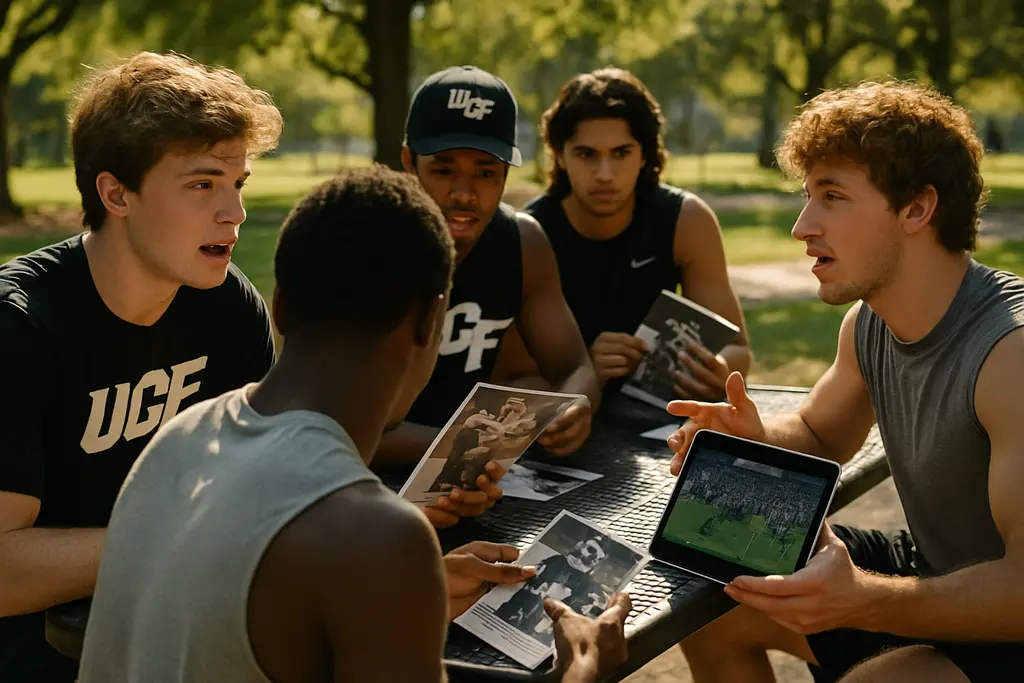
The UCF recruiting opener against Bethune-Cookman on September 3, 2026, gave the Knights more than a first-game stage. It gave the staff a live recruiting setting for prospects from the 2027, 2028 and 2029 classes, with local high school players able to see game-day operations, crowd energy, roster usage and scheme presentation in one night.
As of September 7, 2026, the main value is not measured by public commitments. It is measured by access, timing and the type of on-campus impression UCF created. A September visit can frame the rest of a prospect’s fall, especially for players close enough to return for future games, practices or unofficial visits. The Knights did not need to sell a projection only; they had a completed game, a full stadium setting and a decisive on-field result to discuss with recruits after the opener.
What The UCF Recruiting Opener Showed
UCF Recruiting Opener Audience And Timing
UCF welcomed 16 high school prospects from the 2027, 2028 and 2029 recruiting classes to the home opener against Bethune-Cookman at Acrisure Bounce House, including Orlando Jones defensive tackle Noah Robinson and Lake Wales receiver Kaneilius Purdy, according to Yahoo Sports. That list mattered because it leaned into future-cycle recruiting rather than only short-term roster needs.
For a Florida program trying to strengthen its in-state reach, early contact with underclass prospects can matter before rankings, visits and offer boards settle. The UCF recruiting opener placed those players around the program before many of them reach the heaviest part of their recruitment. That gives UCF a chance to build familiarity while the players and their families can still compare distance, comfort and development plans without a rushed signing-period clock.
Why The Opponent Still Mattered
The opponent was Bethune-Cookman, but the recruiting value was not limited by the matchup. For prospects, an opener can show how a staff handles rotations, tempo, sideline communication and young-player opportunities. UCF defeated Bethune-Cookman 73-6 on September 3, 2026, tying the school record for points in a game and setting a new program record for largest margin of victory, according to the research provided.
That result does not automatically move a recruit’s board. It does, however, give the staff a clean evaluation night to reference. Offensive production, multiple scoring contributors and a controlled defensive showing are easier to explain to a receiver, quarterback, defensive back or lineman when those examples just happened in front of him. The key is whether UCF follows the visit with specific position plans rather than broad praise.
Roster Presentation For Prospects
Offense, Transfers And Scheme Fit
CBS Sports framed the matchup as UCF debuting a revamped offense against Bethune-Cookman, with transfer pieces such as quarterback Alonza Barnett III from James Madison and receiver Josh Derry from Monmouth part of the broader offensive reset in its opener preview. For recruits in attendance, that was one of the most relevant parts of the night.
Transfers can affect recruiting in two ways. They can close paths if a position room looks overloaded, or they can prove a staff has a clear plan for skill usage. In this case, the opener gave UCF a chance to show how incoming players fit into a wider offensive structure. That matters to high school prospects who want to know whether a program will use their skill set or ask them to wait behind a long line of short-term additions.
UCF’s 2026 recruiting class also included Booker High wide receiver Tyren Hornes, described in the research as a four-star receiver ranked No. 74 in the ESPN Top-300 final list. His listed high school production — 802 receiving yards, 12 touchdowns and WR MVP honors at Under Armour Next Camp — gave UCF another example of the type of playmaker it has already attracted. The UCF recruiting opener could help connect that message: high school receivers can stay in Florida, enter a Big 12 program and see an offense trying to expand its profile.
Defensive Continuity In The Visit Pitch
The defensive side also gave UCF a selling point. The research notes that UCF returned multiple starters from a 2025 pass defense that ranked third in the Big 12 and 22nd nationally at 185.1 passing yards allowed per game. Cornerbacks Jayden Bellamy and Antione Jackson, safety Demari Henderson and nickel Braeden Marshall were among the returning names listed.
For defensive recruits, continuity matters because it can point to position teaching, role clarity and trust between players and coaches. A prospect visiting on September 3 could see whether the defense communicated well and whether the staff leaned on experienced players in a way that matched its recruiting message. The large margin of victory also allowed UCF to present depth as part of the discussion, though any specific playing-time projection would still be uncertain.
Central Florida Pipeline Stakes

Local Prospects In The Building
UCF’s recruiting advantage starts with geography. Orlando, Polk County, Tampa Bay, the Space Coast and the I-4 corridor produce enough high school talent that the Knights do not need every local player to leave the state for Power Four exposure. Hosting players such as Robinson from Orlando Jones and Purdy from Lake Wales tied the event directly to Central Florida’s high school map.
That local angle is not just about convenience. Families can attend more games. High school coaches can keep stronger relationships with college staff. Prospects can compare the feel of a home program with out-of-state options without losing sight of competition level. For UCF, the UCF recruiting opener worked as a proof point: the program could bring local players into a packed venue and show them what Saturdays in Orlando can look like.
How Transfer Timing Changes High School Conversations
The transfer portal has changed how high school prospects evaluate depth charts. A player no longer looks only at the current roster and the next signing class. He also has to consider how many transfers a staff may add after spring practice or after a coaching change. That is why UCF must explain where high school development fits beside portal additions.
That same issue has shaped broader Central Florida roster planning, where staffs balance immediate needs with long-term high school relationships. For UCF, a strong opener can help if it shows transfers contributing without making the high school path look blocked. The best recruiting pitch is not simply that transfers can play; it is that the staff can define roles across classes.
Why The Bethune-Cookman Visit Window Matters
Recruiting Takeaway After September 3
The Bethune-Cookman visit window mattered because it combined timing, proximity and evidence. The game marked the 20th season at Acrisure Bounce House, drew 43,127 spectators according to the research, and gave prospects a high-energy night early in the fall. Those details can help UCF’s staff keep conversations active with recruits who were already close enough to make the trip.
The strongest takeaway is still measured with caution. No single game-day visit guarantees a commitment, and public recruiting movement should not be assumed until a player announces it. What UCF did gain was a strong reference point for future contact. Coaches can discuss the 73-6 result, the offensive debut, the defensive continuity and the in-stadium experience with players who saw it in person.
For a program trying to keep more Central Florida talent connected to Orlando, the UCF recruiting opener gave the Knights a useful start. The next step is follow-up: position-specific communication, honest depth-chart talks and more chances for local prospects to see how UCF develops players beyond one strong September night.