


Gators Roster Dynamics changed the moment Florida moved from Billy Napier to Jon Sumrall. The Gators hired Sumrall on Nov. 30, 2025, as the 31st head coach in program history, replacing Napier WRUF report. That kind of change does not stay inside the head coach’s office. It affects player retention, transfer targets, high school recruiting, position fit and the way every scholarship spot is valued before the 2026 season.
Florida’s reset is not just about adding names. It is about sorting a roster after a coaching transition while the transfer portal and NCAA rules keep placing tight deadlines on staff decisions. For Gators fans, the key question is not whether the roster looks different. It is whether the new staff can turn movement into workable depth.
How Gators Roster Dynamics Changed Under Sumrall
A Coaching Change With Roster Consequences
A head coaching change creates two roster tracks at once. The first is retention: convincing current players that their role, development plan and trust level can survive the transition. The second is replacement: identifying where departures leave immediate holes and where the transfer portal can raise the floor.
Sumrall inherited both challenges. WRUF described the start of the Sumrall era through transfers, departures and returners, and also reported that Florida replaced nearly all previous coaching personnel after the hire Florida roster update. That staff turnover matters because a player may have signed with Florida for a position coach, a coordinator, a scheme or a development relationship. When those pieces change, the roster conversation starts over.
Staff Turnover And Player Fit
Roster fit is often the first hidden effect of a coaching change. A linebacker who fit one defensive structure may be evaluated differently by a new staff. A receiver’s value can shift if the offensive approach changes. Offensive linemen, tight ends and defensive backs can see their roles move based on technique priorities and practice standards.
That is why Sumrall hiring analysis matters beyond the announcement itself. A new coach brings a new evaluation lens. Florida’s roster is not only being judged by past production. It is being judged by how each player fits the next version of the program.
Transfer Portal Pressure Points
Gators Roster Dynamics And Portal Triage
The transfer portal became Florida’s fastest tool for repairing depth. Sports Illustrated reported that the new Gators staff hosted more than 40 portal prospects and that Florida faced more than 30 departures, including 25 scholarship players, ahead of the 2026 season SI portal report. Those numbers show why the portal work could not be casual. Florida had to identify needs, host targets, compare fit and protect scholarship balance in a short span.
For Gators Roster Dynamics, the phrase that matters is triage. Not every open spot carries the same urgency. Some losses can be absorbed by younger players already in the building. Others require an older transfer who can practice immediately and compete for snaps. A staff that adds too many short-term players can slow high school development. A staff that adds too few can enter SEC play exposed at thin positions.
What The Departure Count Signals
Over 30 departures is not a minor roster adjustment. It signals a reset in role distribution, leadership structure and practice competition. The scholarship-player portion of that movement is especially important because those are players occupying planned roster capital. When 25 scholarship players leave, the staff must decide how many spots go to transfers, how many go to high school signees and how many are saved for later roster needs.
| Roster Area | Verified Development | Practical Effect |
|---|---|---|
| Head Coach | Jon Sumrall replaced Billy Napier as Florida’s head coach. | Every returning player is re-evaluated through a new staff plan. |
| Staff | Nearly all previous coaching personnel were replaced after the hire. | Position relationships and scheme fit became immediate retention issues. |
| Portal | Florida hosted more than 40 portal prospects during the cycle. | The staff used visits to address roster gaps quickly. |
| Departures | Florida faced more than 30 departures, including 25 scholarship players. | Depth management became central to the 2026 build. |
That makes Gators Roster Dynamics less about headline additions and more about balance. Florida needs enough portal help to survive the short term, but not so much that the roster becomes a one-year patchwork.
Retention, Recruiting And The Local Pipeline
Why Keeping Players Matters
Retention is the part of roster building that does not always draw the most attention, but it can decide how stable a new staff’s first team looks. A returning player already understands Gainesville, SEC travel, academic expectations, locker room habits and the physical demand of Florida’s schedule. Keeping enough of those players helps a staff avoid starting from scratch.
Leadership also changes during a coaching transition. Veterans become translators between the old program and the new one. They can set the tone in workouts, help younger players adjust to new terminology and give coaches a better read on the room. If too many veterans leave at once, the staff may add talent but still lack a stable internal voice.
High School Recruiting After Staff Change
High school recruiting is affected in a different way. Florida prospects and their families want to know who will coach them, what position plan they are entering and whether the staff that recruited them is still in place. In a state with major recruiting competition from SEC, ACC and national programs, any uncertainty can turn into pressure.
Florida cannot afford to treat the high school track as separate from the portal. The two now overlap. A transfer addition at a position can affect a high school signee’s path to the field. A missed high school target can increase portal pressure one year later. The local pipeline still matters because Florida’s best roster builds usually need a strong in-state base, but the timing of a coaching change can force the staff to re-recruit committed players while also recruiting new ones.
Roster Questions Florida Must Sort By Position
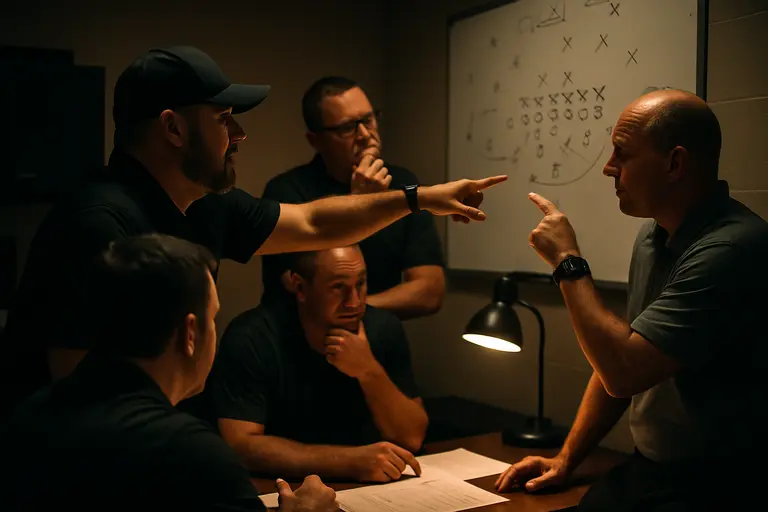
Offense Needs Defined Roles
On offense, the main issue is role clarity. Transfer additions can help, but only if the staff has a defined plan for how those players fit with returners and younger signees. Quarterback, receiver, running back, tight end and offensive line all depend on timing and trust. A staff can add talent, but the offense still needs practice reps, protection calls and shared language before the season arrives.
The same applies to scholarship math. If Florida uses portal spots on immediate offensive help, it must still keep room for longer-term development. That is where roster planning becomes more than a count of arrivals and exits. It becomes a weekly evaluation of who can help now, who can develop and who may be blocked.
Defense And Special Teams Need Continuity
Defense often reflects coaching change faster because technique and alignment can shift quickly. A new staff may ask different things from edge players, linebackers and defensive backs. That can open roles for some players and narrow them for others. Portal targets also have to be judged by whether they can learn the system quickly enough to help in 2026.
Special teams should not be ignored in this roster reset. A team with many new players needs coverage units, return options and dependable depth across the travel roster. Transfers who do not start on offense or defense can still affect field position if they become core special teams players. That is often where roster depth proves itself first.
The NCAA transfer calendar and rule environment also shape how Florida plans. For readers tracking the timing piece, this site’s breakdown of transfer rules and roster planning explains why staff decisions now sit closer to retention, eligibility and January movement than they did in older roster cycles.
Why Gators Roster Dynamics Matter For Florida
The clearest read on Gators Roster Dynamics is that Sumrall’s first roster is being built under pressure from every side: coaching turnover, staff change, portal volume, scholarship departures and recruiting uncertainty. That does not make the reset good or bad by itself. It makes evaluation harder and more important.
Florida fans should watch three markers before 2026: how many returning players earn clear roles, how many portal additions become top-of-depth-chart options and whether the high school class still has a clean development path. If those three areas line up, the coaching change can produce a more stable roster. If they do not, Florida could still be talented but uneven in the places where SEC games expose depth.
For now, the supported facts show a program in heavy roster repair mode. Sumrall’s staff has been active in the portal, Florida has dealt with a large departure count, and the staff change has reset player evaluation. The next step is turning movement into a two-deep that can practice, travel and compete with enough continuity to give the new era a real foundation.