
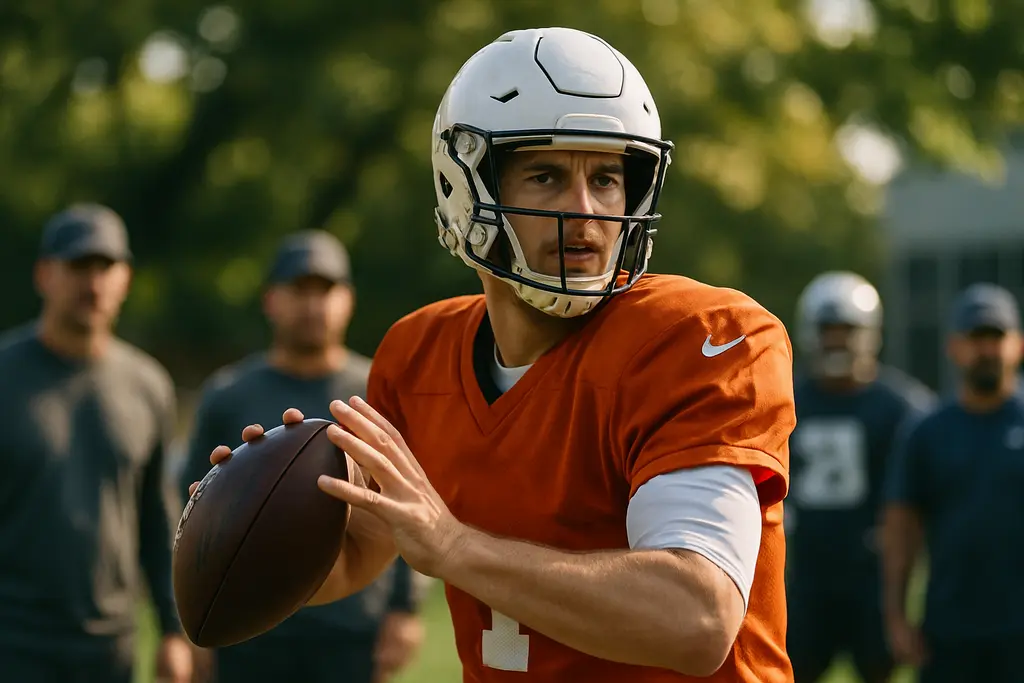
The Gators Depth Chart for the Sept. 5, 2026 opener against Florida Atlantic gives Florida a clear offensive structure, a veteran linebacker core and a few defensive rotation questions that should carry into game week. The headline is settled: Aaron Philo, a graduate transfer from Georgia Tech, has been named the starting quarterback after competing with Tramell Jones Jr. through spring and fall camp, according to SI’s report on Florida’s first depth chart.
That quarterback decision sits inside a broader Week 1 chart that is more settled than scattered. Florida’s offensive line is listed with a returning front five. Jadan Baugh is the starting running back, with Evan Pryor taking the primary backup role. The top receiver group is also identified, giving Philo a defined group around him before his first start in orange and blue.
The shape of the Week 1 chart also fits the broader roster reset Florida has worked through entering 2026. The depth chart includes first-year players from both the high school and transfer routes, but the number of “OR” spots is limited. That suggests the staff has made most of its first-game decisions, even if several rotations remain open.
Gators Depth Chart Starts With Quarterback Clarity
Why The Gators Depth Chart Favors Philo
Philo’s placement at quarterback gives Florida a Week 1 answer at the most visible spot on the roster. The chart does not erase the value of Tramell Jones Jr., who pushed through spring and fall competition, but it does give the offense one voice for opener preparation. That matters with FAU set for Sept. 5, 2026, because the first-team line, receivers and backs can move through game-week work with a defined starter.
For Florida, the decision is also tied to timing. A transfer quarterback stepping into a new offense needs live timing with the full route group and protection unit. The earlier that work becomes starter-focused, the better the chance of reducing assignment issues in the opener. Florida has not released every detail of its offensive plan for FAU, so the fair read is limited: Philo is QB1, Jones remains behind him, and the first game will provide the first public measure of how the passing game fits the personnel.
Offensive Line Gives The Starter A Baseline
The line is the least ambiguous part of Florida’s offense. Bryce Lovett is listed at left tackle, Knijeah Harris at left guard, Harrison Moore at center, TJ Shanahan Jr. at right guard and Emeka Ugorji at right tackle. That returning front five gives Florida continuity at the spot most responsible for keeping the offense on schedule.
There is a practical effect here. A quarterback competition can slow some parts of an offense, but a stable line can offset that by giving the run game and protection calls a base. Moore’s role at center will be central to communication, while the tackle spots with Lovett and Ugorji will be watched closely against FAU’s edge pressure. Florida does not need to reveal much in Week 1 to benefit from continuity up front; it needs the group to handle routine assignments cleanly and avoid putting Philo behind the chains.
Offensive Skill Spots Are Mostly Defined
Baugh Leads The Backfield
Jadan Baugh is listed as the starting running back, while Evan Pryor, a transfer, is positioned as the primary backup for Week 1. Duke Clark, London Montgomery and Byron Louis are also part of the backfield depth. That order gives Florida a clear opening plan while keeping several options available if the staff rotates heavily.
Baugh’s role should help Florida protect the new starting quarterback with early-down balance. Pryor’s placement behind him is one of the notable camp outcomes because he separated from the rest of the reserve group for the first backup spot. Florida has not provided snap-share expectations, so any projection beyond the order would be guesswork. What is supported is that Baugh opens as the lead back and Pryor has the next listed role.
Receiver Rotation Has Proven Names And Open Roles
Dallas Wilson, Vernell Brown III and Eric Singleton Jr. are listed as Florida’s primary wide receivers. Behind them, Micah Mays Jr. and Kahleil Jackson are competing for secondary roles, with Jackson returning from a knee injury. The group gives Philo three leading options and a pair of depth players who can affect how Florida structures its rotation.
At tight end, Lacota Dippre is the starter at the “Y” spot, with Heze Kent behind him. The “H” tight end is listed with an “OR” between Amir Jackson and Luke Harpring. That is one of the spots where the opener can show how Florida wants to use personnel groupings. If the staff leans into heavier sets, the second tight end role could be more than a depth note. If the offense spreads the field, the receiver depth behind Wilson, Brown and Singleton becomes more central.
Linebackers Give The Gators Depth Chart Its Floor
Returned Snaps Matter
The clearest defensive strength on paper is linebacker. Florida returns roughly 1,605 of 1,641 linebacker snaps from 2025, close to 98 percent, according to the program’s official linebacker preview. Myles Graham led the Gators in 2025 with 76 tackles and also had eight quarterback hurries, seven tackles for loss, two sacks and four pass breakups.
For a Gators Depth Chart that has several first-year players listed elsewhere, that returning linebacker production is a stabilizer. Graham gives the group a veteran center. Aaron Chiles and Jaden Robinson are also part of the linebacker picture, while sophomores Myles Johnson and Ty Jackson provide depth. Transfer TJ Bullard and freshman Malik Morris are listed as support pieces, giving Florida bodies across the position without needing to force an unproven player into the first wave.
Defensive Front Rotation Still Bears Watching
Up front, Florida lists Brendan Bett at nose guard and Joseph Mbatchou among the starters, with Jeremiah McCloud at defensive tackle. DK Kalu or Jamari Lyons are behind McCloud. At edge and defensive end, Kamran James, LJ McCray and Emmanuel Oyebadejo are part of a three-man rotating spot.
That rotation is worth tracking because it can shape how much pressure Florida creates without extra rushers. The linebacker group is experienced, but the front still has to control run fits and create third-down chances. The depth chart points to a staff that may use multiple bodies rather than lean on a single edge pairing from the first series through the fourth quarter.
Secondary And Specialists Still Have Week 1 Questions
Cornerback And STAR Roles
In the secondary, Kanye Clark is listed at STAR, with Alfonzo Allen Jr. behind him. Ben Hanks III is a full starter at cornerback. The opposite corner spot remains an “OR” between Cormani McClain and J’Vari Flowers. At safety, Bryce Thornton and DJ Coleman are listed with Cam Dooley and Lagonza Hayward in reserve roles.
The cornerback “OR” is one of the cleanest Week 1 storylines. Florida has one side settled with Hanks. The other side can still be worked through by matchup, practice performance or game flow. The STAR role also matters in modern SEC defensive structure because it can affect nickel spacing, run support and slot coverage. Clark’s senior status gives that spot an experienced first option.
Specialist Operation Is Fully Assigned
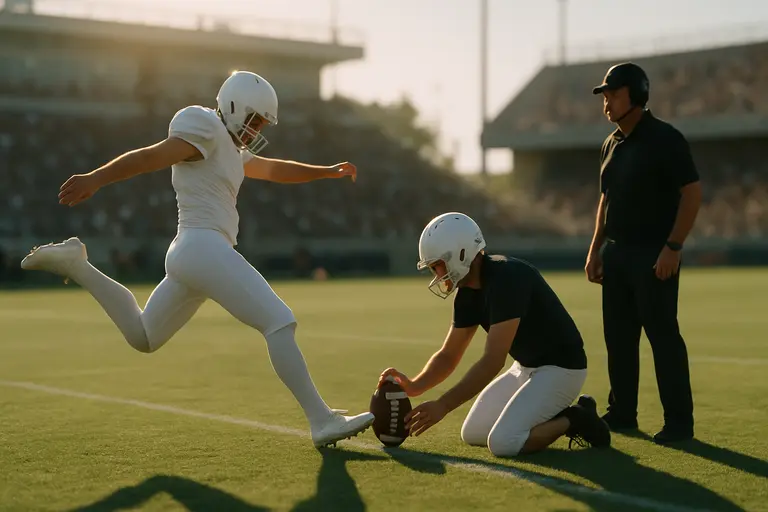
Florida’s specialist chart is also defined. Patrick Durkin is listed for both kickoff and placekicking duties. Alec Clark is the punter and placeholder. Carter Milliron is the long snapper. The backup specialists include Brandon Rabasco at kicker, Nicholas Inglis at punter and holder, and Lincoln Anderson at long snapper.
Special teams often receive less attention before an opener, but the assigned operation matters. With Durkin handling both kickoff and placekicking, Florida has one primary leg for scoring kicks and field-position starts. Clark’s dual role as punter and holder also gives the kicking operation a fixed pairing entering FAU week.
What The FAU Opener Can Clarify
Competition Points To Watch
The Sept. 5, 2026 game against FAU should clarify the few areas that remain open on paper. The “OR” at cornerback, the “H” tight end split, the defensive front rotation and the reserve receiver order are all spots where game reps can carry more meaning than pregame listing order. The Week 1 chart gives the first answer, not the final one.
Florida’s clearest advantage on paper is continuity in selected places: the offensive line returns intact, the linebacker room brings back almost all of its 2025 snaps, and the primary specialist roles are assigned. The main unknowns sit around how Philo manages his first Florida start, how the skill rotation forms around him and which defensive backs separate once FAU tests the perimeter.
The Gators Depth Chart is not overloaded with public indecision, which is a useful sign before an opener. It shows a staff that has chosen its first quarterback, settled its line and leaned on veteran defensive production where it exists. The opener against FAU will show whether that structure is ready to hold up under game speed.