
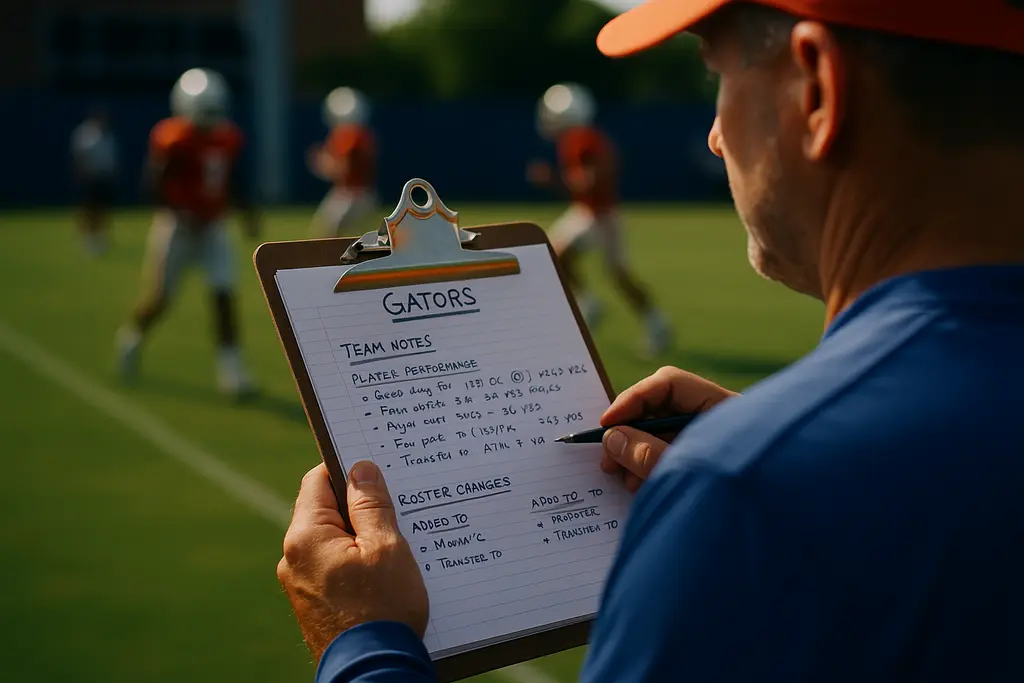
The Gators Roster Overhaul is the central team-news story in Gainesville as Florida works through a coaching change, a large transfer class and a new group of high school additions before the 2026 season. The scale matters because this is not a normal one-position reset. It touches the staff, the offensive line, the secondary, the front seven and the long-term development track.
Sports Illustrated’s roster review identifies Jon Sumrall as Florida’s new head coach, placing the roster movement in the first cycle of a new staff build SI roster review. Florida also announced 29 transfers and 20 high school additions in its 2026 newcomer release official newcomer announcement. Those two facts frame the offseason: Florida is not only filling open spots, it is changing the competition level across the roster.
Gators Roster Overhaul By The Numbers
Transfer Volume Sets The First Read
For Florida, the Gators Roster Overhaul starts with volume. A 29-player transfer group gives the staff immediate options, but it also forces fast evaluation. Transfers arrive with college experience, different scheme backgrounds and varied physical profiles. That can help a first-year staff address depth quickly, yet it also creates a shorter runway for role definition before fall preparation.
The official newcomer list includes offensive lineman Eagan Boyer from Penn State and cornerback CJ Bronaugh from Orlando, Florida. Those names point to two areas that often decide whether a large transfer class settles quickly: line play and coverage depth. Offensive line additions can affect practice tempo because they alter how many viable combinations the staff can test. Cornerback additions matter in the SEC because defensive packages often require more than two reliable outside or nickel options.
High School Additions Keep The Development Track Open
The 20 high school recruits give Florida a second layer to the offseason plan. While transfers can address immediate needs, high school signees remain the base of program development. For a new staff, that group also becomes the first full class to learn the program’s terminology, practice habits and positional standards from the start.
That mix creates a clear roster-management question: how many newcomers are ready to help now, and how many need a developmental year? The answer will not be the same by position. Defensive backs and receivers can sometimes enter the rotation early if they handle assignments and special teams. Offensive linemen and front-seven players often need more time unless they arrive physically ready for weekly SEC snaps.
Where Transfers Change The Depth Chart
Offensive Line And Backfield Fit
The transfer class is the easiest place to see how Florida tried to raise competition. Boyer’s addition gives the offensive line room another player with a Power Four background. That does not decide a starting job by itself, but it does change the room. More experienced bodies mean more competition for tackle, guard and swing roles, and that matters during camp when injuries, conditioning and technique consistency sort out the two-deep.
The research notes running back Jadan Baugh as a key offensive name tied to the 2026 roster conversation. Since the provided high-authority links in this brief do not give a detailed projection for his role, the safer read is simple: Florida’s backfield will be part of the staff’s broader offensive sorting process. Carry distribution, pass protection and short-yardage trust will matter as much as raw rushing ability.
For more position-by-position context on how the portal class affects the depth chart, our related breakdown of Florida Gators transfers tracks the same roster-building theme from a transfer-focused angle.
Secondary And Front-Seven Competition
Bronaugh’s presence gives the secondary another Florida-based player to evaluate in a room where depth is always tested by tempo offenses and injury attrition. His Orlando background also fits the in-state recruiting thread that remains important for Florida. The Gators need to keep building from the state’s high school pipeline while using the portal to fill immediate gaps.
On defense, the research identifies defensive lineman Brendan Bett and linebacker Aaron Chiles as names expected to be involved in the next roster phase. The exact role for each player still has to be earned through practice and staff evaluation. The larger point is that Florida’s defensive front and second level are part of the reset, not side pieces to the offensive story.
That makes the defensive side a key test of roster balance. If the front can build enough playable depth, the secondary has a better chance to hold up. If the linebacker room settles quickly, the staff can be more flexible with pressure packages and run fits. None of that is guaranteed in the offseason, but the roster movement gives Florida more options to sort.
How Staff Transition Shapes Evaluation
Gators Roster Overhaul At Quarterback
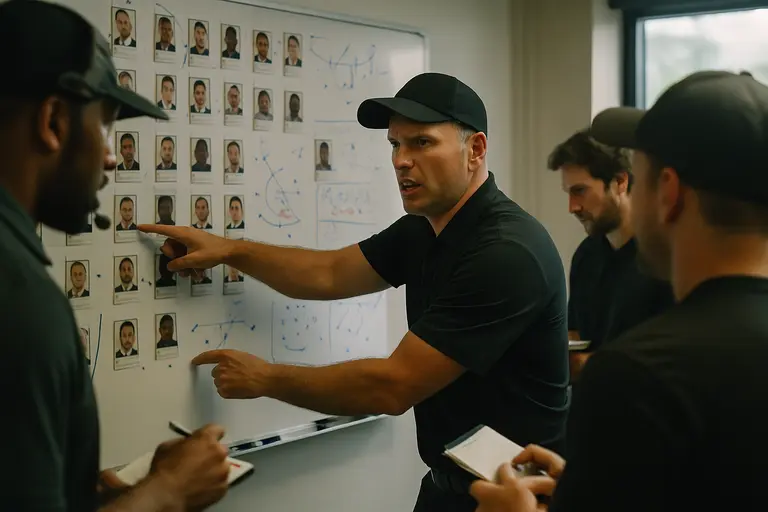
The Gators Roster Overhaul also affects quarterback because any new staff has to decide how the offense should be built and who can run it. The research notes DJ Lagway’s departure and Tramell Jones Jr. returning to compete for the starting position. Because that quarterback update comes from a source outside the two approved citation links for this article, it should be treated here as a reported roster note rather than a settled depth-chart outcome.
The practical football point is clear: quarterback competition under a new head coach changes spring and summer reps. Coaches must decide who gets first-team work, how quickly the playbook expands and which skill players develop timing with the leading candidates. That process can affect receivers, tight ends, running backs and pass protection calls.
Practice Reps Become The Separator
Large newcomer groups sound strong on paper, but practice reps decide how much of that strength carries into games. A transfer who learns the system quickly can move into the rotation. A high school player who handles special teams can travel and earn early snaps. A returning player who adapts faster than a newcomer can protect his role.
This is where Sumrall’s first offseason becomes less about labels and more about sorting. Returning player, transfer and freshman are starting points, not final roles. Florida’s staff has to build a two-deep that can survive an SEC schedule while still developing younger players for later in the season and future years.
For readers tracking the full room-by-room picture, our Florida Gators roster page connects transfer names with broader depth-chart questions.
Why The Gators Roster Overhaul Matters In Gainesville
Local Pipeline And Fan Expectations
The Gators Roster Overhaul matters locally because Florida’s roster is always judged through both SEC results and in-state recruiting identity. Bronaugh’s Orlando tie is one example of why the state pipeline remains part of the story. Florida cannot build only through the portal, and it cannot rely only on high school recruiting during a staff transition. The current class mix shows both tracks are active.
For fans in Gainesville and across the state, the key is not simply how many players arrived. It is where those players fit. Offensive line depth, cornerback competition, defensive front options and quarterback clarity will shape how quickly the roster looks organized. A large class can raise the floor if enough players become dependable. It can also create early unevenness if roles take time to settle.
What The 2026 Team Must Prove
The first task is establishing a functional rotation. Florida added enough players to create competition, but game-week trust is earned through assignment discipline, conditioning and performance under pressure. The second task is blending experience with development. A transfer-heavy class should help right away, while the 20 high school additions need a path that keeps the roster from becoming a one-year patch.
The Gators Roster Overhaul gives Sumrall and his staff a wider pool of answers than a smaller class would have provided. It does not settle the offense, defense or quarterback race before camp. It does give Florida a clearer offseason identity: increase competition, rebuild depth and force every room to reset its standard before the 2026 season arrives.