

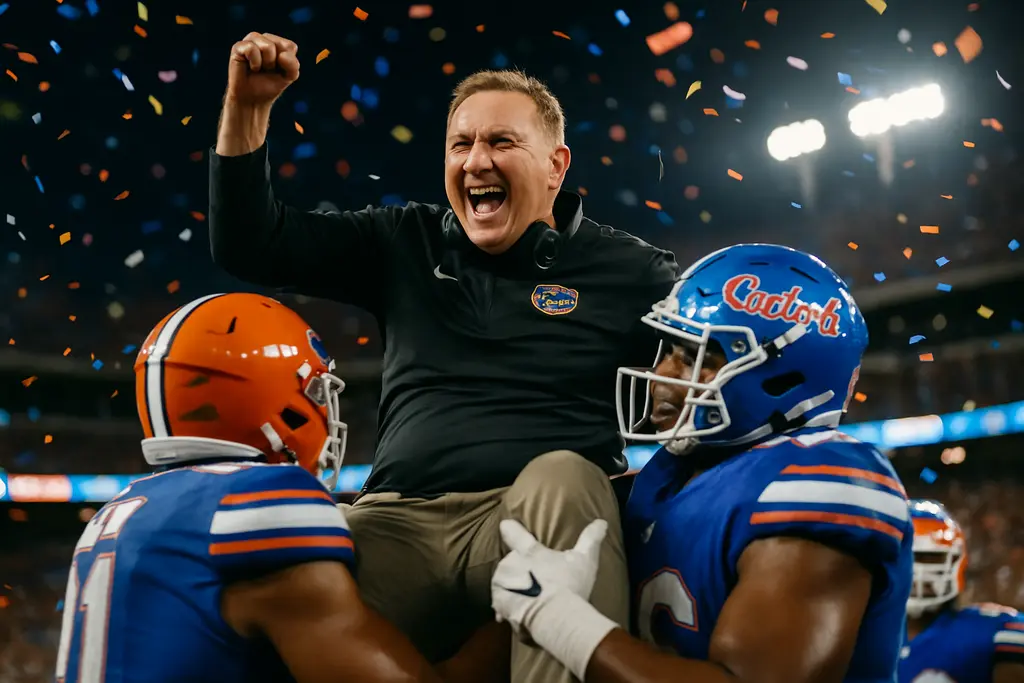
Florida Gators Recruiting gained a more concrete fall talking point after Florida beat Auburn 44-39 on September 19, 2026. The result mattered because it came in an SEC opener, away from Gainesville, and gave the staff a game cutup that showed production under pressure rather than a recruiting pitch built only on projection.
Florida finished with 495 total yards, split between 252 passing yards and 243 rushing yards, while going 3-for-3 on fourth down and 5-for-5 in the red zone, according to the official Florida game recap. For prospects and families, those numbers are not just box-score detail. They point to play-calling trust, offensive line function, quarterback management and a staff willing to stay aggressive in key spots.
The win did not confirm any public five-star flip or guarantee a signing-day surge. That distinction matters. Recruiting coverage has to separate confirmed movement from momentum talk. What the Auburn game did provide was a stronger proof point for the fall evaluation period: Florida could show recruits an SEC road win with balance, fourth-down execution and red-zone finish.
Florida Gators Recruiting After The Auburn Win
Florida Gators Recruiting Proof Points
The strongest recruiting value from the Auburn game was the way Florida won. Prospects rarely watch only the final score. Offensive linemen look at run-game angles and pass-protection answers. Quarterbacks and receivers study spacing, timing and whether the staff creates workable throws. Running backs watch whether the scheme gives them lanes or leaves them to beat free defenders too often.
That is where the 252 passing and 243 rushing split carried weight. It gave the staff a balanced tape sample against an SEC opponent. Balance does not mean every recruit will suddenly favor Florida, but it does allow the staff to speak to multiple position groups with the same game. A receiver can see passing production. A back can see the rushing total. An offensive lineman can see both phases tied to his role.
For Florida Gators Recruiting, that matters because fall conversations often turn on evidence. A staff can tell a prospect that the offense will feature him, but a recent SEC road game is a stronger reference point. The Auburn film gave Florida a current answer when prospects asked how the offense would travel, how the staff would handle fourth down, and whether drives would finish near the goal line.
Why Road Context Matters
The location also mattered. Florida’s win at Auburn was its first Power Four road win of the 2026 season. It followed a 2-0 start built on non-conference wins, which made the Auburn trip the first major SEC test for the staff during the 2026 campaign. Recruits evaluating a program under a new staff or adjusted staff direction often want to see how the team responds outside its own stadium.
Winning on the road does not erase roster needs. It does not settle every question about depth, retention or future portal needs. Still, a road SEC win gives a staff stronger footing in recruiting rooms across Florida, Georgia, Alabama and the rest of the Southeast. It shows prospects that the program’s pitch is tied to something they saw on a Saturday, not only to facilities, branding or long-term plans.
What The Auburn Film Showed Prospects
Offensive Line Messaging
The Auburn game gave Florida a clean offensive line message. The Gators ran for 243 yards and threw for 252. That type of split is useful because line play can be hard to sell when the offense leans too far in one direction. If a team throws all night, tackle prospects may see pass sets but guards and centers may wonder about run-game identity. If a team runs constantly, tackles and skill players may ask whether the passing game can keep pace.
In this case, Florida could point to a game in which the front was tied to both phases. The 3-for-3 fourth-down mark also carried recruiting weight for linemen. Fourth-down calls tell prospects how much trust the staff has in the group up front. They also show how the offense handles short-yardage pressure, substitution stress and defensive movement.
The red-zone result was just as useful. Going 5-for-5 in the red zone gave the staff a direct way to discuss finish. That matters for offensive prospects because long drives that stall can make production feel empty. It matters for defensive recruits too, because a complementary team with a scoring offense can change game flow and reduce pressure on the other side of the ball.
Skill Talent And Usage Questions
Skill recruits often ask how they will be used before they ask about raw opportunity. The Auburn performance gave Florida examples from a game that required answers in several situations. Passing volume, rushing volume, fourth-down trust and red-zone conversion all help shape those talks.
For receivers, the useful point was not just 252 passing yards. It was that the offense had enough balance to keep defenses from sitting on one phase. For running backs, the 243 rushing yards showed a path to real usage. For tight ends and hybrid players, fourth-down and red-zone snaps are often the most telling film because those packages can reveal whether the staff values formation stress and matchup answers.
That is why Florida Gators Recruiting should be viewed through more than commitment counts after the Auburn win. The impact also sits in how the staff can explain roles to 2027 and 2028 prospects who are still sorting through depth charts, offensive identity and development plans.
Class Stability And Transfer-Portal Context

No Public Decommitment Wave
One of the more practical recruiting notes after the Auburn win was stability. ESPN reported that Florida had not had any decommitments in its class in the context of early signing period recruiting intel, a meaningful data point for a program trying to hold its group together during the fall ESPN recruiting intel.
That does not mean every commitment is locked in. Fall recruiting is still fluid across college football, and visits, coaching contact, depth charts and playing time can keep changing the board. But avoiding a public decommitment slide after a high-profile SEC game gave Florida a steadier position than a staff dealing with immediate class damage.
Class stability also affects peer recruiting. When committed players see the program win a road SEC game and the group holds, the staff has a better chance to keep the class message consistent. It can ask commits to recruit alongside the staff without having to answer constant questions about instability.
Portal Planning Without Overclaiming
The Auburn result also fits the transfer-portal side of roster building, though the impact should be framed carefully. A September win does not guarantee that future transfers will pick Florida. It does, however, improve the staff’s evidence when discussing scheme, usage and role clarity with older players who may enter the market later.
For portal targets, recent game film can matter more than broad recruiting language. Veterans want to see how they would fit, whether the staff uses their position in meaningful downs, and whether the team is trending toward competitive SEC play. The Auburn game helped Florida in those conversations because it showed offensive production against conference competition.
Florida’s broader roster-building push has also been tied to momentum, retention and fit, a theme that connects with our prior look at Gators roster momentum. The Auburn win gave that discussion a sharper recruiting angle because it paired a result with transferable film for high school prospects and future portal evaluations.
Why The Auburn Win Matters For Florida Gators Recruiting
The biggest impact of the Auburn game was credibility. Florida had a road SEC result, a balanced offensive output and clean high-leverage numbers to take into recruiting conversations. That is different from promising a future identity. The staff could point to September 19, 2026, and show what happened.
For Florida Gators Recruiting, the next step was not about declaring a finished class or claiming flips that had not happened. The smarter read was that Florida improved its weekly recruiting argument. The staff had better film for offensive linemen, more role examples for skill players and a steadier stability message for commits already in the class.
The win also helped the staff answer one of the most common fall questions: can the plan hold up in SEC play? Against Auburn, Florida’s offense produced 495 yards, converted every fourth-down attempt and finished every red-zone trip. Those facts do not settle every roster need, but they gave Florida a stronger position with prospects who wanted proof before the early signing period.
That is the real recruiting value. The Auburn win did not need to create instant public movement to matter. It gave Florida stronger evidence, fewer defensive answers to make on the trail, and a performance profile that aligned with what recruits at several positions want to see.