

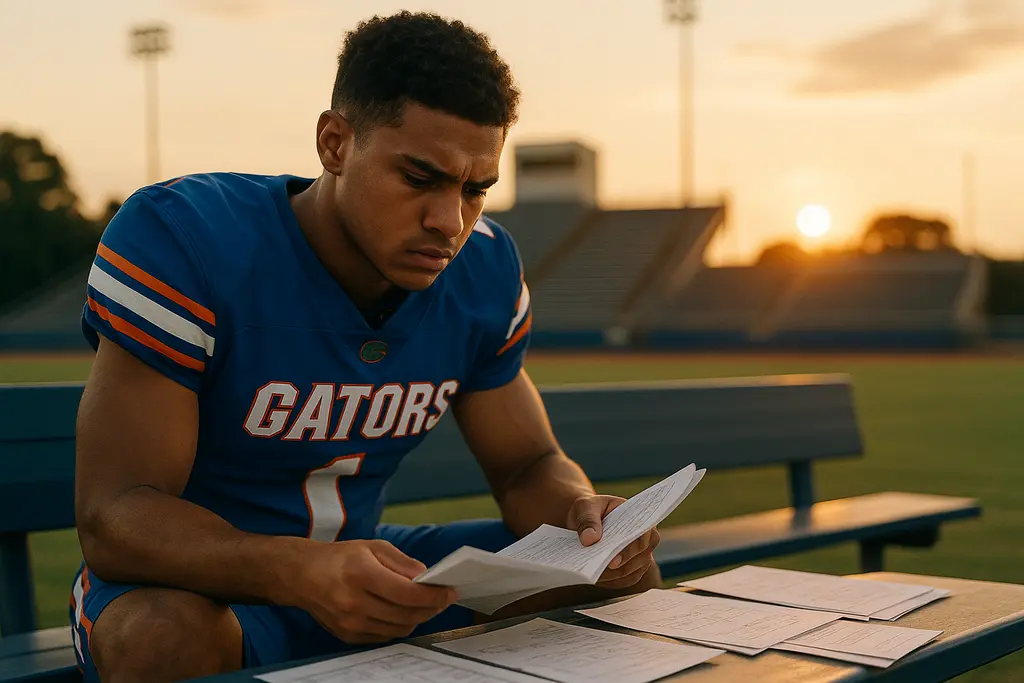
Gators transfers are a major part of how Florida’s 2026 recruiting class is being judged under new head coach Jon Sumrall. The class is not only about high school signees. It also includes older college players who arrive with production, eligibility and position-specific value. That matters for a Florida roster that needs both long-term development and short-term competition.
The transfer group from the research notes is built around several clear roster needs: receiver experience, quarterback competition, running back depth and offensive line reinforcement. Eric Singleton Jr., Aaron Philo, London Montgomery, Bailey Stockton and Eagan Boyer bring different profiles, and none should be treated as the same kind of addition. Some arrive with college production. Others add depth, flexibility or a chance to compete in spring and fall camp.
Florida’s staff still has to sort the depth chart on the field. Portal additions do not guarantee roles, and the Gators have to blend them with returning players and high school newcomers. The early value is that Sumrall’s first cycle gives the roster more playable options at positions where SEC schedules test depth quickly.
Transfer Context For Florida’s 2026 Class
Why The Portal Group Matters
Florida’s 2026 class should be viewed as a two-track build. The high school group can shape the long-term roster, while the transfer additions can push immediate competition. That distinction is useful because the Gators are not simply collecting names. They are trying to fill jobs across the offense while building a workable two-deep.
Yahoo Sports reviewed Florida’s 2026 transfer portal class in a roster-focused breakdown, including transfer additions such as Bailey Stockton Yahoo Sports transfer review. Florida also announced newcomers through its athletic department, including offensive lineman Eagan Boyer Florida’s newcomer announcement. Those two source points support the wider picture: the Gators are adding players with college backgrounds, not just future developmental pieces.
What Florida Can And Cannot Know Yet
The research notes give useful production markers, but they do not settle the depth chart. Eric Singleton Jr.’s receiving production gives Florida a player with experience at Georgia Tech and Auburn. Aaron Philo’s Georgia Tech background gives the quarterback room another option. London Montgomery’s East Carolina production gives the running back room another scholarship body with starting experience. Still, none of that replaces practice evaluation, scheme fit or health once camp begins.
For Florida fans, the right way to read this class is position by position. The transfer group raises the floor in several rooms, but roles will depend on how quickly each player adjusts to the offense, the staff’s teaching style and the SEC week-to-week physical demands.
How Gators Transfers Fit The Offense
Gators Transfers At Skill Positions
Eric Singleton Jr. is the headline offensive skill addition from the research notes. He transferred from Auburn after totaling 2,002 receiving yards and 12 touchdowns over three seasons at Georgia Tech and Auburn. He also withdrew from the NFL Draft to join Florida. That combination gives the Gators an older receiver with real production, which is valuable for a staff trying to stabilize the passing game.
Singleton’s profile is different from a high school receiver arriving with projection. He has already played college football, changed programs and produced across multiple seasons. That does not automatically make him Florida’s top target, but it gives the room a player who has already handled college defensive backs, travel weeks and pressure situations.
Bailey Stockton, also from Georgia Tech, brings a different receiver profile. The research notes describe him as a slot option with quickness and experience. Slot work is often about timing, spacing and trust with the quarterback. If Stockton can earn that trust, he gives Florida another way to structure third-down and middle-of-field concepts.
Quarterback Room And Backfield Depth
Aaron Philo enters as one of the more interesting evaluations in the class. The research notes list him as a Georgia Tech transfer who completed 58 percent of his passes for 938 yards, with two touchdowns and three interceptions in six appearances. They also note that he broke Trevor Lawrence’s high school passing record in Georgia and has three years of eligibility left.
That eligibility piece matters. Philo is not just a short-term depth player if the staff sees developmental value. He can compete now while still giving the quarterback room a multi-year option. His college production is limited enough that Florida should avoid making early assumptions, but his background gives the staff something to work with.
London Montgomery gives the backfield another proven college runner. The research notes say he rushed for 742 yards and seven touchdowns as a sophomore starter at East Carolina and has two years of eligibility remaining. That is a useful profile for a running back room because carries are hard to consolidate over a full season. SEC backs take contact, pass protection matters, and depth can shift quickly.
Line And Receiver Depth Questions
Boyer’s Offensive Line Path
Eagan Boyer transferred from Penn State and is originally from Cornelius, North Carolina, according to the research notes. His value starts with size and depth on the offensive line. Florida does not need to name him a starter in February for the addition to matter. Offensive line rooms need options across tackle, guard and reserve roles, especially when injuries, rotation and development shape the season.
The Gators’ offensive line will be one of the most practical places to track camp movement. A transfer lineman can help in several ways: pushing returning players, giving the staff another emergency option, or settling into a rotation if he earns it. Boyer’s path is less about early attention and more about whether he can become a trusted piece by the time the schedule tightens.
Slot Competition With Stockton
Stockton’s addition should be read through the same lens. Slot receiver competition is rarely decided by speed alone. Florida will need receivers who can line up correctly, adjust to coverage, block enough to stay on the field and give quarterbacks defined throwing windows. If Stockton’s quickness translates, he can help build a more balanced receiver room around Singleton and the returning options.
For readers tracking the wider roster build, our related breakdown of Florida Gators transfers 2026 goes deeper on how the portal group reshapes the roster count and position mix. The key point here is that receiver additions do not have to serve one role. Singleton can bring outside or explosive production, while Stockton can push the slot and underneath passing structure.
Roster Path Before Camp
What Is Known
The known transfer facts point to a staff trying to add college experience across the offense. Singleton brings 2,002 receiving yards and 12 touchdowns from Georgia Tech and Auburn. Philo brings six appearances at Georgia Tech and three years of eligibility. Montgomery brings a 742-yard, seven-touchdown season from East Carolina. Stockton brings slot quickness and experience from Georgia Tech. Boyer brings Penn State offensive line depth.
Those facts help frame the class without overstating it. Florida is not adding guaranteed answers at every spot. It is adding competition. That is the honest value of portal recruiting, especially for a first-year staff trying to set standards and evaluate returning personnel at the same time.
What Still Needs Sorting
The unknowns are just as relevant. Philo’s place in the quarterback room will depend on practice command and decision-making. Montgomery’s role will depend on pass protection, ball security and how the backs separate. Singleton’s production gives him a strong starting point, but receiver chemistry takes time. Stockton has to show where he fits in the rotation. Boyer has to prove he can handle Florida’s protection calls and SEC defensive fronts.
That is why the spring and summer periods matter. For Gators transfers, the first step is not public expectation. It is learning the building, the terminology and the daily standard under Sumrall’s staff. The second step is earning trust from position coaches. The third is proving that trust holds when the roster gets closer to game week.
What Gators Transfers Mean For 2026
The transfer additions give Florida a more complete 2026 roster conversation. The Gators have a receiver with major college production in Singleton, a quarterback option with eligibility in Philo, a productive running back in Montgomery, a slot competitor in Stockton and offensive line depth in Boyer. That is a real start for a staff trying to build quickly without pretending every question is settled.
The best read is balanced. Gators transfers improve competition and give Florida more choices, but the class still has to prove itself through practice and Saturdays. For a fan base watching Sumrall’s first roster take shape, the transfer group is not a finished product. It is the working plan for how Florida tries to close immediate gaps while keeping enough eligibility and development in place for the seasons after 2026.