
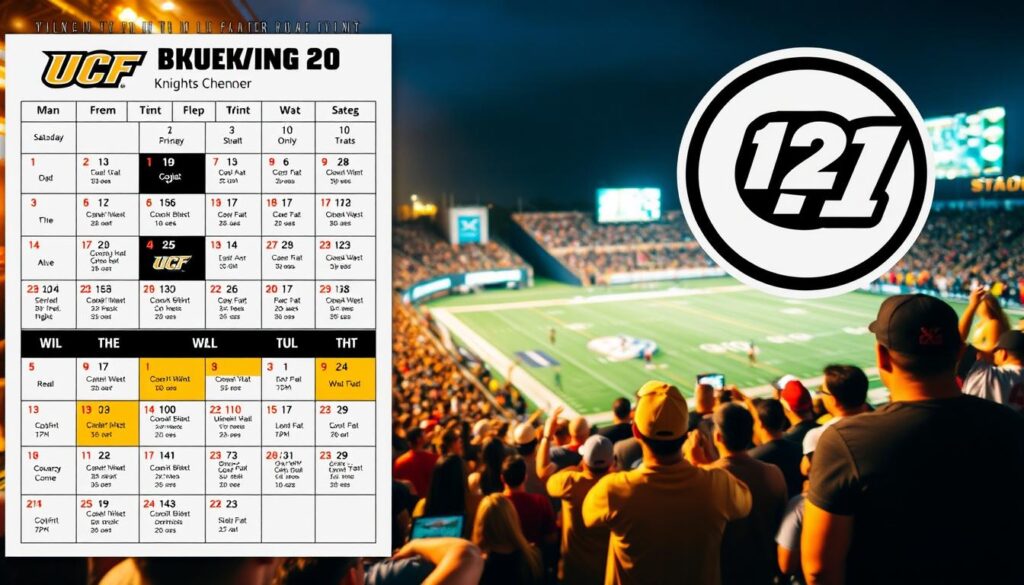
Forget the generic calendar printouts. The official 2026 slate for Orlando’s black and gold isn’t just a list of dates. It’s a test of the program’s soul.
On one side, you see a comforting Thursday night opener. This team has an 11-game win streak in this time slot. On the other, a tough, poetic challenge awaits.
With seven home games, including five against conference foes, the story is rich. Early momentum from transfers adds intrigue. But can hope overcome reality?
We’re here to cut through the preseason noise. This guide goes beyond “Time TBA” to explore the strategic implications. We’ll use FPI and SP+ projections to see if teams are contenders or just dreaming.
Think of this as your definitive map. Let’s navigate the Big 12 standings race, one key game at a time.
Game‑by‑Game Preview (date/time/TV placeholders)
Forget preseason hype; let’s dive into the UCF schedule, game by game. The 2026 season is tough. It’s a twelve-round fight where every opponent is different. Every TV times decision changes your weekend plans.
The season starts with Bethune-Cookman at home on a Thursday night (Sept. 3). It’s like a warm-up lap. But don’t underestimate it. A win sets the tone and lets the coaches try new things.
Then, it’s time for revenge. Pittsburgh on the road (Sept. 12) is a big game. It’s a rematch from 2019 that Knights fans remember. This game shows if the team can overcome past failures.
Georgia State comes next on Family Weekend (Sept. 19). It’s a break before the real season starts.
Hosting TCU (Sept. 26) opens Big 12 play. Last year’s win in Fort Worth showed UCF’s strength. This year’s game must prove it wasn’t a fluke. The TV times for this game will likely be prime, with everyone watching.
The next challenge is two tough road games. Houston (Oct. 3) and Oklahoma State (Oct. 10) are critical. These games can make or break the season. Surviving with a split puts you in the hunt. Sweeping it makes you a contender.
The schedule gives a merciful bye week before the Bounce House becomes a fortress. Homecoming against BYU (Oct. 24) is a big game. Then, Baylor (Oct. 31) promises tricks and hopefully a defensive win for the Knights.
The final act brings new challenges. A trip to Kansas (Nov. 7) is a trap game. Arizona State (Nov. 14) and Iowa State (Nov. 21) come to Orlando for late-season games. The season ends at Colorado on Black Friday (Nov. 28), a chaotic game.
“Time TBA” slots mean everything. A noon kickoff ruins your tailgate. A primetime slot makes you a national audience. TV networks decide your weekend, and all you can do is wait. The Mission X Space Game date is also uncertain, pending TV decisions.
| Date | Opponent | Location | TV / Time |
|---|---|---|---|
| Thurs, Sept. 3 | Bethune-Cookman | Home (Bounce House) | ESPNU / 7:00 PM ET |
| Sat, Sept. 12 | @ Pittsburgh | Away (Acrisure Stadium) | ABC / 3:30 PM ET |
| Sat, Sept. 19 | Georgia State | Home (Family Weekend) | ESPN+ / TBA |
| Sat, Sept. 26 | TCU | Home (Big 12 Opener) | FOX / 8:00 PM ET |
| Sat, Oct. 3 | @ Houston | Away (TDECU Stadium) | FS1 / TBA |
| Sat, Oct. 10 | @ Oklahoma State | Away (Boone Pickens Stadium) | ESPN / 12:00 PM ET |
| Sat, Oct. 24 | BYU (Homecoming) | Home (Bounce House) | ABC / 3:30 PM ET |
| Sat, Oct. 31 | Baylor | Home (Halloween) | ESPN2 / 7:00 PM ET |
| Sat, Nov. 7 | @ Kansas | Away (David Booth Stadium) | FS1 / TBA |
| Sat, Nov. 14 | Arizona State | Home (Bounce House) | ESPNU / TBA |
| Sat, Nov. 21 | Iowa State | Home (Bounce House) | Big 12 Network / TBA |
| Fri, Nov. 28 | @ Colorado | Away (Folsom Field) | FOX / 3:30 PM ET |
Looking at the UCF schedule is more than just opponents. It’s about the rhythm: early tests, tough road games, home stands, and a tricky finish. Each “TBA” in the TV column shows network confidence in your viewership. Primetime slots mean they believe in your drawing power. Noon kicks mean you’re the undercard.
The bye week before Homecoming is a scheduling miracle. It gives the Knights time to heal before the final push. The back-loaded home games (BYU, Baylor, Arizona State, Iowa State) could be key if bowl eligibility is tight.
So mark your calendars, but write in pencil. The TV times will change. Networks decide your weekend, and all you can do is wait. This is the Big 12 life now—every game matters, and every broadcast decision affects your viewing party.
Conference Gauntlet: Back‑to‑Back Challengers
The Big 12 schedule is more than a calendar. It’s a test of your will. UCF’s October looks like a survival horror game. Forget easing into conference play.
The schedule makers have given us a tough sequence. It will define our season.
First, we face a road doubleheader in early October. Houston and Oklahoma State are our opponents. Houston is known for its gritty play and Big 12 ambition. Oklahoma State’s offense is precise, designed to break defenses.
UCF has faced Houston more than any other Big 12 team. The rivalry is fierce. Oklahoma State is a different challenge, with limited past comfort.
| Opponent | Last Meeting | Series Record | Key Context |
|---|---|---|---|
| Houston | 2022 (AAC) | UCF leads 7-5 | High-scoring affairs; avg 68 total points |
| Oklahoma State | First Big 12 meeting | 0-0 | New territory; Mike Gundy’s system vs. Gus Malzahn’s |
Surviving the road trip is just the start. Our next challenge is BYU and Baylor at home. BYU comes in with a Pop-Tarts Bowl win. Baylor is a team that can upset anyone.
These clusters test depth in ways single games can’t. Your second-string player becomes your starter by Week 8. The travel and mental grind are tough.
The second homestand is just as tough. Arizona State and Iowa State are our opponents. The Sun Devils bring Pac-12 remnants and coaching chaos. Iowa State plays disciplined football that squeezes mistakes.
UCF’s depth chart is key. The Knights have recruited well, but the Big 12 is tough. It’s not just talent that matters. Adaptability, recovery, and focus are essential.
These back-to-back challenges will define our place in the Big 12 standings. Win both, and we’re climbing. Split, and we’re treading water. Lose both, and we’re in a hole. The math is simple.
Think about tiebreakers too. Head-to-head matters, but so does record against common opponents. These games create mini-gauntlets. Surviving them builds confidence and creates separation in the Big 12 standings. Failing means playing catch-up in November.
The schedule isn’t unfair—it’s Power Five football reality. Every team faces these stretches. But for UCF, these challenges are our final exam in conference assimilation. Pass, and we’re contenders.
Bounce House Home‑Field Essentials
The Bounce House isn’t just a venue on your UCF schedule. It’s a place where the home team seems to have an unfair advantage. Coaches often point to the humidity, noise, or some magical Orlando factor. But it’s probably all three, plus a fanbase that takes every play personally.
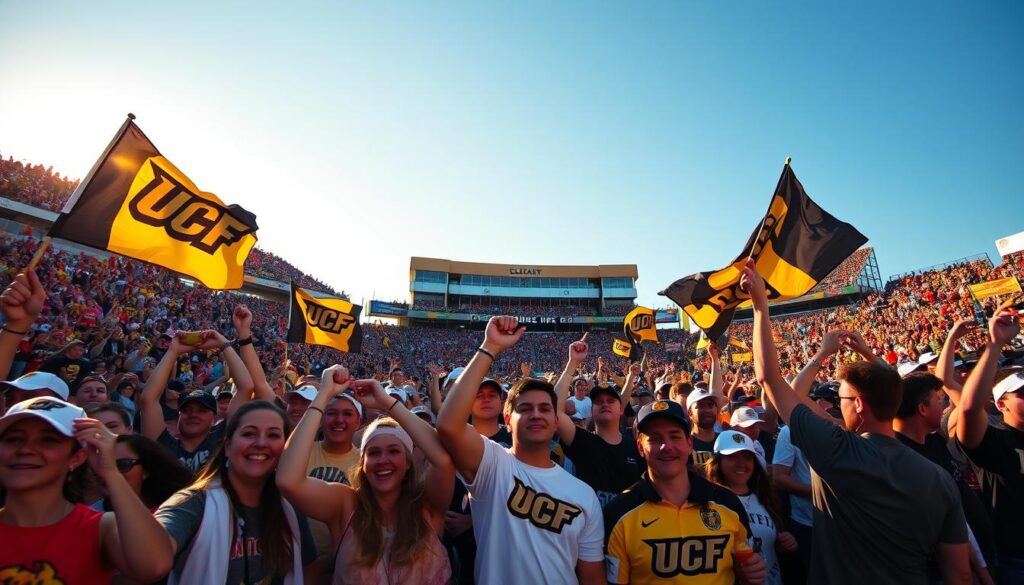
This season, the UCF schedule includes seven home games. Each game has its own unique feel. But three games are special event games where the energy is electric.
Family Weekend against Georgia State is the first event. It’s a fun game with a family vibe. Then, Homecoming against BYU brings out the alumni spirit, making the stadium feel like a time capsule of Knight pride.
The third event is the “Mission X Space Game.” It’s not just a marketing trick. It’s a TV slot reserved for a game with big implications. Your UCF schedule has a spot for it.
To get into this electric atmosphere, you need a strategy. Buying single-game tickets is for beginners. The smart move is to put down a $50 deposit for the 2026 season. This gets you priority access.
What does that $50 buy you?
- Priority access before the general public sees seats
- The same seats every year, creating your own spot
- Early entry to the stadium for pre-game rituals
- A stake in the team, not just a spectator
This deposit system creates two types of fans. One feels the stadium’s energy live. The other watches from home, wondering why the TV doesn’t show the same excitement. That $50 makes all the difference.
Knowing your UCF schedule is basic. But mastering the Bounce House is deeper. It’s about knowing which games are the most intense and getting your spot early.
The ticket deposit is more than a cost. It’s an investment in having an edge. While opponents sweat the heat, you’ll be enjoying the game from a secure seat. The UCF schedule gives you the dates. This knowledge gives you the home-field advantage.
TV/Stream Matrix by Provider
If college football’s TV landscape were a streaming service menu, it would rival the complexity of a tax form from a parallel universe. You need a spreadsheet, a conspiracy board with red string, and possibly a sherpa to navigate it all. The Big 12’s media rights deals with ESPN and FOX create a fascinating, frustrating puzzle for fans.
The conference schedule dropped on ESPNU with typical corporate fanfare. But those listed TV times are written in pencil, not ink. Network executives wield final authority, shifting games to maximize national eyeballs. Your Saturday plans live at their mercy.
This volatility peaks with showcase events. Take the Mission X Space Game. Its unique branding and Orlando spectacle make it a prime candidate for a coveted primetime slot. A noon kickoff here would be a scheduling crime against atmosphere.
So how do we predict the unpredictable? We analyze opponent cachet, historical patterns, and the cold math of TV ratings. Rivalry games and ranked matchups gravitate toward FOX’s “Big Noon Kickoff” or ABC’s Saturday night spotlight. Less glamorous contests often get exiled to the streaming steppes of ESPN+.
Your social calendar demands this intelligence. Will you need your ESPN+ login, or should you clear the couch for a major network broadcast? The matrix below translates corporate speak into actionable intelligence.
| Opponent | Projected Window | Likely Network | Streaming Alternative | Scheduling Notes |
|---|---|---|---|---|
| New Hampshire | Evening (7:00 PM ET) | ESPN+ | Big 12 Now on ESPN+ | Season opener, likely streaming-exclusive |
| TCU | Prime Time (8:00 PM ET) | ESPN or ESPN2 | ESPN App | Thursday night spotlight game |
| Colorado | Afternoon (3:30 PM ET) | FOX or ABC | FOX Sports App | Black Friday weekend, major network target |
| Mission X Space Game | Prime Time (7:30 PM ET) | ESPN | ESPN App | High-profile event, ideal for national audience |
| Baylor | Noon (12:00 PM ET) | ESPNU or FS1 | Network App | Could be affected by “11 a.m. local kickoff curse” |
Remember, this matrix is an educated forecast, not gospel. The conference and its TV partners play musical chairs with TV times until roughly twelve days before each game. That’s when the “six-day window” selections lock in.
The Thursday night opener against TCU? That’s almost certain to be an ESPN family property. Late-season road trips to new Big 12 territories often land on FOX or ABC for regional exposure. Games with less national sizzle frequently become streaming exclusives on Big 12 Now on ESPN+.
Here’s the pro tip: Always verify the official TV times the Monday before game week. Set alerts on the UCF Athletics app. Follow the team’s social accounts. Treat unconfirmed schedules as speculative fiction.
The broadcast puzzle is complex, but solvable. With this guide, you’ll know whether to prep your second screen or commandeer the main living room TV. Your viewing strategy is now data-driven, not guesswork.
Live Score Hub & Win‑Prob Charts Explained
The real excitement in a UCF game isn’t just about touchdowns and turnovers. It’s about the win-probability graph’s ups and downs. That squiggly line on your screen is not just for show. It’s analyzing thousands of data points to predict the game’s outcome.
Looking at the final score is like reading the last page of a book first. The win-probability chart shows the game’s tension from start to finish. It drops when the Knights make a mistake and rises when they do well.
These graphs rely on two top analytics systems: ESPN’s Football Power Index (FPI) and SP+. FPI predicts based on talent, past performance, and coaching. SP+ focuses on play-by-play success. Together, they make the broadcast’s analysis powerful.
Where can you find this magic during TV times? Look for ESPN’s broadcast and their App. Watch a Big 12 game on ABC or ESPN, and the probability curve will be right next to the score. It’s a great second-screen experience without needing a second screen.
For those who love data, here are the best digital spots:
- ESPN Gamecast: It shows the win-prob chart and updates with every play. Perfect for watching TV times.
- NCAA.com Scoreboard: A clean, official source. It’s simple but reliable for scores and drives.
- The Athletic’s Live Score Hub: Offers updates and commentary with the numbers.
- UCF Knights Official App: Your go-to for scores. It sends push notifications faster than a snap count.
Reading the chart is an art. A steady line means the algorithm is sure. A wobbly line means chaos and fun. A sharp drop after a turnover shows how much FPI/SP+ values possession.
The chart tells a story. It stays flat when UCF is ahead with little time left. It spikes after a big play. This makes every possession exciting.
So, next time you check the score, look at the chart too. The FPI/SP+-powered graph shows the game’s soul. It’s not just predicting the outcome. It’s showing the game’s heart, one algorithmic beat at a time. For the Knights in the Big 12, this pulse is key to survival.
Big 12 Standings Tracker & Tiebreakers
If college football had a reality show called ‘Survivor: Conference Standings,’ the Big 12 would win all Emmys for drama. Every Saturday is a chance for a tiebreaker. One loss can change the whole story.
Remember Pitt in 2025? They won nine games but missed the ACC title game. A single loss in September was the tiebreaker that ended their dreams. This is the scary beauty of the Big 12 standings.

To survive this chaos, start with the official tiebreaker rules. When teams have the same record, the league follows a checklist:
- Head-to-head result: Who won when they played each other?
- Record against common opponents: You must win the right games.
- Record against the next highest-placed common opponent: The committee digs deeper.
- Draw of lots: Yes, literal random selection. We’ve reached pure football fate.
Tracking UCF’s path to Arlington needs more than wins and losses. You need a framework. Which games act as ‘standings magnifiers’? These are contests against teams likely to finish in the crowded middle of the pack—beating them gives you a critical edge.
For the Knights, watch the results from Kansas, Iowa State, and Texas Tech. If those teams hover around .500, your victories over them are golden. A loss to a bottom-feeder is a double disaster—it hurts your record and offers no tiebreaker value.
The Big 12 standings race ends on December 4th at AT&T Stadium. Every game from September builds toward that stage. It’s like a season-long elimination tournament where the bracket redraws itself weekly.
Your new Saturday ritual? After celebrating a UCF win, check the scores from Morgantown, STILLwater, and Provo. Another contender’s stumble might be the hidden gift that propels the Knights up the conference standings. In this format, you’re not just rooting for your team—you’re managing a portfolio of results.
This analytical approach turns the standings from anxiety to strategy. You’ll spot opportunities where others see chaos. When the inevitable multi-team logjam forms in November, you’ll know exactly which domino needs to fall for UCF to reach the championship game.
Travel Tips for New Big 12 Sites
Welcome to the realignment tour. Your GPS is less important than knowing the local football culture. Traveling to places like Lawrence or Boulder is more than a weekend trip. It’s a journey into the heart of different football worlds.
You need more than a ticket. You need a plan.
Stilwater, OK: Embrace the Orange Sea
Your first visit to Boone Pickens Stadium is a dive into Midwest culture. The orange is everywhere, and the hospitality is real. Skip the generic lots for a true experience.
Go to the grass lots south of Hall of Fame Avenue. This is where the OSU fans gather. Expect food sharing, friendly talks, and lessons on their defense. Don’t forget to pack for wind and sun.
Lawrence, KS: Conquer The Hill
David Booth Kansas Memorial Stadium awaits you with its famous incline. “The Hill” is a challenge. Arrive early for parking in the lots west of the stadium or use downtown park-and-ride.
The climb is tough, but the view is worth it. This is a basketball school that loves football in the fall. The atmosphere is passionate but not always intense.
Boulder, CO: Respect the Altitude
A November game at Folsom Field is a challenge. The thin air is real. Drink lots of water before you arrive. Wear layers because the sun is warm, but the stands are cold.
This is where your fitness tracker will show you up. Walk slowly. Your body is working hard just to stand and cheer.
Use FPI/SP+ for more than scores. It helps you understand the atmosphere.
If the home team is in the FPI top 15, you’re in for a loud game. Pack your thick skin. If they’re rebuilding, the mood is more hopeful. This is a good first trip.
This data helps you know what to expect. A high-stakes game needs your best as a fan. A lower-stakes game lets you enjoy the local culture.
So, bring your jersey, your voice, and your wits. The Big 12 road trip is a mix of logistics and psychology. Plan for both.
Weather & Lightning Policies (Orlando)
Advanced metrics like FPI/SP+ analyze offense and defense. But do they account for Orlando’s hot weather at 3:30 p.m. kickoffs? The Bounce House has its own weather, with humidity and sudden storms acting like opponents.
Knowing this environment is key to your game-day survival and the Knights’ success.
Lightning is a major disruptor. The stadium’s policy is strict. If lightning is detected within 8 miles, the game pauses. This pause lasts 30 minutes after the last lightning strike.
One lightning strike can extend the delay. Always have a plan for staying hydrated and finding shelter.
Humidity is another game-changer. Teams from dry places like Texas or Kansas find Orlando’s air hard to breathe. It affects muscles and grip, giving a team an edge.
Could humidity be the difference in a close game? It’s a question for the model makers.
Here’s a month-by-month look at what you and the teams will face:
| Month | Temperature & Feel | Precipitation & Storm Risk | Fan Strategy & Team Impact |
|---|---|---|---|
| September | Highs 88-92°F. Feels like 100+ with humidity. Brutal solar exposure for day games. | Highest storm risk. Afternoon thunderstorms are daily rituals. Lightning delays are probable. | Hydrate like it’s your job. Wear breathable fabric. For teams: depth charts are tested; conditioning is key. |
| October | Highs 82-87°F. Humidity starts to drop. Evenings can be nice. | Storm risk lowers but stays. Evenings are drier and more stable. | Layer up. A light jacket for night games is smart. Better conditions for visiting teams. |
| November | Highs 75-82°F. Lower humidity. The most “football-friendly” climate Orlando offers. | Lowest storm risk. Crisp, clear autumn evenings are common. | Perfect football weather. Minimal environmental advantage for either side, focusing on scheme and skill. |
Bring your poncho, sunscreen, and patience. Knowing the Bounce House’s weather is as important as knowing the opponent’s third-down tendencies.
Weather becomes a known factor. For the Knights, this might be the edge the FPI/SP+ doesn’t see.
Bowl Eligibility Countdown
This season is like a tense casino heist film. Every Saturday is a new challenge on the way to bowl eligibility. The goal is simple—win six games. But the execution is where the drama unfolds.
The schedule is perfect for a story. The bye week is at the midpoint, dividing the season into two acts. Act One sets the stakes. Act Two brings the payoff or a heartbreaking twist.
A 4-2 start is a good first half. It means the Knights have done their job and maybe pulled an upset. Then, they need a 2-4 finish in the second half. This feels like a simple task, like opening a door with a fingerprint scan.
A 3-3 start changes things. Now, the team needs to go 3-3 after the bye. Every game becomes a critical moment. The TV times in late-season games are key, as fans watch to see if UCF can handle the pressure.
Let’s look at the most likely paths. Some games are must-wins, essential for success. Others are bonus opportunities, high-risk, high-reward chances to make the journey easier.
| First Half Record | Second Half Requirement | Overall Path | Viability Rating |
|---|---|---|---|
| 5-1 | 1-5 | Early Clinch | Highly Likely |
| 4-2 | 2-4 | On Schedule | Likely |
| 3-3 | 3-3 | Nail-Biter | Possible |
| 2-4 | 4-2 | Miracle Run | Unlikely |
The “must-wins” are usually home games against teams with similar preseason hopes. Lose those, and things get tough fast. The “bonus” games are the road trips to ranked opponents. Win one of those, and you’re in a better spot.
Where could a 6-6 (or better) UCF team end up? The Big 12 has ties to several bowls. A 7-5 record might get the Knights into the Texas Bowl. A 6-6 finish could mean the First Responder Bowl in Dallas.
Perception is key. Prime TV times in November show a team’s form to bowl committees. A thrilling win in a nationally televised game means more than a quiet noon victory. It’s not just about the record—it’s the story you tell along the way.
The countdown clock started with the first snap. Every win brings it closer. Every loss adds pressure. By the bye week, we’ll know if UCF is on track or needs a new plan.
Rivalries & Trophy Games
The Big 12 schedule is like a social mixer, forcing UCF to meet twelve new people. It whispers, “Now, make a lifelong enemy.” Rivalries grow fast here. We’re looking at matchups that could turn into big feuds.
Pittsburgh is a prime example. The 2019 loss is a big deal, not just a footnote. Beating them is about settling a past score. That trick play is the start of a long-standing rivalry.
The 2024 win at TCU is another key moment. Winning on the road in your first Big 12 game is a big deal. If these games are always close and important, it’s a rivalry in the making.
Houston might be seen as a rival due to its location. Being close can lead to rivalry. The recruiting battles in Texas add to the tension. It’s like a simmering border dispute.
Kansas could be a sleeper rivalry. Why? The Big 12 standings. If both teams are fighting for the same spot, every game is a battle. It’s not hate at first sight but shared struggles.
Newcomers like Arizona State or Iowa State can spark rivalries. A memorable game, a close finish, or a clash of styles can start it all.
So, what makes a rivalry worth fighting for? Here’s what you need:
- History: A painful play or a key win.
- Stakes: Fighting for Big 12 standings or bowl spots.
- Style: A clash of playing styles that makes for great games.
- Geography & Recruiting: Competing for the same area or players.
The Knights don’t have a long-standing rival yet. But the Big 12 is creating the perfect setting. All it needs is a few unforgettable moments to spark the rivalry. That’s how a team’s identity is shaped, not just by wins but by the battles fans look forward to.
Downloadable Schedule & Alerts Setup
Knowledge is power, but organization is victory. After looking at every Big 12 matchup and travel tip, your next step is simple. Stop writing dates on napkins.
The official UCF athletics website, ucfknights.com, is your command center. Go there for a clean, printable version of the UCF schedule. Your fridge door is a sacred space. It deserves better than a sticky note with bad handwriting.
Now, let your phone handle the worries. Set up official team and conference alerts for two key updates. First, get instant notice when “Time TBA” slots get TV assignments. Second, protect against last-minute Friday game shifts or schedule chaos. This is like having a reliable scout in the press box.
Automating this info removes the stress of tracking the UCF schedule. It frees your mind for the fun stuff: building pre-game hype and criticizing the officiating. Think of it as your personal victory formation.