
Remember when college sports were simple? Athletes played for school pride and maybe a free education. Those days are gone faster than a halftime hot dog.
College athletics have changed dramatically. The “should athletes get paid” debate got its answer: NIL. Now, your favorite quarterback can endorse local car dealerships, while gymnasts launch Times Square billboards.
This is beautiful chaos. But how did we get here?
The journey from the Ed O’Bannon lawsuit to today’s landscape is key. Understanding this evolution is not just interesting. It’s essential for any fan trying to navigate modern college sports.
This regulating body once controlled everything from player apparel to recruiting standards. Now, they’re scrambling to keep up with the very revolution they tried to prevent.
Buckle up. We’re diving into the most fascinating story in sports. And you’ve got the best seat in the house.
Eligibility Rules Simplified
Welcome to the NCAA’s version of “choose your own adventure.” Every decision can either boost your career or lead to compliance issues. The eligibility rules have changed a lot but are hard to understand.
It’s like walking a tightrope while juggling flaming torches. You can make millions from brand deals but can’t even accept a free burger from your coach. The system creates paradoxes that would make Kafka proud.
Maintaining amateur status requires navigating three critical minefields:
- Academic progress: Meet minimum GPA requirements and complete degree percentages
- Amateurism certification: Register with the NCAA Eligibility Center
- Reporting requirements: Disclose all NIL deals and outside income
The academic part seems easy until you realize athletes work two full-time jobs. They spend 40-50 hours weekly on practice, games, and travel. Then, they have to do schoolwork too. The NCAA expects athletes to make “satisfactory academic progress,” but what does that mean when you’re traveling all the time?
Amateurism certification is like applying for top-secret security clearance. You need to document your entire sports history, proving you never got improper benefits. One mistake can ruin everything.
Now, let’s talk about reporting requirements. Athletes must report all NIL deals, including how much they got paid and who paid them. Forget to report a free product from a local business? That’s a violation. Underreport earnings? That’s another violation.
| Eligibility Area | Basic Requirement | Common Pitfalls | Consequence |
|---|---|---|---|
| Academic Progress | Maintain 2.3 GPA for DI | Missing classes due to travel | Academic probation |
| Amateur Status | No pre-enrollment payments | High school agent contact | Season suspension |
| NIL Reporting | Full disclosure of deals | Forgetting small agreements | Retroactive ineligibility |
| Playing Seasons | 4 seasons in 5 years | Redshirt miscalculations | Lost eligibility year |
The table above shows how easily things can go wrong. Academic requirements seem simple until you’re missing classes for away games. Amateur status rules appear clear until you realize that summer tournament expense payment from three years ago suddenly matters.
NIL reporting seems straightforward until you forget about that free energy drink shipment from a local company. Playing season calculations look simple until medical redshirt paperwork gets misfiled.
This eligibility info matters because the stakes couldn’t be higher. Make one wrong move and you’re watching from the sidelines instead of playing under the lights. The system demands perfection while operating in gray areas that would confuse Supreme Court justices.
Ultimately, eligibility rules represent the NCAA’s attempt to balance amateur ideals with modern realities. They want athletes to benefit from their fame while maintaining some semblance of the “student-athlete” model. Whether this balancing act works remains to be seen, but for now, it’s the only game in town.
NIL (Name, Image, Likeness) Explained
Imagine being famous but not allowed to make money from your fame. That was college sports until 2021, when the NCAA changed its NIL policy. This change made student-athletes into stars overnight.
The policy lets athletes make money from their fame. They can do endorsements, social media posts, and start businesses. But, schools can’t pay them for playing sports.
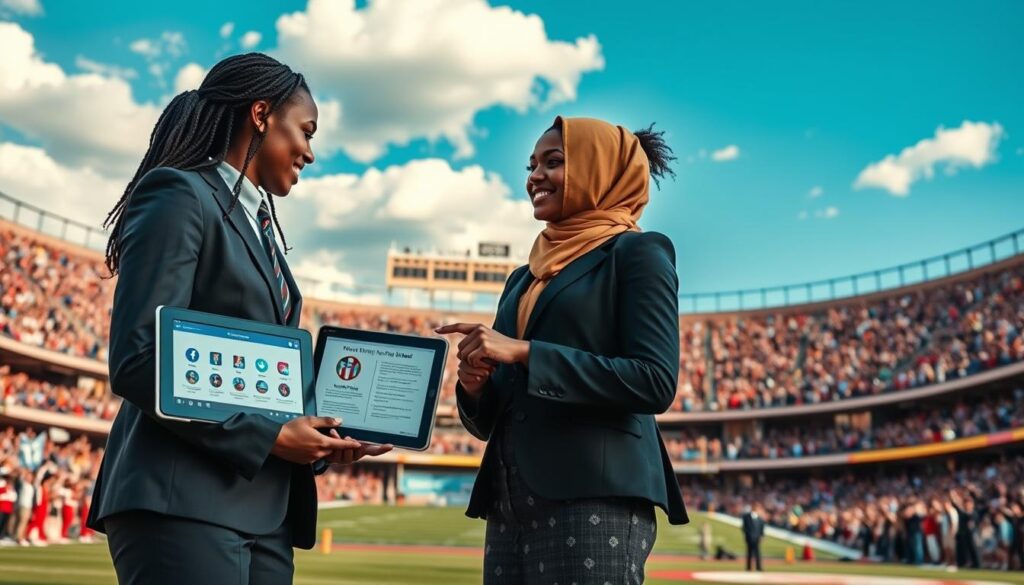
What’s allowed under the NIL policy? It’s real business deals, not just paying for play. Athletes must offer real services like appearances or social media posts.
The Cavinder twins were early examples of this new era. They used their fame for brand deals and social media. They showed that being yourself can be as valuable as your skills.
Permitted NIL Activities
- Social media sponsorships and promotions
- Personal appearance fees
- Product endorsements and merchandise
- Autograph signings and memorabilia
- Camp and clinic instruction
Common NIL Restrictions
| Category | Restriction | Reason |
|---|---|---|
| School Marks | Cannot use university logos | Protects institutional branding |
| Performance Bonuses | No pay-for-play agreements | Maintains amateur status |
| Recruiting Inducements | No promises during recruitment | Prevents bidding wars |
| Prohibited Industries | No alcohol/gambling deals | Protects athlete reputation |
Boosters with lots of money now play a big role. They help with deals but can’t pay for sports skills. It’s a mix of capitalism and amateur sports.
The NIL policy has led to weird partnerships. Like entire teams sponsored by barbecue joints. Welcome to the world where athletes can make money from their fame.
State laws add more complexity. Some states are more lenient than others. This means an athlete’s chances depend on where they go to school.
The NIL policy is about more than money. It’s about athletes controlling their own brands. They learn business skills that help them after sports.
This change keeps evolving. The NCAA updates rules often. The NIL policy is a work in progress, balancing athlete power with traditional values.
How Compliance Affects Florida Teams
Florida was ahead of the game when it came to letting athletes sign endorsement deals. Our state’s rules on NIL regulations made it a testing ground for NCAA Compliance and capitalism.
Florida’s early move gave our schools a boost in recruiting. Imagine telling top recruits they can make money right away. It’s like giving them VIP access to the championship before it starts.
Florida’s state laws opened doors but also caused headaches for compliance teams. Athletes get to earn money, but schools face tough sponsorship issues.
Let’s look at how Florida stands out compared to its neighbors:
| State | NIL Implementation | Recruiting Impact | Sponsorship Rules |
|---|---|---|---|
| Florida | Immediate (2021) | Significant advantage | Most flexible |
| Georgia | Delayed rollout | Moderate impact | School approval required |
| Alabama | Conservative approach | Limited advantage | Restrictive |
| Louisiana | Medium flexibility | Variable impact | Moderate restrictions |
Florida State athletes using NIL for charity is a win. Miami athletes becoming influencers show the commercial side. But when endorsements clash with university sponsors? That’s when compliance officers really work hard.
State laws vary, making it tough for Florida teams. They have more freedom but face more complex rules. It’s the cost of leading the change.
Recruiting advantages will even out as other states follow. The real challenge is how well Florida teams handle ongoing compliance issues. In college sports, winning games is key, but following the rules is even more important.
Avoiding Sanctions
Navigating NCAA compliance is like playing chess with invisible pieces. You know the game exists, but you’re never sure where the boundaries are. It’s not just knowing the rules; it’s guessing how they’ll be interpreted tomorrow.
There are obvious landmines to avoid. Alcohol and gambling endorsements are a no-go. Using school logos without permission is also a big no. Deals that look like recruiting inducements? That’s a big problem.
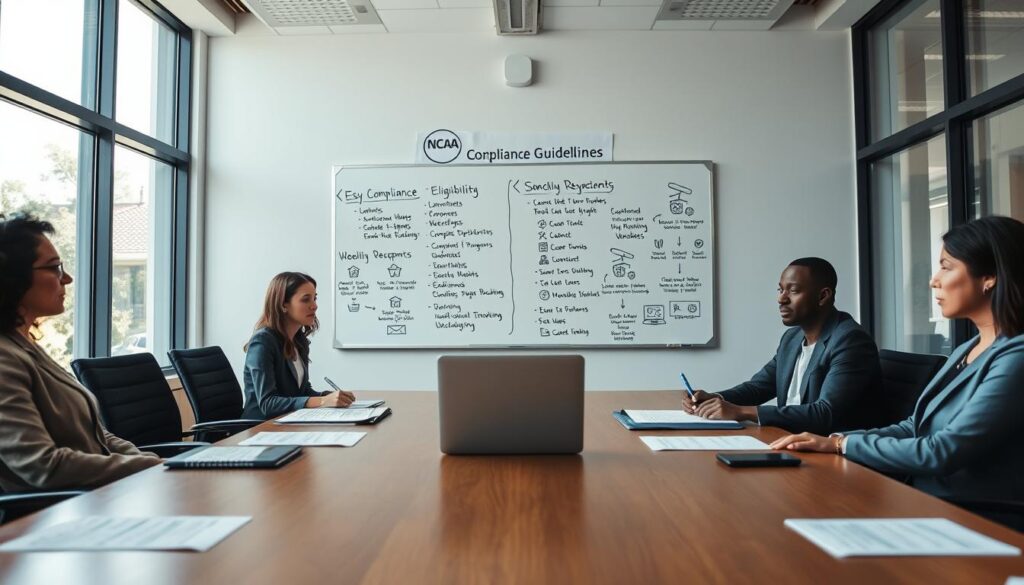
Disclosure is key. It’s your way out of trouble. Every deal, handshake, and tweet needs to go through compliance officers. They live for paperwork, and we should thank them for it.
The real challenge is the state-by-state rules. What’s legal in Florida might get you suspended in Alabama. Schools interpret rules differently, making it a patchwork quilt of dos and don’ts.
Here are three steps to avoid trouble:
- Assume every deal needs disclosure – even your cousin’s car wash promotion
- Document everything like you’re writing a memoir
- When in doubt, ask the compliance office (they’ve seen weirder)
The 2006 Citadel case shows how quickly good intentions can go wrong. What seemed like innocent support became violations because of a missing dot.
| Prohibited Area | Common Mistake | Compliance Solution |
|---|---|---|
| Endorsements | Using school logos in promotional material | Pre-approval from compliance office |
| Recruiting | Deals offered to prospective students | Clear separation between NIL and recruitment |
| Disclosure | Assuming small deals don’t need reporting | Document every arrangement, no exceptions |
| State Laws | Applying one state’s rules universally | School-specific compliance training |
Remember: NCAA compliance isn’t about stopping opportunities. It’s about keeping them safe. Athletes who thrive in this new era see rules as guardrails. They keep you safe while you enjoy the view.
Your best defense? Assume everything is a violation until proven safe. Compliance officers might seem like buzzkills, but they keep you from trouble.
High-Profile Cases
When the NCAA compliance rules changed, some athletes didn’t just dip their toes in the water. They built luxury yachts. The Cavinder twins became overnight stars, signing deals quickly. They combined their marketable personalities with their basketball skills.
Livvy Dunne turned her social media into a financial powerhouse. She didn’t just break the mold; she created a new one. While others were learning Instagram, Dunne was making six-figure deals.
But it’s not just about being famous. Entire teams have gotten local sponsorships. Musicians are starting careers with athlete collaborations. Some athletes even use their deals for charity.
What makes some athletes stand out? Three key things:
- Pre-existing social capital – built audiences before cashing in
- Niche marketability – specific skills beyond their sport
- Business savvy – understanding brand alignment
The Cavinder twins knew how to package themselves. Their twin dynamic offered unique marketing chances. Dunne saw her gymnastics as just part of her brand.
Natural talent doesn’t always mean business success. The best NIL deals mix sports talent with business smarts.
Some athletes are starting their own merchandise lines. Others are launching podcast networks. A few are even investing in startups.
The playing field isn’t even – and that’s the beauty of it. NIL rewards creativity and talent. Those who get this are building careers that will last long after their playing days.
These stories aren’t just tales; they’re blueprints. They show what’s possible when ambition meets opportunity in college sports.
What to Watch for Next
If you thought the current NIL landscape was chaotic, buckle up – we’re about to enter the turbo-charged second inning of this game. The changes coming could make today’s million-dollar deals look like lemonade stand money.
Congress is now focusing on college sports. Lawmakers are discussing national standards to replace the current state laws. Imagine federal NIL legislation that actually makes sense. Wouldn’t that be something?
The collectives you see today? They’re evolving into full-service agencies. We’re talking professional representation, brand management, and even financial planning for athletes. These aren’t booster clubs anymore – they’re Fortune 500 operations in training.
Then there’s the elephant in the room: should schools pay players directly? The debate is heating up, and the answer might reshape college sports forever.
The transfer portal continues to rewrite the rules of roster management. Players now move between schools while managing brand deals and endorsement contracts. It’s free agency meets college football.
Here’s what’s actually happening behind the scenes:
| Pending Change | Potential Impact | Timeline |
|---|---|---|
| Federal NIL Legislation | National standards replacing state laws | 2024-2025 |
| House v. NCAA Settlement | Revenue sharing with athletes | Ongoing |
| Collective Evolution | Professional agency services | Already happening |
| Transfer Rule Modifications | Fewer restrictions on player movement | 2024 season |
The House v. NCAA settlement could be the biggest game-changer. It might establish a revenue-sharing model that acknowledges athletes’ contributions. We’re talking about real money flowing from schools to players.
Will the system hold together or collapse under its own weight? The next few years will determine whether college sports can balance tradition with modernization. It’s the greatest reality show in sports – and everyone has a front-row seat.
Keep your eyes on Congressional hearings, court decisions, and those ever-evolving transfer rules. The only constant in college sports right now? Change itself.
Wrap-Up
We’ve reached the end of our NCAA compliance journey. We’ve looked at everything from eligibility rules to the big change brought by NIL. This system is so unique, it’s only found in college sports.
This guide wasn’t just about rules. It was about showing you how to see things differently. Watch how Florida teams handle these challenges. See how penalties can change a team’s path? That’s the real excitement behind sports.
The future is already here. Athletes are seen as brands. Fans are more than just spectators. Compliance is like a high-stakes game of chess. Your turn? Stay curious, support your teams well, and enjoy the ride. That’s what being a fan is all about, right?