

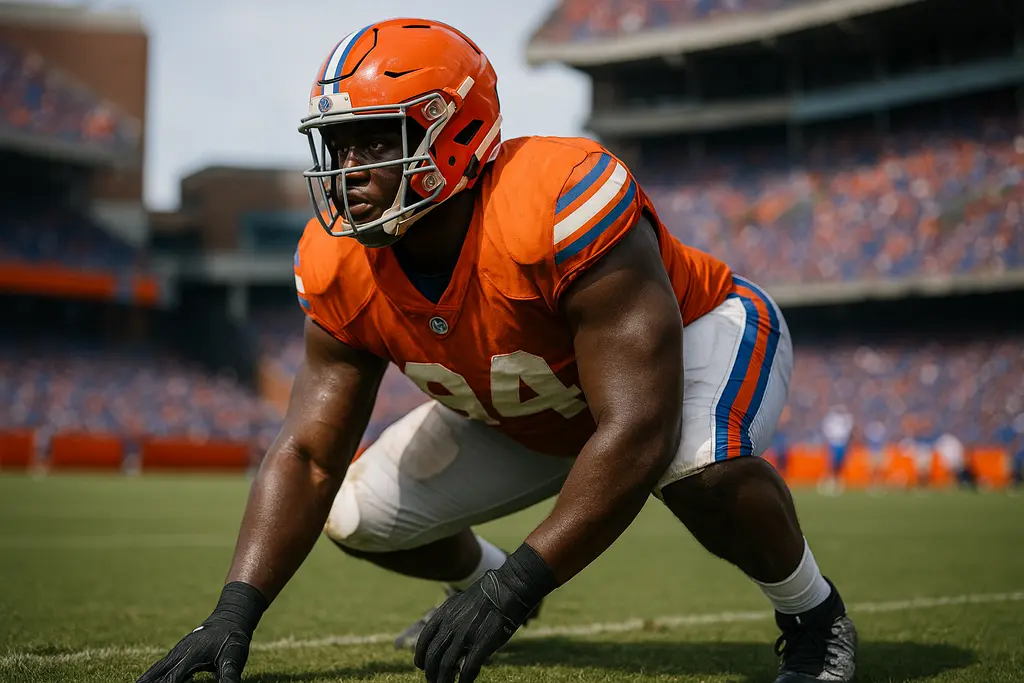
The Florida football defensive line breakout candidates list starts with role clarity, not hype. Florida’s 2026 front will be shaped by who earns early-down trust, who can handle interior contact, and who can create enough pass-rush pressure to stay on the field in key situations. Public reporting points to a mix of returning players, projected starters and younger linemen trying to turn opportunity into production.
For a Florida audience, the defensive line race matters because it affects every level of the defense. A front that wins first down can protect linebackers, shorten third downs and give the secondary more manageable coverage situations. A front that gets moved off the ball can force a defense into constant adjustment. That is why the breakout label should be tied to playable traits and snap path, not just name recognition.
Why The Defensive Front Needs New Production
Breakout Value Starts With Available Snaps
Defensive line breakouts usually come from two forces meeting at the same time: a player’s development and a real opening in the rotation. Florida has several names being discussed because the 2026 group is not simply about replacing one player with one player. It is about building a front that can handle nose tackle snaps, defensive end responsibilities and pass-rush packages without leaning too heavily on one lineman.
That is where projected roles carry weight. Sports Illustrated projected Brendan Bett as a starting interior lineman and Kamran James as a starting defensive end after spring camp, while listing Bett as a returning redshirt junior who had 39 tackles and three sacks in 2025 SI defensive line projection. Those details do not guarantee a jump, but they give both players a clear path to high-value snaps.
Breakout Does Not Mean Guaranteed Stardom
A fair player-performance read separates a breakout candidate from a proven star. A candidate may have traits, a projected job or prior flashes, but still needs to answer questions once the season starts. Can he hold his gap against SEC run games? Can he avoid losing leverage against double teams? Can he finish pressures instead of only affecting the pocket? Those are the measures that turn offseason attention into real production.
That framing also helps with younger linemen. If a player has not logged a heavy college workload, the question is not whether he can dominate every week. The better question is whether he can win a defined role: early-down nose, base end, interior pass-rush piece or rotational edge. Florida’s best version of the front likely comes from several players making smaller jumps rather than one player carrying the full unit.
Interior Candidates With Starter-Level Paths
Brendan Bett Has The Clearest Interior Case
Bett’s case is the cleanest because it combines production, experience and projection. A returning redshirt junior with 39 tackles and three sacks in the 2025 season has already shown enough activity to be discussed as more than a depth piece. The next step is not just adding sacks. For an interior defender, the bigger jump often shows up in run fits, pocket push and the ability to stay effective across longer drives.
If Bett becomes a true leader inside, Florida gains a stabilizer. Interior linemen who can handle base downs give coordinators more freedom with pressure calls. They also help keep second-and-long and third-and-medium available, which is where edge rushers and blitz packages become more useful. Bett’s breakout path is less about surprise and more about turning a projected role into consistent down-to-down control.
Joseph Mbatchou Fits A Development Profile
Joseph Mbatchou fits a different type of breakout profile. The research available for him lists nine freshman appearances, 11 tackles, one tackle for loss and 134 snaps. Those numbers describe a young player who has already been introduced to game action but has not yet carried a front-line workload. That is often the stage where a sophomore jump can matter.
For Mbatchou, the key word is competition. He is expected to compete for a nose tackle role, and that spot demands more than size. A nose tackle has to handle contact from both sides, keep linebackers clean and avoid being displaced on zone or gap runs. If he earns steady snaps, the breakout may not show up first in sack totals. It may show up in the way Florida’s run defense looks when he is aligned over the center.
Edge And End Candidates Who Can Change Downs
LJ McCray And Jeramiah McCloud Carry Breakout Buzz
LJ McCray and Jeramiah McCloud are part of the public breakout conversation. Yahoo Sports identified both among Florida’s breakout candidates for the 2026 season Yahoo Sports breakout list. That matters because defensive line growth is not limited to returning starters. Rotational defenders and young linemen can reshape a front if they give the staff trustworthy snaps in specific packages.
McCray’s path should be judged by how often he affects blocking schemes. If an offense has to slide protection, chip with a tight end or alter run calls because of one defender’s presence, that player is changing the game even before the stat sheet fills up. McCloud’s path depends on where Florida uses him and how quickly he earns assignment trust. A defensive lineman can flash athletic ability in limited snaps, but a bigger role requires gap discipline and repeated execution.
Kamran James Brings A Projected Starting Role
James stands out because he is projected as a starting defensive end in the cited spring-camp projection. That does not make him a finished product, but it places him in one of the most valuable roles on the front. A starting end has to do two jobs at once: set the edge against the run and threaten the passer enough to affect protection.
The run-game part is easy to miss from the stands. If James can force backs to cut inside before they want to, keep outside contain and avoid getting sealed by tight ends, he helps the entire defense stay on schedule. The pass-rush part will draw more attention, but Florida needs both. A defensive end who only wins in passing situations is useful. A defensive end who can hold up on early downs and still pressure the pocket has breakout value.
How To Judge The 2026 Defensive Line Race
Snap Share Will Say More Than Labels
Spring and offseason labels can guide the conversation, but snap share will reveal the staff’s trust. The first few games should show who is getting base-defense work, who is limited to pass-rush situations and who is playing when the opponent still has its full call sheet available. That is especially important for interior players, where a reliable 30 snaps can be more valuable than a few splash plays in a narrow package.
Fans should also watch alignment. If Bett is moved across interior spots, that suggests the staff trusts his technique and communication. If James is kept on the field against different formations, that signals more than pass-rush interest. If McCray, McCloud or Mbatchou earns early-down work, that would be a stronger breakout indicator than late-game snaps after the rotation has thinned.
Production Should Be Read By Role
Not every defensive lineman should be judged by the same numbers. Nose tackles and interior defenders can have strong games without heavy tackle totals if they absorb blocks and keep linebackers free. Defensive ends and edge players need more visible disruption, but pressures, contain wins and forced hurried throws can matter before sacks arrive.
The cleanest fan checklist is simple: who wins first contact, who keeps his gap, who affects the quarterback, and who stays on the field in competitive downs? Those answers will separate offseason candidates from real contributors.
Why The 2026 Florida Front Matters
The 2026 season will test Florida’s ability to develop defensive linemen into defined roles. Bett brings the strongest interior profile from the available reporting. James has a projected starting job at end. McCray and McCloud have outside breakout attention. Mbatchou brings a young nose tackle profile that depends on growth and trust.
That makes the Florida football defensive line breakout candidates discussion less about picking one name and more about tracking how the rotation forms. If two or three of these players take real steps, Florida’s defense can become more flexible, more physical and harder to plan for on early downs. The front will not need every candidate to hit. It needs enough of them to turn opportunity into dependable snaps.