

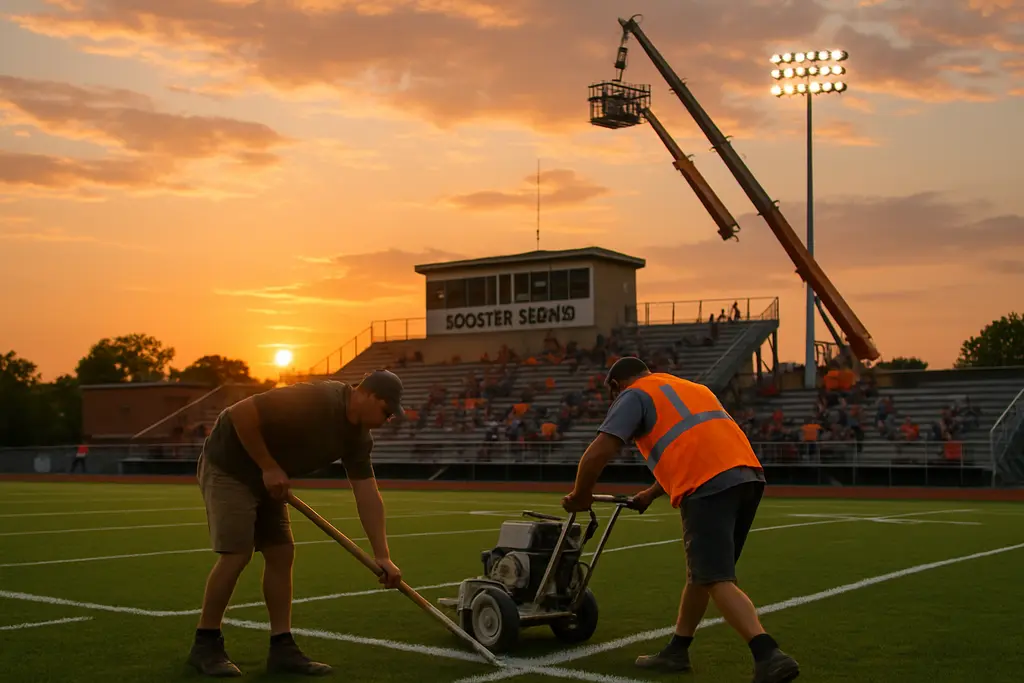
The Booster Stadium revitalization plan in Ocala has moved from a long-discussed need to a defined facilities project for Marion County Public Schools, with football at the center of the conversation. The proposal affects Vanguard High School, visiting teams, fans, graduations and other community events tied to one of the county’s most visible school sports venues.
What Booster Stadium revitalization Means For Marion County
Why The Board Moved The Plan Forward
On May 21, 2026, during a Marion County School Board work session, board members agreed to plan a revitalization of Booster Stadium and directed staff to draft interlocal agreements while beginning work toward a community capital campaign, according to an Ocala Gazette report. That step did not mean construction had begun. It meant the district had moved into a planning and funding phase for a stadium that has served the county for more than five decades.
The research record says Booster Stadium was built in 1969, opened by the Ocala Wildcats Booster Club and transferred to the school board in 1973. The case for action is tied to age and function. Reported concerns include plumbing, electrical and structural issues, outdated seating and amenities, and locker rooms that are no longer fully usable. For a football venue that carries regular high school use, those issues affect more than appearance. They touch game operations, player movement, halftime organization, visiting team logistics and the way families experience Friday nights.
Booster Stadium revitalization Timeline And Funding
The project has been estimated at $25 million. The funding plan described in the research calls for $20 million through bond issues using certificates of participation, with another $5 million expected through a community capital campaign. The May work-session plan targeted final bond approval for summer 2026, and by September 3, 2026, the School Board had agreed to borrow up to $160 million through certificates of participation to speed up several school facilities projects, including a $20 million plan for Booster Stadium.
Design concepts were planned for the 2026-2027 school year. Construction was described as possible in the 2027-2028 school year if funding was secured. That wording matters. As of September 28, 2026, the supported record shows planning, borrowing authority and campaign work, not a completed rebuild. Formal agreements with the city of Ocala or Marion County were still identified as required for shared community use, operating hours and management.
Football Benefits For Teams And Game-Day Operations
Vanguard’s Home-Field Fit
For local football, Booster Stadium revitalization is less about a cosmetic refresh and more about giving teams a workable stadium platform. Vanguard High School is central to that point because it does not have an on-campus stadium and uses Booster Stadium for home games. A stronger, more reliable venue would give Vanguard a home setting with upgraded support spaces instead of asking coaches, players and staff to manage around old infrastructure.
The proposal also matters for opponents. The research notes that visiting teams have had to return to Vanguard’s campus for post-game facilities such as showers. Improved locker rooms at Booster Stadium would reduce that problem. That is a practical football detail: visiting teams need a place to meet, recover, shower and load buses after games. Better team spaces also help event staff move players and coaches through the building with fewer bottlenecks.
Locker Rooms, Turf And Track Use
The proposed work includes an artificial turf field, a synthetic track, upgraded locker rooms, improved concession areas, better restrooms and added storage beneath expanded bleachers. Those changes would affect football, track and other school activities. Turf can support heavier usage than a natural grass surface, though the research does not specify final design, maintenance terms or a confirmed construction schedule.
From a football operations view, the most direct gains would come from field consistency, locker room access and storage. Coaches want predictable footing, room for equipment and a stadium layout that supports pregame, halftime and postgame routines. Fans see the seating bowl and concessions. Teams feel the difference in the areas behind the field.
- Players: upgraded locker rooms and more dependable game-day spaces.
- Coaches: cleaner movement between field, locker room and equipment areas.
- Visiting teams: less need for post-game travel back to another campus for basic facilities.
- Fans: more seating, improved restrooms and updated concessions.
- Event staff: added storage and a venue better suited for larger crowds.
The same planning questions show up across Marion County sports facilities. Venue access and scheduling affect families, teams and travel patterns, as seen in local discussion around the South Marion Stadium closure. Booster Stadium carries a different project scope, but the core issue is similar: high school football depends on facilities that can handle weekly use.
Fan Access, Events And Local Revenue

Capacity And Shared Use
The plan would expand Booster Stadium to about 8,000 seats. That capacity figure is significant for local football because larger crowds require more than bleachers. Restrooms, concessions, parking flow, entry points and staffing all shape the experience. The research does not provide a final parking plan, so that remains a detail to watch as design work continues.
Board Chair Sarah James and district leaders have described the stadium as a community resource, including the idea of early opening hours around 5 a.m. Shared-use agreements with the city of Ocala and Marion County were part of the planning discussion. Those agreements would be important because a stadium used beyond school football needs clear rules on access, supervision, maintenance cost and scheduling priority.
Graduations, Tournaments And Rentals
The district also sees event value beyond Friday night football. The improved venue could host graduations, regional tournaments, state competitions and concerts. The research notes that schools have paid outside venues such as the World Equestrian Center and the Southeast Livestock Pavilion for graduations. A rebuilt Booster Stadium could reduce those outside costs and keep more event revenue within the district through rentals, parking and concessions.
That financial argument is part of the sports story because stadiums do not operate on game nights alone. A facility with better seating, restrooms, concessions and team spaces can carry a broader calendar. The tradeoff is that more events place more demand on maintenance, security and operations. Those details will depend on the final agreements and operating model, which had not been completed in the supplied record.
Booster Stadium revitalization And Marion County Football Identity
Booster Stadium has a long place in Ocala sports, but the current plan is driven by function more than nostalgia. A stadium built in 1969 now has to meet the needs of athletes, families and event staff in 2026 and beyond. The proposed work gives Marion County a chance to align a major public-school venue with the way high school football and community events are actually used.
If the Booster Stadium revitalization reaches construction in the 2027-2028 school year, the benefits would be felt first in practical ways: more seats, better locker rooms, improved restrooms, updated concessions and a field built for frequent use. For Vanguard, it would strengthen a home venue that already carries its football schedule. For visiting teams, it would simplify post-game logistics. For fans, it would address comfort and access. For the district, it would create a venue with potential to keep more events and revenue inside Marion County.