
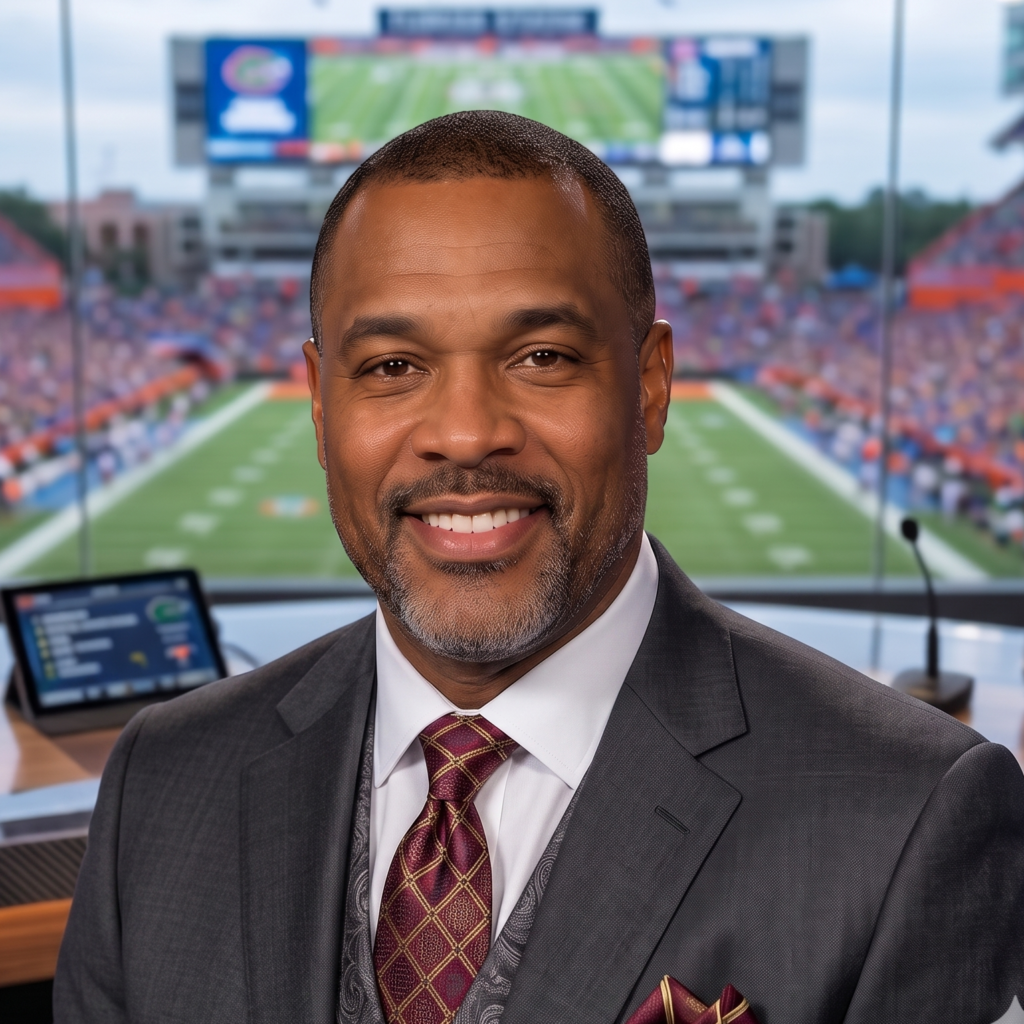

The Aaron Philo journey reached Florida’s first-team offense on August 24, 2026, when head coach Jon Sumrall announced that Philo had moved to the top of the quarterback depth chart and would take the “bulk of first-team QB snaps” before the September 5 opener against Florida Atlantic, according to the Florida announcement.
That move did not come out of one practice or one scrimmage. Florida’s quarterback competition started in spring 2026, carried into fall camp and included two preseason scrimmages. Sumrall said Philo’s ability to “operate the full offense at a little bit higher level right now” separated him in the race, according to The Washington Post.
Aaron Philo Journey To The Top Of Depth Chart
Why Aaron Philo Journey Moved In August
Florida’s decision came at a clear point in the calendar. By August 24, the Gators had gone through spring work, summer installation and enough fall camp snaps for the staff to set a direction before game-week preparation. Sumrall’s wording mattered. He did not frame Philo as a finished product or as a ceremonial starter. He pointed to operational command of the offense, which is often the deciding factor when a transfer quarterback is working in a system he already knows.
The Aaron Philo journey also included timing that worked in his favor. Philo transferred from Georgia Tech in January 2026 after offensive coordinator Buster Faulkner moved to Florida. That prior exposure to Faulkner’s offense gave him a practical edge during the competition. It did not remove the need to win reps, but it helped explain why the staff could evaluate him through a fuller version of the call sheet.
What The Staff Prioritized
Sumrall’s public explanation focused on command, not just arm talent. That distinction is important for Florida’s 2026 offense. A quarterback who can align protections, get the offense in and out of the huddle, process the middle of the field and keep the ball out of trouble gives the staff more room to call the full offense. Philo’s path through camp pointed to those traits.
During fall camp and the two preseason scrimmages, Philo received more first-team reps than Tramell Jones Jr., according to the research provided. The same notes say Jones had an interception and two fumbles in scrimmage settings that Sumrall considered important. Those details do not define either quarterback’s long-term ceiling, but they help explain the late-August separation in a competition that had stretched for months.
From Record High School Passer To Transfer Fit
Production Before Florida
Philo arrived at Florida with a clear passing background. At Prince Avenue Christian in Bogart, Georgia, he set the Georgia state record with 13,922 career passing yards, moving past Trevor Lawrence’s previous mark of 13,902. He threw 159 total touchdowns in high school, including 56 as a senior in 2023. Those totals established him as a volume passer before he entered the college game.
High school records do not guarantee SEC production. They do, however, give context to why Florida viewed him as more than a depth addition. Philo had already handled large passing loads, repeated high-volume weeks and lived with the attention that comes with record-setting production. For a Florida staff trying to build a quarterback room around competition, that background was relevant.
Georgia Tech Gave Him College Tape
Philo’s college sample at Georgia Tech gave Florida more to study. In 2025, he played in three games as a backup before making his first start against Gardner-Webb on September 6, 2025. In that start, he completed 21 of 28 passes for 373 yards, one touchdown and one interception. That performance did not make him a finished college quarterback, but it gave Florida evidence against live college competition.
That part of the Aaron Philo journey helps explain why the transfer fit made sense. Florida was not only taking a passer with high school numbers. It was adding a quarterback who had already been in Faulkner’s system, had taken college snaps and had one productive start on his record. The combination of scheme familiarity and real game tape made him a credible contender from the start of the 2026 competition.
How Camp Reps Shaped The Decision
First-Team Work Carried Weight
Quarterback competitions are not only about highlight throws. They are about who can keep practice on schedule. The research points to Philo receiving more first-team reps during fall camp and the preseason scrimmage period. That matters because first-team reps usually create better evidence for coaches. The quarterback works with the starting receivers, against stronger defensive looks and inside the timing the staff expects to use on Saturdays.
For Florida, the decision gave the offense a lead voice before the September 5 game against Florida Atlantic. That timing was important. Once a staff moves from competition mode to game-week preparation, the starter needs more of the plan. The Gators made that shift with Philo after a process that began in spring and lasted into late August.
Why Familiarity Was Not The Only Factor
Philo’s familiarity with Faulkner’s system was a significant advantage, but the staff still had to judge whether that knowledge showed up against Florida’s defense. The available facts show that it did. Sumrall cited Philo’s ability to operate the full offense at a higher level at that point in the calendar. That phrasing suggests the staff saw more than comfort with terminology. It saw enough execution to assign the bulk of first-team work.
There is still a limit to what can be concluded from camp notes and staff comments. Florida’s public decision identified Philo as the leader of the room before the opener, and his first two starts gave the Gators early results. It did not remove the week-to-week pressure that comes with playing quarterback in Gainesville.
Early Starts Gave Florida A Working Baseline

Florida Atlantic Start Confirmed The Plan
Philo started against Florida Atlantic on September 5, 2026. In that Week 1 start, he completed 16 of 21 passes for 275 yards and three touchdowns, and he added one rushing touchdown. Those numbers gave Florida an immediate return on the late-August decision. They also showed how the offense could function with Philo distributing the ball efficiently and adding scoring value near the goal line.
For readers tracking his first start in Gainesville, our post-FAU role analysis focused on what that opener showed and what still needed proof after one game. The key point after September 5 was simple: Florida made the move, then saw Philo handle the first assignment with production through the air and on the ground.
Campbell Added A Second Data Point
In the following game against Campbell, Philo again completed 16 of 21 passes. He threw for 242 yards and two touchdowns, and he added another rushing touchdown. Through those first two Florida starts, he completed 32 of 42 passes for 517 yards, five passing touchdowns and one interception, with two rushing touchdowns.
That two-game sample is still early, but it is useful. The repeated 16-of-21 completion line in both games points to efficient operation. The touchdown production showed scoring impact. The one interception across those two games gave the staff a cleaner early baseline than many first-time transfer starters provide. Florida will need more evidence against stronger defensive fronts and tighter coverage, but the first two starts matched the staff’s stated reason for elevating him: operating the offense.
What Aaron Philo’s Starter Status Means For Florida
The Quarterback Room Has A Clear Order
For Florida, the Aaron Philo journey matters because it gave the 2026 offense a defined starting point. The Gators did not leave the competition open into the opener. They named Philo before the Florida Atlantic game, gave him the bulk of the first-team work and then let the offense build around his timing. That clarity helps receivers, linemen and play-callers. It also sets expectations for how the staff evaluates the position after each start.
The decision does not erase competition inside the room. Jones remained part of the broader quarterback picture based on the camp battle, and Florida’s staff had months of practice evidence on both players. But once Philo won the role and started the first two games, the weekly evaluation shifted. The question became less about who knew the offense in August and more about how consistently Philo could run it in live game settings.
The Next Step Is Sustaining Command
Philo’s story to this point is supported by several clear markers: a record-setting high school career in Georgia, a Georgia Tech stop that included one productive start, a January 2026 transfer tied to Faulkner’s move, a spring-to-fall competition at Florida and an August 24 decision by Sumrall. His first two starts then gave the Gators efficient passing numbers and rushing scores.
That is the shape of the quarterback story as of September 21, 2026, based on the research provided. Florida has a starter who won the job through scheme command, first-team work and early-game execution. The next measure is repetition. If Philo keeps the offense on schedule, limits giveaways and continues to finish drives, the path that began at Prince Avenue Christian and moved through Georgia Tech will remain one of the central team-news threads in Gainesville.