


College football’s real power doesn’t happen on Saturdays. It happens in high school hallways and living rooms from June to December. This is where championships are built, not in fourth-quarter drives.
Florida’s 2025 class is a great example. They ranked 11th nationally and 8th in the SEC. Their class includes Vernell Brown III and an elite defensive back trio, all needing polish.
The summer heat brings more than just temperatures. It brings commitment predictions and program-defining decisions. Teams that master this know you don’t build champions in the fourth quarter. You build them through strategic SEC recruiting.
Those who treat recruiting like political primaries win in the end. They make early investments and build coalitions. Wise programs win in the quiet moments between seasons.
Key Trends Across the SEC
The SEC recruiting scene is like a high-stakes poker game. Everyone’s trying to outmaneuver each other, and the stakes are getting higher. With only eight ESPN 300 prospects left, the drama is reaching its peak in this year’s high school football recruitment.
Coaching changes at Auburn, Florida, LSU, and Penn State have opened up new opportunities. Jordan Brown’s decision to stay with LSU, even after Brian Kelly left, shows his dedication. Tyler Womack’s change of heart about Auburn after Hugh Freeze’s departure is just smart business in this competitive world.
The real question is whether we’re seeing the end of traditional recruiting or a new, exciting chapter. In the era of the transfer portal, every commitment seems like a temporary truce, not a lasting agreement.
Florida’s Latest Signees
Billy Napier’s recruiting at Florida is like looking at luxury cars but choosing a reliable Honda. The Gators have 23 new players, some are solid choices, others are exciting possibilities.
Vernell Brown III is a nod to tradition, like choosing someone’s kid for a job. It’s like nepotism, but it can work well. The defensive back trio gives me hope, as you can never have too many in the SEC.
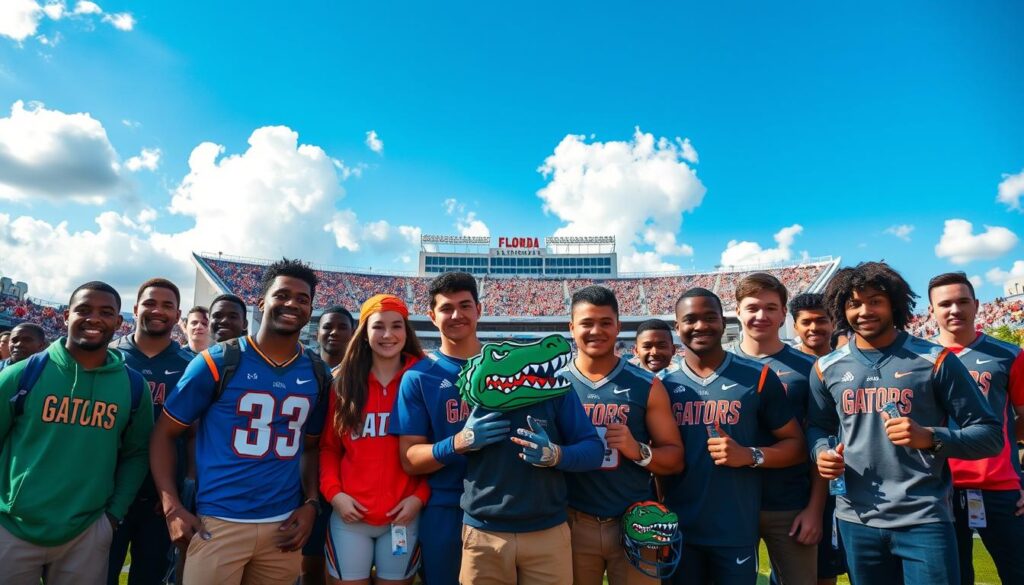
The real excitement is in the almost-signs and maybe-soon additions. Jeremiah Smith could be a game-changer, making defenses nervous. Jamarion Montgomery might join the Gators, adding strength to the secondary.
In the NIL era, “committed” is like a politician’s promise. Noah Owusu-Boateng chose Notre Dame, showing even being a top choice doesn’t mean you’ll sign.
Napier’s recruiting at Florida is like a mix of quality and value. The defensive backs show smart planning, while the receivers could be explosive. Whether this class is key or just good enough will depend on how the players perform under pressure.
Top National Recruits Headed South
Watching elite football talent move south is like seeing money shift hands. The SEC’s pull has grown from a local thing to a national force. Now, five-star players make choices like business leaders.
Jordan Carter’s choice shows this new world. He must decide between Miami’s beaches and Ohio State’s football. It’s not just about playing ball anymore. It’s about building a brand and securing money through NIL deals.
The real story is in the pursuit patterns. Anthony Jones was set for Oregon but chose Texas A&M. Kevin Ford is being courted by many, despite being committed to Florida. These aren’t just battles for players. They’re economic wars fought on the recruiting trail.
Three key southern migrations are changing the game:
- Jeremiah Smith – Florida’s top prospect
- Jamarion Montgomery – A game-changer Florida is targeting
- Jordan Carter – The Miami/Ohio State decision that shows the modern recruiting world
What sets these recruiting classes apart? The SEC’s wealth has turned local recruiting into a national game. When Florida takes talent from Texas or LSU raids Pennsylvania, college football’s economy is being rewritten.
The southern move isn’t just about the weather anymore. It’s about guaranteed money, fame, and top-level competition. These elite recruiting classes are more than just talent. They’re smart investments in football’s new economy.
As these top recruits head south, they’re not just picking schools. They’re choosing entire worlds, financial chances, and career paths. The old recruiting map is gone, and the new one is SEC red.
Impact on 2024 Szn
Welcome to the SEC’s version of musical chairs, but the music stopped months ago. Some programs are scrambling for seats. The 2024 season is not just about football; it’s about who got the best recruits.
Florida’s recruiting class ranking is interesting. They’re 11th nationally but 8th in the SEC. It’s like winning a participation trophy in the hunger games. The Gators’ SEC recruiting faced challenges due to coaching uncertainty, affecting their 2024 season.
Program stability is key in the SEC. Schools with stable coaching staffs early on built strong classes. Programs in transition are playing roster roulette. Their success in 2024 depends on quick staff development.
Teams that recruited early will start strong. They’ve already begun developing their systems. The ones who recruited late will play catch-up in spring practice.
| Program Stability Factor | High Stability Programs | Transition Programs | Impact on 2024 Season |
|---|---|---|---|
| Early Signing Rate | 85%+ signed early | Below 70% signed early | Faster system installation |
| Coach Retention | Minimal staff changes | Multiple new coordinators | Scheme consistency |
| Blue Chip Ratio | 55%+ blue chip recruits | Below 40% blue chip | Depth chart quality |
This analysis shows that programs with stable coaching are ready for the SEC. Their SEC recruiting foundations lead to better on-field performance.
The 2024 season will show which teams built for success and which chased quick fixes. In the SEC, recruiting with purpose is key. Teams that did this well will be in the championship talks.
Coach & Analyst Reactions
Recruiting season makes every college coach a master storyteller. They talk about character and talent, leaving out the misses. Coach Billy Napier’s comments on Florida’s class are a great example. He focuses on “high character guys,” but doesn’t mention the players they missed.
Analysts tell a different story. They talk about players like Jordan Brown being key for LSU. This is code for “if this kid doesn’t choose us, our class might fall apart.” These insights are key in high school football recruiting. They show the real story behind the PR.
Parent quotes often reveal more than coaches’ press conferences. When Kevin Ford’s mom talks about their Texas visits, it shows Florida’s worries. These quotes cut through the coachspeak and show where players might really be leaning.
National recruiting analysts have different facts than coaches. They base their predictions on real talks with players, families, and high school coaches. The gap between what coaches say and what analysts know is huge.
Coaches sell hope and excitement. Analysts deal in reality. Both are important for understanding high school football recruiting. But, smart fans know to trust analysts for real predictions.
Transfer Portal & Recruiting
The transfer portal has changed recruiting into a game of musical chairs. Programs now focus on both high school recruits and experienced players. This creates tension between growing players and getting immediate results.
Take Florida signees like Kevin Ford. He’s committed to the Gators, but other teams are interested. It’s like dating while keeping options open. The portal has made recruiting more complex.
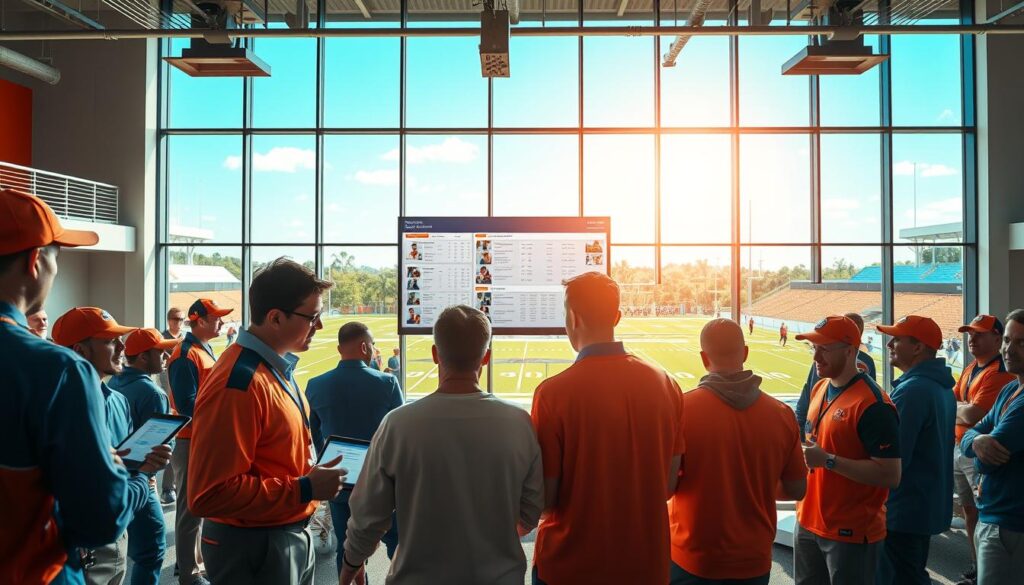
Smart programs mix developing players with using the portal. They know high school commits might leave. Less strategic teams worry about losing their Florida signees to other coaches.
The Kevin Ford situation shows this chaos. He’s committed to Florida, but other teams keep calling. It’s like trying to keep a dinner reservation while other restaurants offer better deals.
| Aspect | Traditional Recruiting | Transfer Portal | Program Impact |
|---|---|---|---|
| Timeline | 2-4 year development | Immediate contribution | Dual-track strategy needed |
| Commitment stability | Verbal agreements | No long-term guarantees | Constant roster management |
| Player development | Build from ground up | Plug-and-play options | Mixed development approaches |
| Resource allocation | High school visits | Portal evaluation | Double the scouting work |
This table shows the challenge programs face. The portal demands immediate attention, while traditional recruiting needs patience. Getting this balance wrong can hurt a program fast.
The best programs see the portal as a supplement, not a replacement. They develop their Florida signees and use the portal for specific needs. This approach can build a dynasty, not just a team.
Fans find this both fascinating and frustrating. The uncertainty around commitments like Ford’s keeps everyone guessing. Will he stay with the Gators, or will the portal pull him elsewhere?
Coaches must be recruiters, psychologists, and fortune tellers. They need to sell a vision to high school kids and negotiate with college veterans. It’s a tough job.
The portal has changed roster building. Programs that adapt will do well. Those that don’t will wonder about their Florida signees when the music stops.
Conclusion
So, what’s the final score in this endless recruiting battle? Florida’s current recruiting classes are like teenagers – full of promise but not quite ready. They’re good enough to get invited but might not be dancing when the music stops in the SEC.
The coaching carousel never stops spinning. Billy Napier and Brian Kelly learned that even with top recruiting classes, job security is not guaranteed. These programs gamble with their futures every signing day.
The smart teams know that building championship recruiting classes is more than just talent. It’s about blending high school development with portal acquisitions. They aim to build a complete roster, not just win December headlines. The ones who get this right will be celebrating championships, while others will be paying out coaches.