

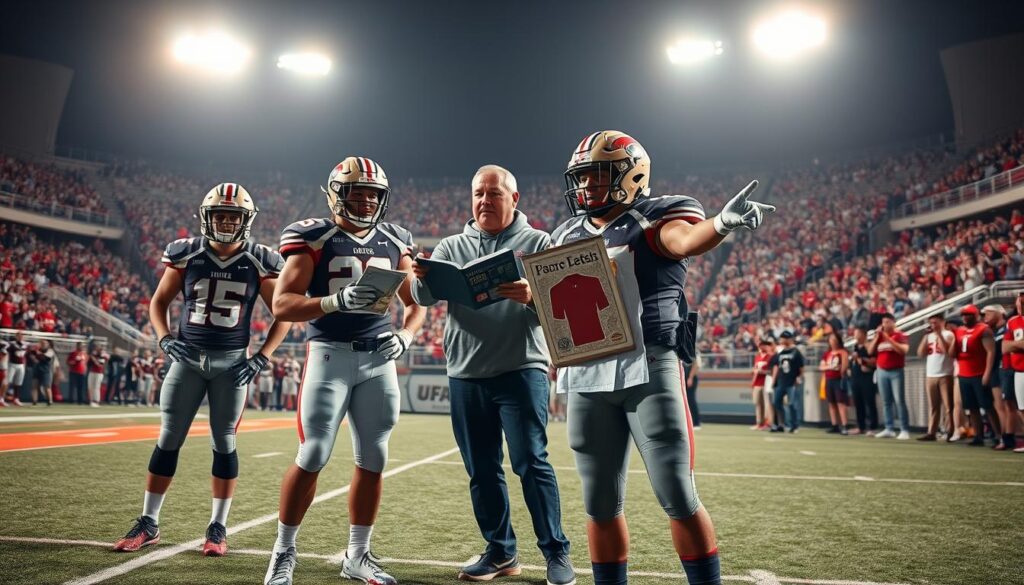
The NCAA’s four-game redshirt rule is key in college football today. It lets players play in up to four games without losing a year of eligibility.
This rule helps coaches make smart decisions. They can see how new players do in games while keeping their future in mind.
It changes how teams use freshmen. Players like Alabama’s Ezavier Crowell or Ohio State’s Jeremiah Smith show how freshmen can make a big difference early.
Coaches plan carefully when to use these players. This is true for Florida and other teams, balancing now and later needs.
Where Freshmen Help Now: special teams, rotation snaps, packages
Coaches use freshmen in specific roles to meet immediate needs. This way, they can help without the pressure of being starters. They focus on situations where freshmen can really make a difference.
Special teams are where freshmen often start. Kickoff and punt coverage need speed and tackling. Return units look for players who can dodge tackles and see the field well. These roles help freshmen learn the game while making a big impact.
At Arkansas, Sutton Smith is a prime example of a high-impact special teams returner. He shows how freshmen can quickly find their place. Using them on special teams is a smart way to get them into the game.
Another way freshmen play is through limited snaps in key positions. Coaches create special packages for them. This could be for third downs or specific formations. It helps freshmen get experience without being overwhelmed.
At Texas, Ryan Wingo, a freshman wide receiver, played a lot. He had 618 snaps last season. This shows how a talented freshman can get a lot of playing time in a specific role.
Defensive packages also offer chances for freshmen. A defensive back might play in nickel or dime situations. A pass-rusher could get in on obvious passing downs. These roles play to their strengths and hide any inexperience.
The goal is to meet immediate needs without hurting their growth. Coaches pick a few key tasks for freshmen to excel in. This approach builds confidence and lays the groundwork for more playing time in the future.
Early Enrollee Edge: spring reps and install comprehension
Spring practice is not just for veterans. For early enrollees, it’s a crash course in college football. They dive into the system months before others.
They get critical reps in a structured setting. They start physical development and playbook mastery early. This is key for their success.
Understanding schemes is a big plus. Coaches can teach at a slower pace. This lets early enrollees learn and ask questions without pressure.
This early start often means more playing time. A player who knows the schemes in April has an edge. Alabama’s Ezavier Crowell and Oregon’s Dakorien Moore are examples.
This is a strategic move for teams. It helps with roster management and smooth transitions. The impact of recruiting weekends is seen when players contribute.
Summer enrollees face a different challenge. They have to rush physical and mental development. Early enrollees avoid this rush, entering fall camp ready.
The edge is clear. It comes from extra reps and months of learning. For freshmen wanting to play right away, enrolling early is the best choice.
Snap-Count Heatmap: which positions lean on freshmen this year
Looking at the annual roster cycle shows a clear pattern. Positions most needing new talent each year are based on physical needs and immediate vacancies. Teams focus on these areas for early contributions.
Skill positions like wide receiver, cornerback, and running back need top athleticism and instinct. These traits are often found in top recruits from the start. Coaches can use these players in specific packages without needing full system mastery.
Team needs speed up the process. A weak secondary or thin wide receiver corps creates must-have spots. At Mississippi State, safety Bralan Womack fills a key need. Nationally, players like wide receiver Kaliq Lockett (Texas A&M), cornerback Devin Sanchez (Ohio State), and offensive tackle Bennett Babalola (UCLA) are expected to make an impact right away.
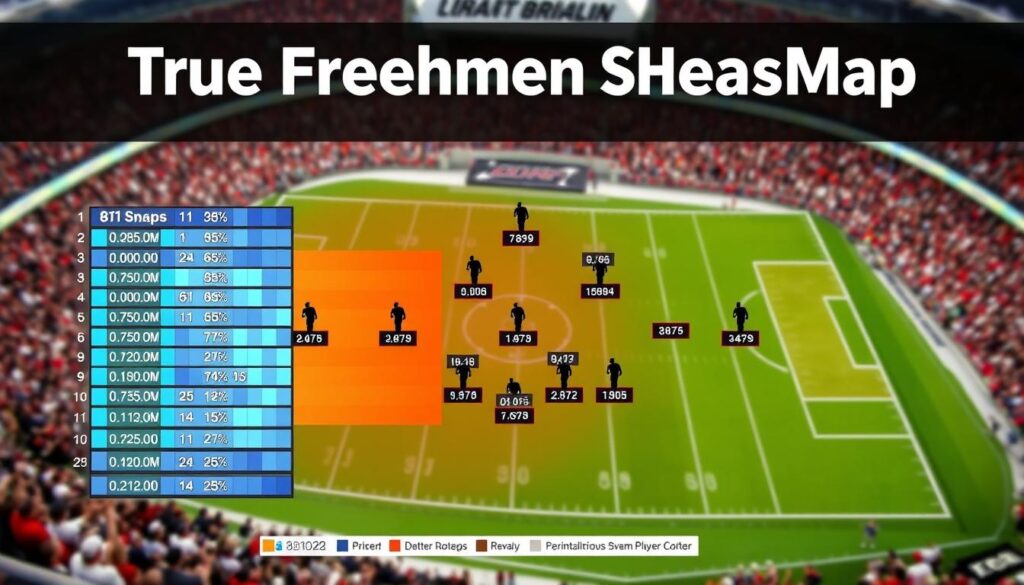
The table below shows common positions and their turnover rates. It also shows where freshmen are most likely to play based on roster patterns.
| Position Group | Turnover Rate | Key Physical Demand | Freshman Impact |
|---|---|---|---|
| Wide Receiver | High | Speed, Agility | Very High |
| Defensive Back | High | Coverage Skills, Fluidity | High |
| Running Back | Moderate-High | Vision, Burst | High |
| Offensive Line | Moderate | Size, Strength, Technique | Low-Moderate |
| Linebacker | Moderate | Instinct, Tackling | Moderate |
Offensive line and quarterback roles usually have fewer freshman snaps. These spots need advanced skills and a deep understanding of the game. But, some teams might use freshmen if they have a standout player.
The snap-count heatmap changes every year. It’s influenced by graduation, transfers, and recruiting classes. Knowing these changes helps predict which freshmen will play right away.
Development Curve: weight room, technique, playbook mastery
A freshman’s first year is more about off-field development than game days. This journey shapes them from high school stars to reliable college players. It spans three key areas.
Physical development is the base. College strength programs are tougher than high school ones. Gaining strength, speed, and size is essential. Alabama coach Kalen DeBoer said freshman running back Ezavier Crowell worked hard to get stronger and faster.
For linemen, gaining weight is a top priority. Michigan’s Bennett Babalola needs to add strength and weight to play in the Big Ten. This physical change is the first and most obvious step.
At the same time, technical skills are being sharpened. Each position requires specific skills. Wide receivers work on routes and releases, while defensive backs focus on backpedals and eye discipline.
Position coaches spend hours perfecting these skills. They aim to replace high school habits with college-level techniques. This builds the muscle memory needed for high-pressure situations.
The final part is mastering the playbook. Learning offensive schemes or defensive calls is complex. Freshmen must grasp terms, formations, adjustments, and their roles on every play.
Understanding the playbook sets players apart. It’s key to earning the coaches’ trust. Mastering it is the last step of the development curve.
These three areas form the core of a freshman’s growth. Success is seen in weight gained, techniques improved, and playbook knowledge. This journey shapes their readiness and defines their freshman year beyond the stadium.
Protecting Eligibility: when to pause/play late-season
The four-game redshirt rule is key in the final weeks of the season. Coaches must balance now and the future for true freshmen. They need to manage their rosters carefully.
It all comes down to how many games a freshman has played. If they’ve played in three or fewer, they can redshirt. This is a big decision for games in November and later.
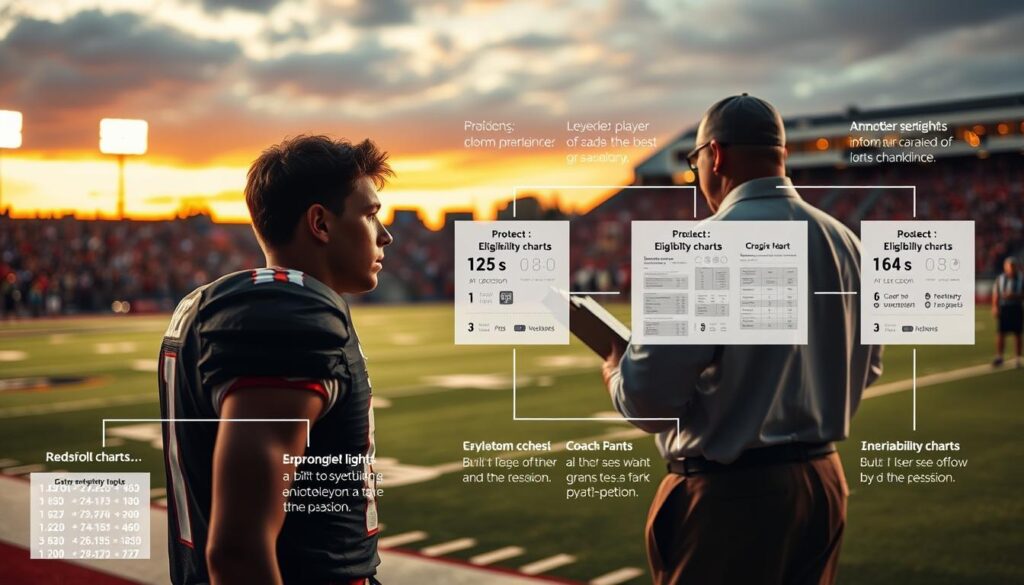
There’s a clear choice to make. Coaches might choose not to play a player in late games. This keeps the player’s redshirt intact. They get a full year to develop without losing eligibility.
This is often the case for players who are not starters. The extra year is more valuable than a few games. It’s a smart move for the team’s future.
On the other hand, playing a player in four games uses up their redshirt. This is true even if they’ve only played in three games. It’s a choice that can be made for a player at any game count.
Coaches might decide to play a player in a big game. This could be for a division title or to get into a bowl game. The team’s goals are more important than saving the redshirt.
Playing a player in a bowl game is also a big decision. It uses up the redshirt. But if the player is key to winning, it might be worth it.
Many things go into making this decision. How the player is doing now is important. So is the team’s injury situation and depth at the player’s position. The opponent’s style and how important the game is also matter.
Looking ahead is key in these decisions. Saving a redshirt means the player can get stronger and learn the playbook. Using it up shows confidence in the player’s ability to help win now.
In the end, these decisions show what a program values. They balance the current season with building for the future. Each choice affects the player and the team’s path forward.
Portal Context: balancing freshmen vs transfers in depth chart
The transfer portal has changed how teams build their rosters. Now, there’s a direct competition between experienced players and top freshman recruits. Coaches have to decide between a veteran quarterback from the portal and a young player who has been developing for years.
This choice is all about weighing immediate performance against long-term growth. Transfer portal players often bring proven college production and know what it takes to play at the college level. Freshmen, even the best ones, are a bigger gamble on their future success.
| Profile Factor | Typical Immediate-Impact Transfer | Typical Developmental Freshman |
|---|---|---|
| College Game Experience | Significant; has played in live FBS games | None; limited to high school or prep competition |
| Physical Readiness | Often physically mature, having spent years in a college S&C program | May require significant time in the weight room to match the size and speed required |
| System Familiarity | Must learn a new playbook but understands college-level scheme complexity | Learning playbook, practice tempo, and film study from the ground up |
| Recruitment Investment | Short-term roster fix with immediate ROI expectations | Long-term program building block with a multi-year development arc |
In critical positions, the transfer portal often gets the nod. Quarterback is a prime example, with players like Byrum Brown at Auburn or Sam Leavitt at LSU expected to start right away. The fear of inexperience at such a key spot often means a talented freshman is relegated to backup or redshirt status.
On the other hand, a freshman’s exceptional physical abilities can sway a coach’s decision. If a first-year player shows rare speed, size, or instinct, they might get a faster start. This is more common at positions like wide receiver or defensive back, where raw talent can quickly make an impact.
This balance is key to building a successful team. A good program mixes portal veterans to fill immediate needs with freshman talent for the future. Managing these roster layers well determines a team’s success each season. For more on how teams make these decisions, check out transfer portal news.
What to Watch on Game Day: telltale signs of growth
On-field behaviors tell us more about a player’s growth than stats alone. Coaches and analysts look for specific actions that show a player is getting better. These signs are clearer than just raw talent.
Assignment alignment shows if a player understands the playbook. When a freshman always lines up right, it means they’ve learned the plays. This helps the whole team avoid confusion before the snap.
How a player does in one-on-one situations is key. For a wide receiver like Kaliq Lockett, speed is important. But, if they can run the right route against tough coverage, that’s growth. For a cornerback like Devin Sanchez, it’s about ball skills and staying in position. Good footwork and leverage show they’re improving.
Quick reactions versus hesitation tell if a player is ready for the game. Fast, decisive moves after the snap mean they know the play well. A slight delay usually means they’re thinking too much. This gets better with more experience.
Doing well in specific roles is another way to judge a player. For example, a gunner on punt coverage has a clear job. Downs the punt inside the ten-yard line? That shows they’re listening to the coaches and trying hard. It’s a clear sign they’re making a difference, even if it’s not always on offense or defense.
Seeing fewer mistakes over time is the best sign of growth. Early errors are normal, but fewer of them mean a player is getting smarter. They start to anticipate what’s happening instead of just reacting.
The table below summarizes key observable indicators, what they signal, and real-world examples.
| Observable Indicator | What It Signals | Example |
|---|---|---|
| Pre-snap alignment consistency | Playbook comprehension and reduced mental load | Linebacker correctly adjusts to offensive formation shift |
| Technique maintenance in isolation | Discipline and skill development under pressure | CB uses proper hand placement throughout a red-zone rep |
| Immediate post-snap reaction | Instincts and confidence in the scheme | Safety drives on a route without pausing to diagnose |
| Production in a core special teams role | Coachability, effort, and role acceptance | Freshman gunner is first player to reach the returner |
| Decrease in procedural penalties | Growing game awareness and focus | Offensive lineman eliminates false starts in consecutive games |
These signs add up. One game might show improvement in one area. But, if a player consistently shows growth in many areas, they’re on the right track. This progress can change their role and the team’s strategy.
Next 3 Games: smart usage based on opponent styles
Coaches plan games for freshmen carefully. They match a player’s skills with the opponent’s weak spots over three games.
This strategy makes a big impact. It boosts a young player’s confidence by giving them clear, winnable roles. For instance, a strong running back like Ezavier Crowell is great for short-yardage plays against tough defenses.
A fast receiver might get more playing time against a team that uses man coverage. A linebacker who stops the run could play more against a team that runs a lot.
This planning is more than just putting players on the field. It involves studying the opponents to find areas where a freshman can shine.
The aim is to use players wisely. This protects their growth while giving them a chance to make a difference right away. Smart use of players turns raw talent into a real advantage on the field.
Looking at the next games with this strategy is key. It helps decide which freshmen move from practice stars to game-day heroes.