

College football is more than a game; it’s a mix of excitement and uncertainty. Every Saturday, teams face ups and downs. For Florida’s teams in the ACC, SEC, and other conferences, it’s all about the standings.
Wins, losses, and points tell a team’s story. They show its strength and chances for the playoffs. A small loss early can haunt a team later.
This tracker helps you understand the game. It shows what wins mean to the AP and CFP. It also reveals how teams aim for big bowls in Florida.
It’s like Moneyball meets the thrill of rivalry games. Let’s dive into the numbers.
ACC/SEC/Big 12/AAC/C‑USA Tables (Format + Update Cadence)
Think of conference standings as a team’s vital signs. They show current streak, points for and against, and record against ranked teams. The table below is more than a snapshot. It’s a live EKG for Florida’s football heartbeats across five leagues.
Here’s how to read the diagnostics. The W-L column shows the team’s conference record—the only stat that wins championships. PF/PA shows how well the team scores and defends. A big gap here means they’re either dominating or struggling.
The STRK column shows momentum. Is the team getting better or worse? The AP/USA columns tell us who they’ve actually beaten. A win here is a big plus for their season.
Our data is updated live. The numbers change after every game. A team could go from 6-2 to 6-3 overnight. The story changes fast, like a turnover in the Swamp.
| Team (Conference) | Conf. W-L | PF / PA | STRK | vs. AP Top 25 |
|---|---|---|---|---|
| Florida State (ACC) | 5-1 | 192 / 120 | W3 | 1-1 |
| Florida (SEC) | 3-3 | 145 / 155 | L1 | 0-2 |
| UCF (Big 12) | 2-4 | 165 / 190 | L2 | 0-3 |
| USF (AAC) | 4-2 | 210 / 175 | W2 | 0-0 |
| FAU (C-USA) | 3-3 | 180 / 185 | W1 | 0-1 |
This table is your control panel. Watch the STRK for momentum shifts. Study the PF/PA for true team strength, not just luck. These standings tell you who’s contending and who’s just pretending.
Tiebreaker Rules Simplified by Conference
Tiebreakers turn college football’s regular season into a thrilling process. Two Florida teams end up with 7-1 records in their division. The stadiums are empty, but the conference offices are buzzing with activity.
Forget complex algorithms. We’re focusing on the simple steps that usually decide everything. It starts simple and gets more complex.
First, we look at head-to-head matchups. Did these teams play each other? Who won? This is the cleanest, most dramatic answer. It’s like saying “I told you so.”
If that’s a tie or never happened, we move to record against the next best common opponent. It’s like judging two chefs by how they cooked the same ingredient.
Stuck in a tie? Record against all common opponents comes into play. This is a broader comparison. It asks: “Against the same schedule, who was consistently better?”
When all else fails, many conferences use the College Football Playoff Ranking. The committee becomes deus ex machina, descending to settle the dispute with their mysterious, weekly poll. It’s less satisfying but often decisive.
Each major conference has its own twist on this theme. The steps are similar, but the order and specifics matter. Here’s how the primary conferences affecting Florida teams handle the chaos:
| Conference | Primary Tiebreaker | Unique Quirk | When CFP Used |
|---|---|---|---|
| SEC | Head-to-Head | Record vs. division opponents in order | Last resort for division title |
| ACC | Head-to-Head | Record vs. common conference opponents | Only if tied for championship game |
| Big 12 | Head-to-Head | Point differential vs. common opponents (capped) | Final step for championship |
| AAC | Head-to-Head | Record vs. next highest placed team | Not typically used |
| C-USA | Head-to-Head | Coin flip after several steps | Rarely reaches this point |
Notice a pattern? Head-to-head is almost always king. It’s the most equitable, understandable solution. The subsequent steps feel increasingly like legal code. For a professional comparison, the NFL’s tie-breaking procedures follow a similar logical cascade, though with different specifics.
The Big 12’s point differential rule is fascinating. They cap it to prevent running up the score—a rare instance of sportsmanship baked into the rules. The SEC’s methodical march through the division is pure bureaucracy. C-USA admitting a coin flip might be the most honest approach of all.
Why does this matter for Florida fans? Because in crowded divisions, these tiebreakers often decide who plays for championships, who gets better bowls, and whose season is remembered. They transform a single regular-season game into legacy-defining drama.
So next time you see identical records in November, don’t panic. Just pull up the conference’s rulebook. The drama is already written—you just need to know how to read it.
Rankings Watch: AP, Coaches, CFP Timeline
The AP and Coaches polls come out every Sunday. They bring instant joy or disappointment, often before we’ve had our coffee. Sports bars turn into stock exchanges, where teams’ values change based on their last game.
But these polls are more than just fun. They have real consequences.
The College Football Playoff rankings are different. They’re made in secret, late in October. This creates drama that’s hard to ignore.
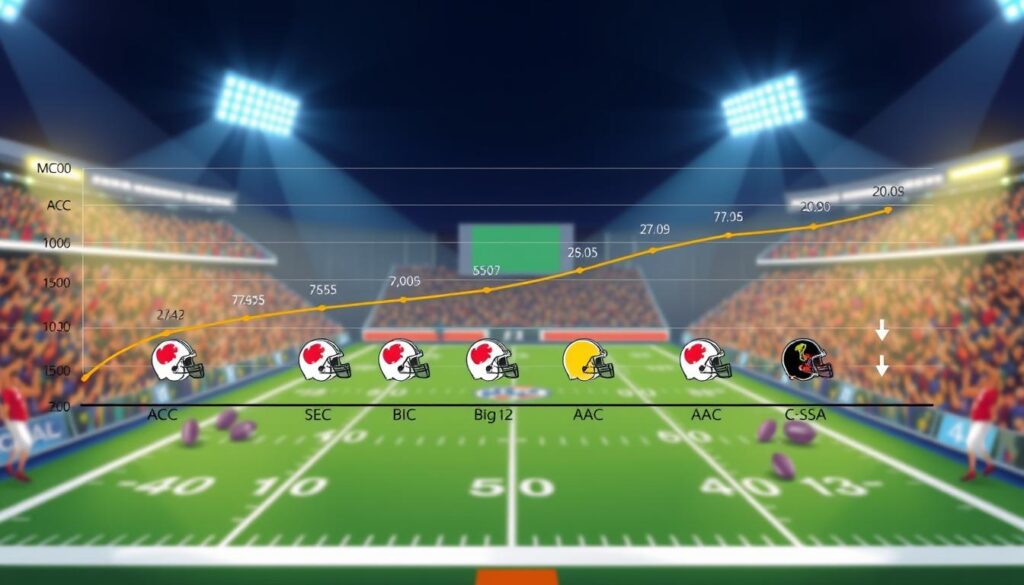
Understanding this timeline is key. The Sunday polls react to Saturday’s games. The Tuesday CFP rankings are more strategic, often sparking debate.
So, what drives rankings movement? It’s not just winning. It’s who you beat. Our tables show how important these wins are.
Here’s what matters most:
- Rocket Fuel: Beating a top-15 team on the road. Pollsters notice this right away.
- Steady Climb: Winning against a good but unranked team. It’s steady, if not exciting.
- Warning Flare: A close win against an easy team. You might stay ranked, but you’re at risk.
- The Anchor: Losing to an unranked team. This can drop you fast, like a bad stock.
For Florida teams, beating a ranked SEC or ACC team is key. Losing to an unranked in-state rival is a big setback.
The real skill is tracking a team’s velocity and direction. Is it rising steadily or barely holding on?
We look for these signs:
- The Silent Assassin: A team that keeps winning, slowly rising as others fall.
- The Paper Tiger: A top-ranked team with a weak record against ranked teams, due for a drop.
- The November Surge: A team that peaks when the CFP committee is watching.
The AP and Coaches polls are influenced by highlights and headlines. The CFP committee watches every game. This difference can cause big changes in rankings.
Our tracking is more than just numbers. We’re watching how teams gain or lose respect. This adds a psychological layer to the season.
So, when you see those Sunday updates, look closer. The number next to your team is just the start. The real story is in their trajectory. Are they heading somewhere meaningful, or just going through the motions? The rankings movement reveals all.
Power Ratings 101 (SP+, FPI—Plain‑English)
If you think points for and against tell the whole story, you’re reading the football box score like a toddler reads a picture book. It shows you what happened, but not why. Enter the nerdy overlords of college football analysis: power ratings.
These metrics, chiefly SP+ and FPI, are the forensic tools that dissect the raw data. They ask the uncomfortable questions. Did that offense rack up yards because it’s genius, or because the opposing defense was a welcome mat? Is a team’s record a mask for underlying flaws?
Let’s start with the Points For and Points Against on your standings tracker. These are the foundational inputs, the raw ore. Power ratings are the refinery, turning that ore into a purer grade of insight.
SP+ (Bill Connelly’s brainchild) is obsessed with efficiency and explosiveness, adjusted for every opponent. Think of it as a measure of “how you played” more than “if you won.” It strips away garbage-time stats and blowouts against cupcakes. A team can “win ugly” and have a better record than its SP+ ranking. On the other hand, a team with a few tough losses might have a stellar SP+, signaling they’re better than their record suggests. SP+ is your answer to “Who is playing the best football right now?”
ESPN’s FPI (Football Power Index) has a different job. It’s part fortune teller. FPI blends actual game results with preseason projections and, importantly, the strength of a team’s remaining schedule. It’s designed to predict future success. While SP+ tells you about the current weather, FPI tries to model the entire season’s climate. A team with a favorable remaining slate might have a higher FPI than its current resume warrants.
So, what’s the plain-English translation for Florida fans? If your team’s SP+ is soaring, breathe easy. They’re controlling games in a sustainable way, which is what the CFP committee claims to love. If their FPI is more optimistic than their record, it means the algorithm sees friendly foes ahead and a chance to finish strong.
The magic—or the misery—happens when these ratings disagree with the win column. It’s the difference between being lucky and being good. For tracking playoff hopes and bowl projections, you need both. SP+ reveals the true quality on the field this Saturday. FPI sketches the path to Atlanta or a New Year’s Six bowl come December.
Ignoring these metrics is like ignoring the analyst’s commentary to just stare at the scorebug. To truly understand where any Florida team stands, you must listen to what the numbers are whispering about their present and their future.
Strength of Schedule & Quality Wins Tracker
Two teams can end up 8-4, but one might have played tougher opponents. This is where strength of schedule matters. The committee sees different values in each team’s record.
Your Strength of Schedule (SOS) shows how tough your opponents were. It’s like a summary of every game you played. A high SOS with a good record is very valuable. It shows you’ve faced strong teams.
A “quality win” is a big deal in your schedule. It’s usually against a top-ranked team. This is key for tiebreakers in the postseason. Did you play against strong teams or weaker ones?
Look at the numbers. A Florida team with 0-2 against AP Top 25 teams has a big gap. But a team with 2-1 has a solid base. These wins are not just numbers; they show your team’s strength.
The Quality Win Ledger: Florida’s Audit
Let’s dive into the numbers. The record of quality wins and losses is in two columns. “vs. AP Ranked Teams” and “vs. USA Today Coaches Poll Ranked Teams.” Your schedule’s strength is based on your opponents’ records.
This tracker doesn’t just count wins. It checks their value for the tiebreaker. The committee looks at who you beat and their reputation.
When standings are tied, these metrics are key. It’s not just who you beat, but who you beat that matters.
Reading the Résumé
So, how do you use this? Look for patterns. A team with a weak non-conference schedule has a lower SOS. But a team that scheduled tough and won has a strong résumé for debates.
Your schedule tells your story. A quality win is a game-changer. It turns a good season into a memorable one.
Keep track of these numbers every week. A 2-0 record against ranked teams in September is valuable. It can help in December when bowls and championships are decided.
Bowl Eligibility Countdown (6‑win meter)
The quest for bowl eligibility turns standings into real plans for the holidays. Six wins are the key. They’re the ticket to a December trip, even if it’s to Detroit in the snow. Missing this goal means your season ends abruptly, like a canceled flight.
This isn’t about winning championships or Heisman trophies. It’s about making it to the bowl games. Every November game is a high-stakes event. For Florida teams, the win column tells the story, not just the standings.
Let’s look at the math. A team’s record is its wins in the conference plus non-conference games. Six total wins are needed. No points for style or opinions matter here. It’s simple and fair.
| Florida Team | Current Record | Wins Needed | Status Meter | Critical Games Left |
|---|---|---|---|---|
| Florida State | 7-1 | 0 | Ticket Punched | Miami, Florida |
| Florida | 5-3 | 1 | On the Bubble | LSU, FSU |
| Miami | 4-4 | 2 | Walking the Tightrope | FSU, Louisville |
| UCF | 3-5 | 3 | Needing a Miracle | Houston, BYU |
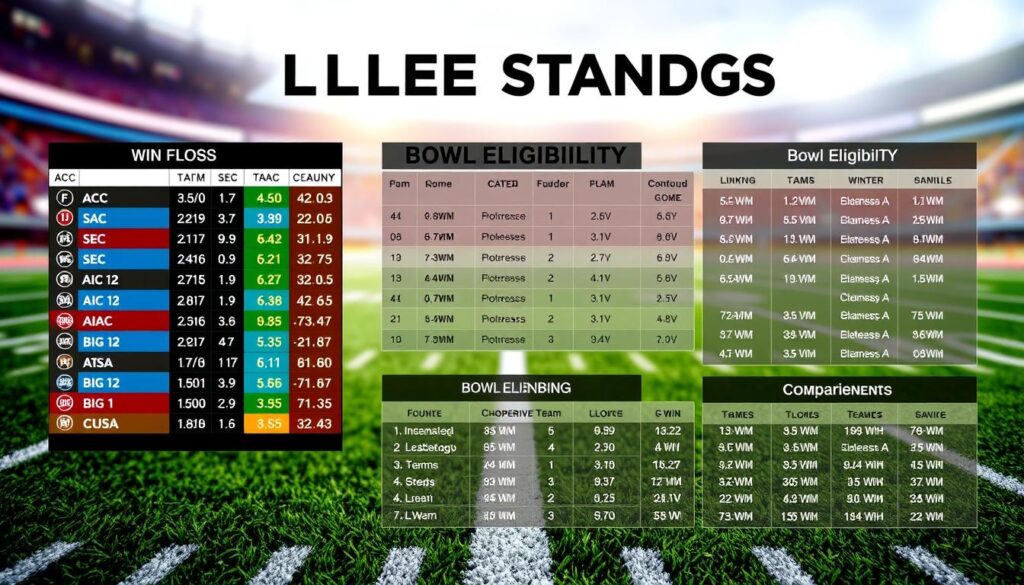
That table shows a range of hopes and fears. Florida State, at 7-1, has already secured its spot. The Seminoles are looking at hotel reviews. Florida, at 5-3, needs just one more win to qualify. That’s a lot of pressure on every game.
Miami, at 4-4, must win half of its remaining games. Sounds easy until you see their schedule. Every game is a must-win, adding to the pressure.
UCF, at 3-5, needs to win three of its last four games. This is a tough ask, requiring near-perfect finishes. At this point, standings feel like destiny.
The countdown is clear and straightforward. You either have six wins or you don’t. The standings provide the framework, but the overall record is the final say.
As November goes on, keep an eye on these numbers. The race to six wins is its own kind of championship. It’s the championship of not ending your season in November. For everyone involved, a bowl trip is a success, turning standings into real plans.
Head‑to‑Head Matrix Among Florida Teams
Forget about conference allegiances for a moment. The most exciting stories in Florida football happen when Sunshine State teams face off. Conference standings set the stage, but the real story is in bragging rights and backyard arguments.
This is where seasons are truly defined, no matter the overall record.
Think of it as Florida’s own round-robin tournament for state supremacy. Who owns the Sunshine State this year? The answer isn’t found in national polls alone, but in the direct, visceral results of these in-state showdowns.
A head-to-head win can make a season legendary. It can give a team that critical “quality win” that CFP committee members take note of. On the other hand, a loss to a rival can turn a promising campaign into a disappointing march toward fading bowl hopes.
The stakes are always personal, cutting through the national noise with local intensity.
Let’s break down the battlefield. Below is the current matrix of results between Florida’s FBS programs. This isn’t about conference prestige—it’s about who beat whom, plain and simple.
| Team | vs. Florida | vs. Florida State | vs. Miami | vs. UCF | vs. USF |
|---|---|---|---|---|---|
| Florida | — | W/L | W/L | W/L | W/L |
| Florida State | W/L | — | W/L | W/L | W/L |
| Miami | W/L | W/L | — | W/L | W/L |
| UCF | W/L | W/L | W/L | — | W/L |
| USF | W/L | W/L | W/L | W/L | — |
Reading this table is like examining a family tree of grudges. Each “W” or “L” represents more than a game result—it’s a data point in an ongoing cultural war. The “Sunshine Showdown” (Florida vs. Florida State), the “War on I-4” (UCF vs. USF), and Miami’s clashes with both northern foes create a web of outcomes that often tells the season’s truest story.
Why does this matrix matter beyond local pride? Two words: AP and CFP. Voters in the AP Poll absolutely notice when a team handles its business against in-state competition. It signals program strength and regional dominance. For the CFP committee, a convincing win over a ranked in-state rival is gold—a resume bullet point that’s hard to ignore.
Conversely, a loss here is a scarlet letter. It’s the result that gets highlighted on every broadcast for the rest of the year. It’s the talking point that never dies.
So, who’s winning Florida’s civil war this season? The answer shifts weekly, but the tension is constant. This matrix is more than a scoreboard—it’s a living document of pride, pain, and perpetual competition. Check it weekly, because in Florida football, the most important standings are often the ones you make yourself.
Streaks: Win/Loss, ATS, Over/Under (educational)
Momentum in sports is more than a feeling. It’s something we can measure. Win, loss, and betting streaks show us the truth. The “STRK” column in standings is like the season’s heartbeat.
“W4” shows confidence, while “L4” shows despair. But there’s more to it than just wins and losses.
The real story is in how teams perform against expectations. This is where the real analysis starts.
Win/Loss streaks are the main event. They directly affect rankings movement. A team with a “W5” is likely rising in the polls. On the other hand, a “L3” signals a team in trouble.
ATS (Against The Spread) adds a layer of depth. It’s not about betting, but about how teams match up against predictions. A 5-game ATS win streak means a team is outperforming expectations.
Think of it like this: They’re the underdog who keeps winning, or the favorite who keeps dominating. This streak shows a team’s true value, like undervalued quality or great coaching.
The Over/Under streak reveals a team’s style. A 4-game “Over” streak means they’re playing explosive games. This can predict a shift in how teams are seen by pollsters.
For Florida fans, this matters a lot. It helps figure out if a team’s wins are real or just luck. An ATS losing streak might mean they’re winning but not impressively.
These streaks offer a deep look into a team’s performance:
- Win/Loss: The basic result.
- ATS: How they do against predictions.
- Over/Under: Their game style.
Together, they show if a team is on the rise or falling. They explain why some teams are ranked higher than others. They also show the team’s mindset and strategy.
Watching these trends is like having a crystal ball for a team’s future. A strong ATS streak can lead to a big jump in rankings. A sudden “Under” streak might mean a team’s defense is improving. It’s all about the data.
So, when you look at the standings, don’t just see the Ws and Ls. Look at the streaks. They tell the real story of the season, shaping every rankings movement and defining a team’s path.
What Each Team Needs This Week
Saturday in Florida is more than just a game day. It’s a series of strategic moves that shape the postseason. The standings show where we are, but this section reveals what must happen now. Think of me as your weekend guide, turning data into action.
Florida Gators (ACC): The Gators are 5-3 and aiming for respect. They face a Coastal Division team this week. They need a strong defense and an offense that scores over 35 points.
Why? The selection committee watches these games closely. A big win boosts their standing, while a sloppy one keeps them at 6 wins.
Florida State Seminoles (ACC): The ‘Noles are 7-1 and in control. But they must watch their rivals closely. A Seminole win and a rival loss could secure a conference title.
So, they should root for the underdog on the other channel.
Miami Hurricanes (ACC): The Canes are 4-4 and on the edge. They need a convincing win this week. Their schedule is tough, and a narrow victory won’t help.
They must show unity and dominate on both sides of the ball. Six wins get them a bowl, but how they get there matters.
UCF Knights (Big 12): The Knights are 5-3 and in the hunt. They face a team that can spoil their chances. They should play smart and avoid drama.
A win puts them at 6-3 and makes the next month exciting.
USF Bulls (AAC): The Bulls are 3-5 and fighting for a bowl spot. They face a team with the same record. They need to play with desperation and creativity.
Every fourth-down attempt and trick play matters. Conservative football won’t save their season.
FAU Owls (AAC): The Owls are 4-4 and aiming to prove their worth. They face a team they should beat. The focus is on staying healthy.
FAU needs to come out of this game without injuries. A win at full strength sets them up for success.
FIU Panthers (C-USA): The Panthers are 2-6 and playing for growth. They focus on developing young players. The game is about finding future stars.
It’s not just about winning but about progress. Sometimes, the most important victories aren’t in the win-loss column.
See the pattern? Some teams focus on the scoreboard, while others manage perceptions. And then there are those tiebreakers that decide who plays in December. This weekend will change many stories across the state. The data has given us the script; now we wait to see the actors perform.
Data Sources & Update Times
Think of our data sources as the official scorekeeper at a heavyweight fight—impartial, precise, and always keeping count. In a world full of opinions, we rely on verified numbers. No guessing, just the facts.
We get our truth from official conference statistics. This includes the ACC, SEC, Big 12, AAC, and C-USA’s data. It’s the real deal, not rumors.
The format is familiar, like any major sports site: Wins, Losses, Points For, Points Against, and Current Streak. We treat this data with great respect. Every prediction and tiebreaker scenario comes from these standings.
Our updates are fast. When a Florida team’s game ends on Saturday night, we update by Sunday morning. Each game’s end means a new update.
We believe in transparency. Below is how we get our numbers, how often they update, and what it looks like. It’s like our source code.
| Conference | Primary Data Source | Update Cadence | Data Format |
|---|---|---|---|
| ACC | ACC Official Statistics & ESPN | Real-time (Post-Game) | W-L, PF, PA, STRK |
| SEC | SEC Official Statistics & ESPN | Real-time (Post-Game) | W-L, PF, PA, STRK |
| Big 12 | Big 12 Official Statistics | Real-time (Post-Game) | W-L, PF, PA, STRK |
| AAC | AAC Official Statistics | Real-time (Post-Game) | W-L, PF, PA, STRK |
| C-USA | C-USA Official Statistics | Real-time (Post-Game) | W-L, PF, PA, STRK |
Why does this matter? It lets you track a team’s journey clearly. You can see a winning streak grow, a defense improve, or a season change. It turns fan guesses into informed views.
So, when you check your team’s standing, you see the same numbers as the committees. The same numbers that decide bowl destinations. It’s not our opinion. It’s the official record. In college football’s chaos, this is the most reliable guide.
Downloadable Standings One‑Pager
After eleven sections of standings, tiebreakers, and power ratings, your brain might feel like it just ran the Miami Hurricanes’ fourth-quarter two-minute drill. We get it. So we built the escape hatch.
Our downloadable one-pager is the cheat sheet you actually need. It condenses every metric from this tracker into a single, printer-friendly snapshot. Get the latest ACC, SEC, and Big 12 standings. See the 6-win meter for Florida State, Florida, and Miami. Glance at the head-to-head matrix and current betting streaks. It’s the quick-reference guide for your group chat or the perfect thing to pull up during a heated bar debate about the latest rankings movement.
Think of it as your VIP pass to informed fandom. All the analysis from SP+ to strength of schedule, distilled into actionable intelligence. We update it weekly to capture every subtle rankings movement, ensuring your one-pager is never caught watching last week’s game film.
Download it. Print it. Stick it on your fridge or save it to your phone. When someone asks why UCF’s path to the AAC title looks clearer than Florida’s in the SEC, you’ll have the answer in your pocket. No scrolling required.